📌 UPDATE — July 3, 2026
Tesla's FSD-compatible fleet has now reached 9,654,278 vehicles globally, according to tracking data shared by Whole Mars Catalog — putting the company on track to surpass 10 million FSD-capable vehicles this quarter. Of that total, approximately 3.5 million are estimated to be running Hardware 3.0 (AI3), highlighting the significant portion of the fleet still awaiting a potential hardware upgrade path. This milestone goes beyond total production figures, specifically reflecting vehicles capable of running Tesla's Full Self-Driving software suite.


📌 UPDATE — July 2, 2026
Tesla is now on track to deliver its 10 millionth vehicle this quarter, just months after crossing the 9 million production milestone. If achieved, this would represent a gain of roughly 1 million deliveries in a remarkably short window, underscoring the company's accelerating production pace. The 10 million milestone would mark a historic moment for the EV industry as a whole, cementing Tesla's dominance in the global electric vehicle market.
@SawyerMerritt · July 2, 2026"Tesla is on track to deliver its 10 millionth vehicle this quarter."
 👍 950 🔁 45 👁 26,673
Twenty-three years after building its first electric sports car, Tesla has crossed 9 million vehicles produced — and the Model Y has claimed the title of world's best-selling car of any kind for three years running. Both milestones, announced by Tesla on July 1, 2026, mark a shift that would have seemed implausible a decade ago: an EV-only automaker sitting at the top of the global sales chart.

The Numbers Behind the Milestone
Tesla's nine-millionth vehicle rolled off the line at Giga Shanghai — a white Model Y, fitting given that factory has contributed nearly half of all Teslas ever built. The milestone came roughly 207 days after the eight-millionth vehicle, a red Model Y produced at Giga Berlin. At that pace, Tesla is on track to produce its ten-millionth vehicle sometime around mid-2026.
| Milestone | Detail |
|---|---|
| 9 millionth vehicle | White Model Y, Giga Shanghai |
| 8 millionth vehicle | Red Model Y, Giga Berlin |
| Time between milestones | ~207 days |
| Giga Shanghai share of total production | ~50% of all Teslas ever built |
| Model Y cumulative sales (as of March 2026) | 4 million units |
| Model Y 2023 global sales | 1.22 million units (JATO Dynamics) |
Three Years at the Top
The Model Y's run as the world's best-selling passenger vehicle — across 2023, 2024, and 2025 — is the part of this announcement that deserves more attention than it typically gets. This isn't a best-selling EV title. It's best-selling car, full stop, beating every combustion and hybrid model on the market globally. According to JATO Dynamics, the Model Y moved 1.22 million units in 2023 alone. By March 2026, cumulative Model Y sales had reached 4 million vehicles.
For context: the Model Y only entered production in 2020. Reaching the top of the global sales chart within three years of meaningful volume production is a compression of automotive history that no legacy manufacturer has come close to matching.
What This Means for Owners
Scale matters directly to Tesla owners. A production base of 9 million vehicles means a larger service network, more robust parts availability, a deeper pool of used vehicles for buyers entering the ecosystem, and — critically — more real-world data feeding into Tesla's software and autonomy systems. Every additional million vehicles on the road accelerates the feedback loop that drives OTA improvements.
The Model Y's sustained sales dominance also signals that Tesla's core product remains commercially viable at a global scale, which supports long-term software support timelines and continued hardware investment in the platform.
With the 10-millionth vehicle projected to arrive around mid-2026, the pace isn't slowing. The more interesting question now is whether any single model — from Tesla or anyone else — can challenge the Model Y's grip on the top spot before the decade is out.
Related Gear
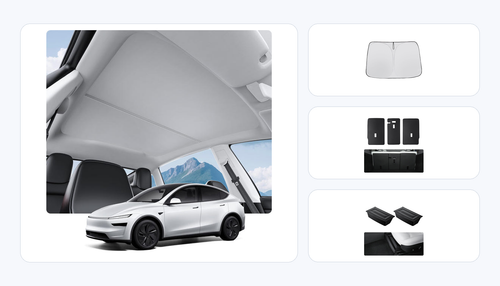
Gear up your Model Y with tested, custom-fit BASENOR accessories — shop Model Y accessories →
Sources & reporting notes
The links below identify the material source records used for this report.
- @Tesla on X (2026-07-01T17:48:54.000Z) — Direct source
- @SawyerMerritt on X (2026-07-02T19:13:59.000Z) — Direct source
- @wholemars on X (2026-07-03T02:01:04.000Z) — Direct source
- @wholemars on X (2026-07-03T02:01:05.000Z) — Direct source
Source links are preserved as published or accessed. See our editorial standards and corrections policy.
The BASENOR Editorial Desk covers Tesla, SpaceX, and related technology, curating reporting from primary sources — official accounts, regulatory filings, and software release data. Every article passes source-record and fact-checking review before publication. About the newsroom.
This report was curated by the BASENOR Editorial Desk from the sources listed above. Read our editorial standards or email editorial@basenor.com to report an error.