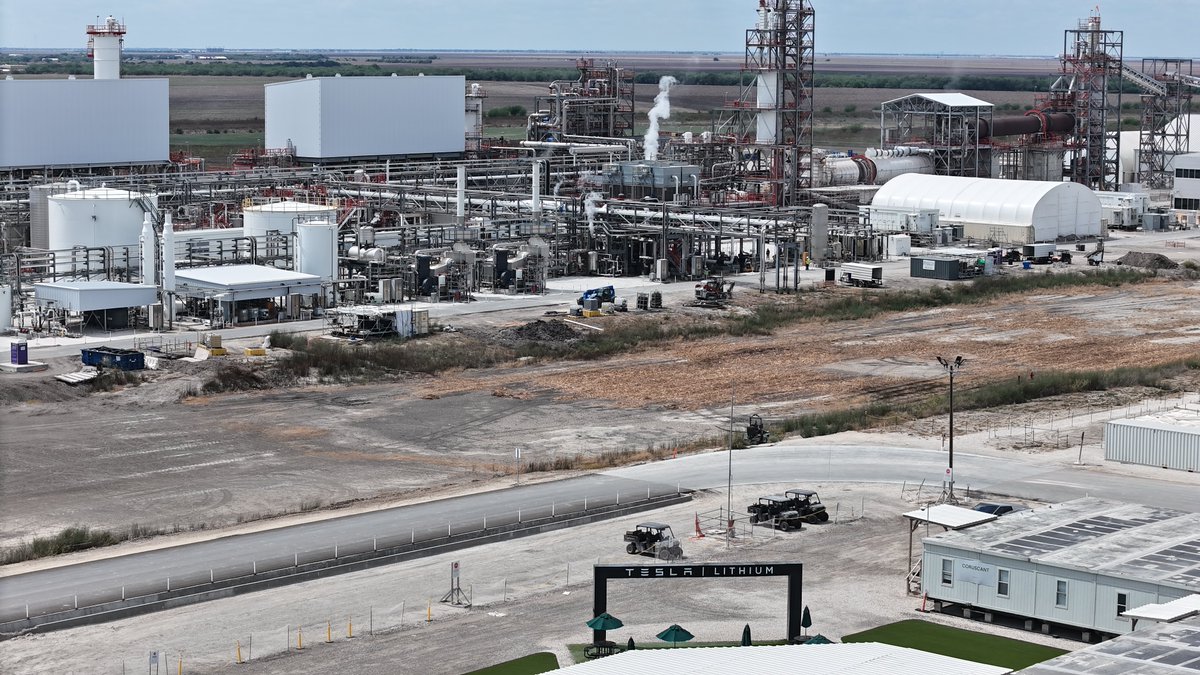
Tesla's supply chain ambitions just cleared a major threshold. The lithium refinery near Robstown, Texas — North America's largest — is now delivering battery-grade lithium hydroxide monohydrate (LiOH) directly to the cathode production facility inside Gigafactory Texas, closing the loop on an integrated domestic battery supply chain that the company has been building since 2023. Independent observer Joe Tegtmeyer documented the plant on September 26, 2026, noting the team has hit "massive milestones" in recent months.


How We Got Here
Construction on the Robstown refinery began in May 2023. Initial production started in December 2024, and the facility became operational in January 2026. The real inflection point came in July 2026, when Tesla held a public "Lithium Day" event at the site to mark full integrated operational capacity — the moment the plant crossed from ramp-up to steady-state output.
According to verified reporting, the refinery uses Tesla's proprietary alkaline leaching process — an acid-free method that the company says cuts greenhouse gas emissions by more than 30% compared to conventional lithium refining. The facility is rated at approximately 20,000 metric tons of battery-grade LiOH per year, enough to support roughly 30 GWh of battery production annually. Total capital investment exceeds $1 billion.

The Cathode Connection
The downstream destination for that LiOH is the cathode plant operating inside Gigafactory Texas — which Tesla describes as the first large-scale cathode production facility in the Americas. The cathode material produced there feeds directly into 4680 cell manufacturing, and both the anode and cathode for those cells now use Tesla's dry-electrode process.
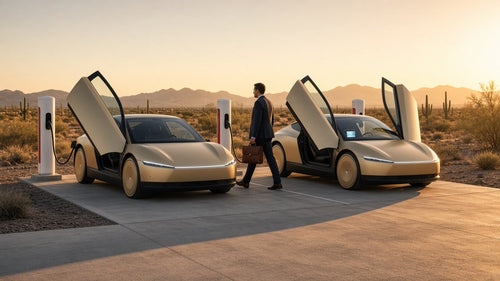
The real-world proof points arrived quickly. On September 4, 2026, Tesla confirmed the first Cybertruck built with 4680 cells containing lithium from the Gulf Coast refinery rolled off the production line. Less than three weeks later, on September 23, Tesla confirmed the first Cybercab produced using in-house manufactured cathode material from the same Giga Texas facility.
Supply Chain Milestones — Timeline
| Date | Milestone |
|---|---|
| May 2023 | Robstown refinery construction begins |
| December 2024 | Initial LiOH production |
| January 2026 | Refinery declared operational |
| July 16, 2026 | "Lithium Day" — full integrated capacity confirmed |
| September 4, 2026 | First Cybertruck with Texas-refined lithium in 4680 cells |
| September 23, 2026 | First Cybercab using in-house Giga Texas cathode material |
| September 26, 2026 | On-site documentation confirms continued ramp |

Why Vertical Integration at This Scale Matters
Most EV manufacturers still purchase cathode active material from third-party chemical suppliers — predominantly in Asia. Tesla is now doing the full journey in-house, from raw lithium processing on the Gulf Coast to cathode synthesis inside the same Texas campus where cells are manufactured and vehicles are assembled. That compression of the supply chain has two direct effects: it reduces Tesla's exposure to spot-market lithium price swings, and it gives the company tighter quality control over the electrochemical properties of its cells.
The 30 GWh of annual support capacity from the Robstown plant is meaningful context. For comparison, the entire U.S. EV market consumed roughly that order of magnitude in battery capacity across all manufacturers in recent years. Tesla isn't just building a refinery — it's building the infrastructure to underpin a much larger production footprint than it currently operates.

The Cybercab confirmation on September 23 is particularly telling. Tesla's robotaxi program depends on cost-competitive 4680 cells at scale — and the ability to source, refine, and process lithium domestically without relying on overseas supply chains is a structural cost advantage that compounds over time. Whether that advantage translates into faster Cybercab production ramp or lower cell costs per kWh will be the real test to watch in the quarters ahead.
🚕 Following the Robotaxi rollout? See every operating city, launch date and announced market in our Tesla Robotaxi Tracker.
Related Gear
Gear up your Cybertruck with tested, custom-fit BASENOR accessories — shop Cybertruck accessories →
Sources & reporting notes
The links below identify the material source records used for this report.
- @JoeTegtmeyer on X (2026-09-26T18:17:07.000Z) — Direct source
- @JoeTegtmeyer on X (2026-09-26T18:54:33.000Z) — Direct source
Source links are preserved as published or accessed. See our editorial standards and corrections policy.
The BASENOR Editorial Desk covers Tesla, SpaceX, and related technology, curating reporting from primary sources — official accounts, regulatory filings, and software release data. Every article passes source-record and fact-checking review before publication. About the newsroom.
This report was curated by the BASENOR Editorial Desk from the sources listed above. Read our editorial standards or email editorial@basenor.com to report an error.