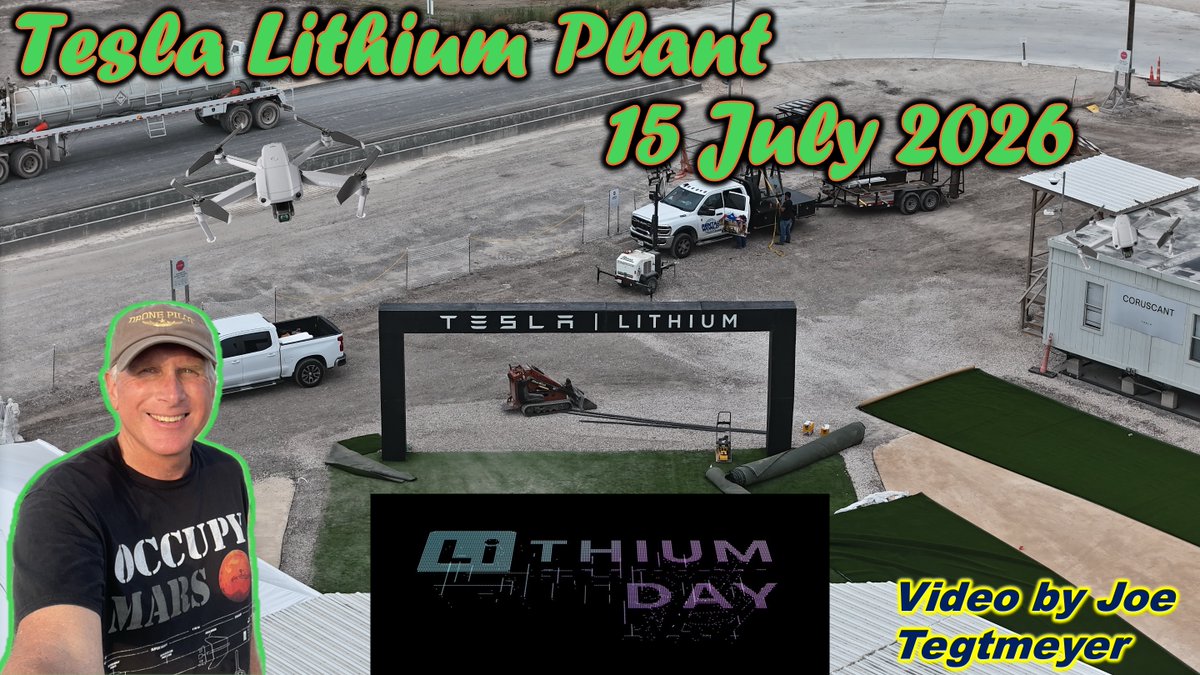
Tesla's lithium refinery in Corpus Christi, Texas — North America's first large-scale battery-grade lithium chemicals plant — is making a practical but telling infrastructure push. Drone footage captured on July 15, 2026, by aerial observer Joe Tegtmeyer shows crews actively laying both asphalt and concrete roadways across and around the operational facility. It's the kind of unglamorous work that signals a site is settling in for the long haul.

Why Roads Matter at an Industrial Site
It sounds mundane, but paved roadways are a meaningful operational milestone for a heavy-industry facility. Without them, a working lithium refinery generates constant dust and mud — both of which create real problems. Dust contaminates chemical processes and degrades equipment. Mud slows vehicle movement, complicates logistics, and creates safety hazards for the roughly 250 full-time staff the plant employs. Tegtmeyer noted in his post that the roadway work addresses exactly these conditions, calling the progress "great news" for the site.
The concerted push to pave roads throughout the plant — rather than just at entry points — suggests Tesla is moving past the raw construction phase and hardening the facility for sustained, high-volume operations. That's consistent with where the plant stands: it became operational in January 2026 and is currently in the process of ramping toward full capacity.
The Plant's Scale and Strategic Position
The context behind this infrastructure work is worth keeping in mind. According to multiple reports, the Tesla Lithium Refinery broke ground in May 2023 and represents an investment of over $1 billion in South Texas. The facility is designed to produce between 40,000 and 50,000 metric tons of lithium carbonate equivalent per year — enough battery-grade lithium hydroxide to supply approximately 1 million EVs annually at a 30 GWh annual capacity.
Beyond scale, the plant carries a process distinction: Tesla claims it deploys an acid-free lithium refining method industrially for the first time, eliminating hazardous byproducts that conventional hard-rock refining produces. Instead, the process yields anhydrite — a mineral co-product used in concrete mixes. Tesla has stated the approach cuts emissions by over 30 percent compared to traditional hard-rock methods, according to the company.
Securing domestic lithium refining capacity is a core part of Tesla's battery supply chain strategy. Dependence on overseas refining — primarily in China — has been a structural vulnerability for the broader EV industry. A fully operational, high-capacity refinery in Texas reduces that exposure directly.
Reading the Drone Footage
Tegtmeyer's drone flights have become a reliable window into the plant's progress over time. The July 15 footage doesn't show a dramatic new structure or a headline-grabbing reveal — it shows a facility methodically building out the infrastructure that makes day-to-day operations run cleanly and efficiently. That's actually the more meaningful signal at this stage of the ramp. A plant that's investing in internal road networks is a plant that expects heavy, sustained traffic — forklifts, tankers, delivery trucks — for years to come.
The next indicators to watch will be production throughput data and any announcements around offtake agreements or supply chain integrations. The roads being laid today are the foundation — literally — for the volumes Tesla needs this facility to deliver.
Related Gear
Gear up your Tesla with tested, custom-fit BASENOR accessories — shop Tesla accessories →
Sources & reporting notes
The links below identify the material source records used for this report.
- @JoeTegtmeyer on X (2026-07-17T04:48:41.000Z) — Direct source
Source links are preserved as published or accessed. See our editorial standards and corrections policy.
The BASENOR Editorial Desk covers Tesla, SpaceX, and related technology, curating reporting from primary sources — official accounts, regulatory filings, and software release data. Every article passes source-record and fact-checking review before publication. About the newsroom.
This report was curated by the BASENOR Editorial Desk from the sources listed above. Read our editorial standards or email editorial@basenor.com to report an error.