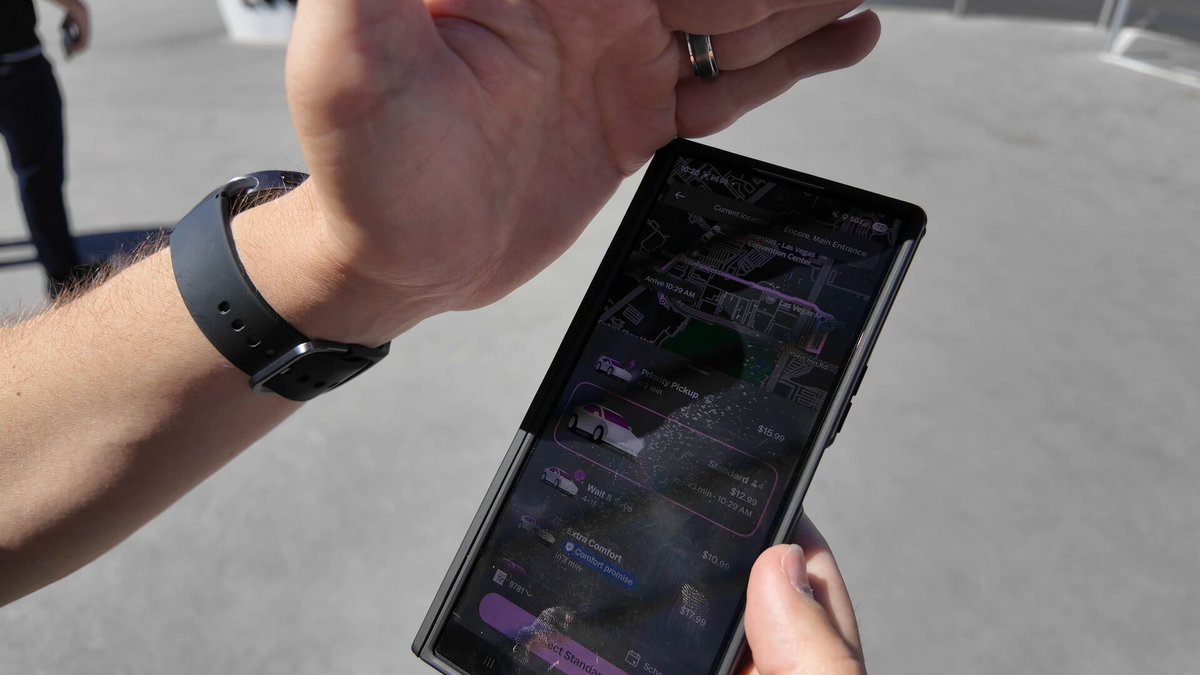
A single tweet from @DirtyTesLa put the math plainly: $13 and 10 minutes versus $4.50 and 1 minute for the same Las Vegas trip. That gap isn't a fluke — it shows up consistently across the Boring Company's expanding Vegas Loop network. Here are five numbers that explain why the Loop is quietly becoming the most cost-effective way to move around the Las Vegas Strip corridor.

1. $4.50 vs. $13 — the fare gap on a typical Strip trip
The tweet that sparked this comparison puts the headline number front and center: a Loop ride that would cost $4.50 runs $13 by Lyft for the same origin and destination. That's a 65% fare reduction. The Loop's pricing is fixed and per-vehicle — not per-person — so a group of four splits a cost that would otherwise multiply on a rideshare. According to verified fare data, resort-to-Convention Center rides are currently priced at $4.25 per vehicle, consistent with the figure cited in the tweet.
2. 1 minute vs. 10 minutes — what a dedicated tunnel actually buys you
The time comparison is arguably more striking than the price. A 10-minute surface trip — subject to Strip traffic, signals, and Uber pool detours — becomes roughly 1 minute underground. The Las Vegas Convention Center Loop, the system's flagship installation, reduces what was a 45-minute cross-campus walk to approximately 2 minutes, according to Boring Company data. At peak convention hours, when surface traffic is worst, that delta only grows.
3. $0 — the fare for LVCC campus rides during conventions
Convention attendees at the Las Vegas Convention Center pay nothing for rides within the LVCC campus. The Loop operates as a free shuttle during major events, which means the cost comparison against rideshare isn't just favorable — it's infinite. For the hundreds of thousands of attendees at events like CES, the Loop removes the rideshare decision entirely. This is the Boring Company's clearest proof-of-concept: high-frequency, zero-friction movement at scale.
4. $10–$20 million per mile — why Loop fares can stay low
The economics behind the low fares trace back to construction cost. The Boring Company reports tunneling costs of approximately $10–20 million per mile. Traditional subway infrastructure runs $900 million or more per mile in major U.S. cities, according to published transit data. That 45-to-90x cost reduction in construction translates directly into the operating model — the system doesn't need to charge subway-level fares to service debt on billion-dollar tunnels. The Tesla-based vehicles running the tunnels also have low per-mile operating costs relative to human-driven fleets.
5. $14 maximum — airport-to-hotel door-to-door pricing as of June 2026
As the Vegas Loop network has expanded toward Harry Reid International Airport, the fare ceiling for door-to-door airport service has been set at $14 per vehicle as of June 2026, according to verified fare data. That's competitive with — or below — base Lyft and taxi fares from the airport before surge pricing. Rides from Westgate and Resorts World to the airport are priced at $12. The airport connection is arguably the Loop's most commercially significant route: it's where rideshare pricing is most variable and where travelers are most sensitive to both cost and time.
The numbers above come from a network that is still expanding. As more resort and venue connections come online, the Loop's advantage compounds — each new station adds more origin-destination pairs where the fixed-fare, fixed-time model beats dynamic rideshare pricing. The tweet from @DirtyTesLa captured one data point, but the broader fare structure suggests it's representative, not cherry-picked.
Related Gear
Gear up your Tesla with tested, custom-fit BASENOR accessories — shop Tesla accessories →
Sources & reporting notes
The links below identify the material source records used for this report.
- @DirtyTesLa on X (2026-07-17T03:26:05.000Z) — Direct source
Source links are preserved as published or accessed. See our editorial standards and corrections policy.
The BASENOR Editorial Desk covers Tesla, SpaceX, and related technology, curating reporting from primary sources — official accounts, regulatory filings, and software release data. Every article passes source-record and fact-checking review before publication. About the newsroom.
This report was curated by the BASENOR Editorial Desk from the sources listed above. Read our editorial standards or email editorial@basenor.com to report an error.