📌 UPDATE — July 10, 2026
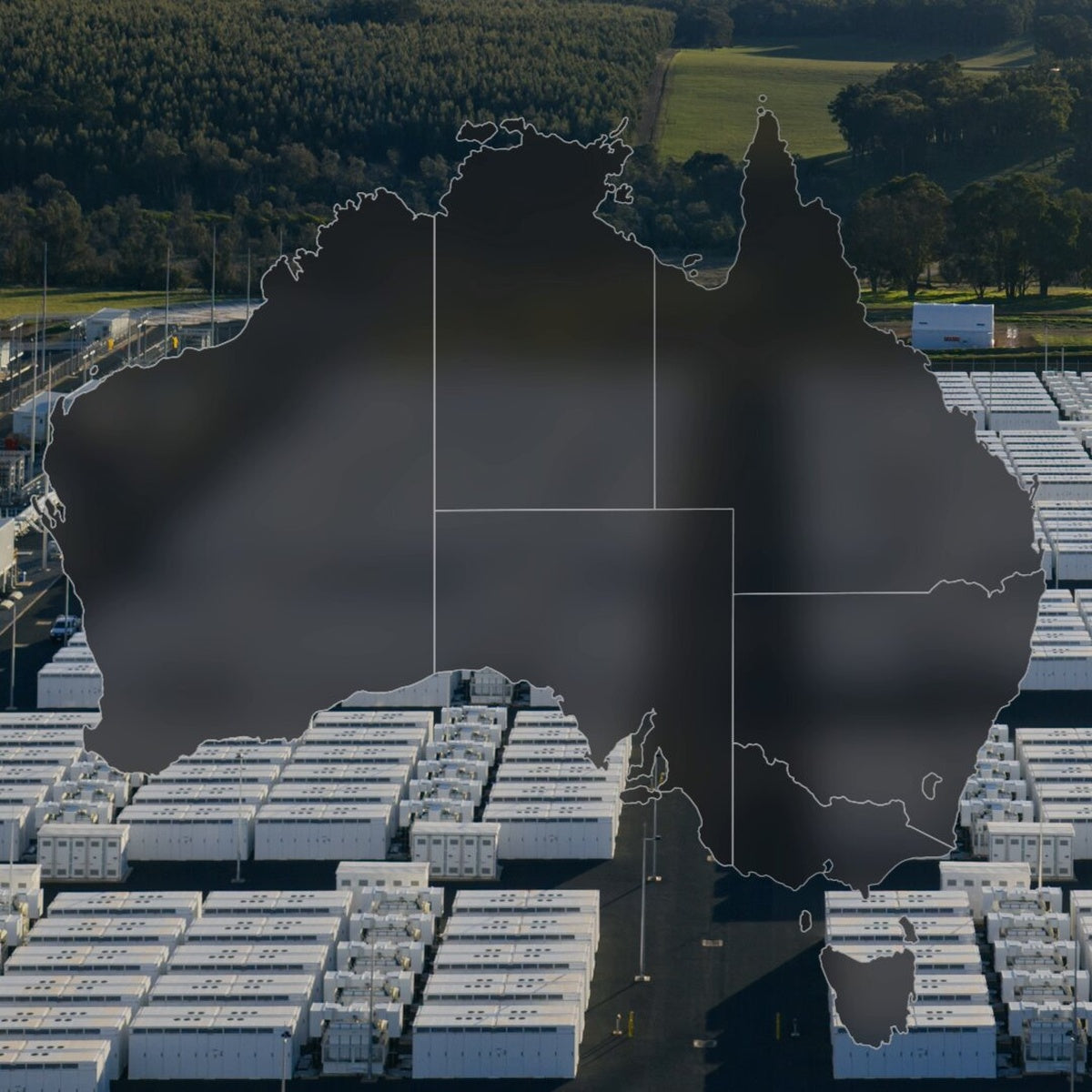
Tesla Megapack has hit a major cumulative milestone in Australia: 10 GWh of industrial energy storage is now operational across the country. To put that in perspective, Tesla equates it to the battery capacity of 160,000 Model Y vehicles. This total capacity figure goes well beyond the 4,130 MWh delivered through new projects in 2025 alone, reflecting the full stack of Megapack deployments built up across Australia over time. Tesla Megapack confirmed the milestone directly, noting "we're just getting started" — signalling further expansion is planned in the region.

@Tesla_Megapack · July 10, 2026 · View on X
Tesla's Megapack didn't just participate in Australia's utility-scale battery boom last year — it owned it. Ten of the 17 new projects that reached commercial operation in 2025 were Megapack deployments, delivering a combined 4,130 MWh and accounting for more than half of the country's new grid-scale storage capacity. For a market that grew 233% year-on-year, that's a commanding position.

How Australia Became Tesla Energy's Proving Ground
Australia's energy storage market didn't arrive at this moment by accident. The country commissioned 2 GW / 5.1 GWh of battery energy storage systems in 2025 — a 233% year-on-year increase — as grid operators scrambled to backstop an accelerating renewable buildout. According to industry research, Australia is now the world's third-largest utility-scale battery storage market, sitting behind only the US and China. That context makes Tesla's 59% project share even more striking: this isn't a niche market where a handful of installations can skew the numbers. It's a genuinely competitive, fast-moving arena.
The projects themselves span the continent. In Queensland, the Western Downs Battery's third and largest stage broke ground in February 2026, deploying 312 Tesla Megapack 2XL units to add 305 MW / 1,220 MWh — bringing that single facility's total to 845 MW / 2.3 GWh when it comes online in the 2027/28 Australian summer. In New South Wales, the Limondale BESS — built with 144 Megapacks — received full operational sign-off from AEMO and Transgrid in late May 2026, becoming the longest-duration battery storage system in the country. The Orana BESS, a 400 MW / 1.6 GWh Megapack facility in New South Wales, reached commercial operation in June 2026.
South Australia is where things get genuinely novel. Construction on the Goyder North battery began in December 2025, and it's expected to feature Tesla's new Megablock technology — four Megapack 3 units combined into a single 20 MWh block, a world-first deployment. If that architecture performs as intended at grid scale, it could meaningfully reduce installation complexity and cost for future projects.
The Numbers Behind the Story
| Metric | Figure |
|---|---|
| Megapack projects in Australia (2025) | 10 of 17 new projects |
| Megapack capacity delivered | 4,130 MWh |
| Share of commercial operations | >50% |
| Australia total BESS commissioned (2025) | 2 GW / 5.1 GWh |
| YoY market growth | +233% |
| Tesla global storage deployed (2025) | 46.7 GWh |
| Tesla Energy revenue (2025) | $12.8 billion (+26.6%) |
| Australia projected capacity by 2034 | 19.81 GW |
| AEMO utility-scale battery pipeline (Q1 2026) | 33.2 GW |
What This Signals for Tesla Energy's Trajectory
Tesla's energy division posted $12.8 billion in revenue for 2025 — a 26.6% increase — driven by a record 46.7 GWh deployed globally. Australia is a meaningful slice of that, but the more important signal is structural: Tesla is winning projects at the procurement stage, not just the manufacturing stage. The 4.3 GW of large-scale battery capacity that reached final investment decisions in Australia in 2025 — much of it Megapack — represents contracted future revenue, not speculation.
The Megablock architecture announced for Goyder North is worth watching closely. Combining four Megapack 3 units into a single 20 MWh pre-assembled block reduces the number of discrete installation steps on-site, which is one of the main cost variables in large BESS deployments. If it works at scale, it's a competitive moat — not just a product feature.
Australia's AEMO currently tracks a 33.2 GW utility-scale battery pipeline. At the current project win rate, Tesla is positioned to capture a significant portion of that buildout through the end of the decade. The market is projected to reach 19.81 GW by 2034 — roughly four times today's installed base. The question isn't whether Australia will keep building grid storage. It's whether any competitor can chip into Tesla's lead before that pipeline matures.
Related Gear
Gear up your Tesla with tested, custom-fit BASENOR accessories — shop Tesla accessories →
Sources & reporting notes
The links below identify the material source records used for this report.
- @Tesla_Megapack on X (2026-07-03T00:01:14.000Z) — Direct source
- @Tesla_Megapack on X (2026-07-10T18:48:01.000Z) — Direct source
Source links are preserved as published or accessed. See our editorial standards and corrections policy.
The BASENOR Editorial Desk covers Tesla, SpaceX, and related technology, curating reporting from primary sources — official accounts, regulatory filings, and software release data. Every article passes source-record and fact-checking review before publication. About the newsroom.
This report was curated by the BASENOR Editorial Desk from the sources listed above. Read our editorial standards or email editorial@basenor.com to report an error.