30-Second Brief
The News: Inflation-adjusted analysis shows the Tesla Model 3's current $36,990 price is equivalent to roughly $27,000 in 2016 dollars — cheaper than the original $35,000 promise.
Why It Matters: For Tesla owners and prospective buyers, the Model 3 has quietly become a better value proposition than most people realize — and it now starts below the $50,000 average price of a new car.
Source: @wholemars on X
The Tesla Model 3 Is Actually Cheaper Today Than When It Was Announced — Here's the Math
When Tesla first unveiled the Model 3 in March 2016, the $35,000 starting price was the headline. It was a bold promise: a mass-market electric vehicle priced right at the average cost of a new car at the time. A decade later, critics often point to the current $36,990 base price as evidence that Tesla hasn't delivered on affordability. The inflation-adjusted reality tells a very different story.

📊 Key Figures
| Metric | Value | Context |
|---|---|---|
| Model 3 announced price (2016) | $35,000 | Equal to avg. new car price then |
| Model 3 current price (2026) | $36,990 | Below avg. new car price today |
| $36,990 in 2016 dollars | ~$27,000 | $8k cheaper than originally promised |
| Average new car price (2016) | $35,000 | Model 3 was priced at market average |
| Average new car price (2026) | $50,000 | Model 3 now $13k below average |
The Numbers Most People Get Wrong
Here is the core misconception: comparing a 2016 dollar figure to a 2026 dollar figure without adjusting for inflation is like comparing apples to oranges. The US dollar has lost significant purchasing power over the past decade. When you apply standard inflation adjustments, today's $36,990 Model 3 is the equivalent of approximately $27,000 in 2016 money — a full $8,000 below what Tesla originally promised.
Put differently: Tesla has not raised the Model 3's price in real terms. It has lowered it — substantially.

The Market Comparison That Changes Everything
There is a second layer to this analysis that is equally striking. In 2016, the $35,000 Model 3 was positioned at roughly the average price of a new car in America. Tesla was not pitching a budget vehicle — it was pitching a mainstream one. A car for everyone, priced like everyone else's car.
Fast-forward to 2026, and the average price of a new car has climbed to $50,000. The Model 3 has stayed near its original nominal price point. That means the Model 3 now starts approximately $13,000 below the average new car — a dramatic shift in its competitive position that has nothing to do with Tesla cutting corners or discounting aggressively. The broader auto market simply inflated around it.
📐 The Affordability Shift at a Glance
2016: Model 3 announced at $35,000 → at the average new car price
2026: Model 3 priced at $36,990 → $13,000 below the average new car price
Inflation-adjusted: Today's price equals ~$27,000 in 2016 dollars → $8,000 cheaper than originally promised
🔭 The BASENOR Take
| Timeline | Model 3 announced March 2016 at $35,000; current base price $36,990 (2026) |
| Impact Level | 🟡 Medium — reframes the value narrative for prospective buyers |
| Confidence | 🟢 High — based on publicly available pricing and standard inflation methodology |
📰 Deep Dive
The inflation argument is not a PR spin — it is basic macroeconomics. The US has experienced meaningful cumulative inflation since 2016, and virtually every consumer product category has seen nominal price increases well above the Model 3's roughly $2,000 bump over the same period. The fact that Tesla has held the Model 3 close to its original price point while adding significant feature and performance improvements over successive generations is, by any objective measure, a strong value story.
What makes this analysis particularly relevant right now is the broader conversation about EV affordability. Critics of electric vehicles frequently cite sticker prices as a barrier to adoption. The Model 3 data complicates that narrative. When the benchmark for comparison is the average new car — not a stripped economy vehicle — the Model 3 is not just competitive; it is now meaningfully cheaper than what a typical American spends on a new vehicle.
There is also a feature-adjusted dimension worth considering. The Model 3 available today is a substantially more capable vehicle than what was promised in 2016. The current generation includes a refined interior, improved range, enhanced Autopilot hardware, and over-the-air update capability that has continuously improved the ownership experience. Buyers in 2026 are getting more car for fewer real dollars than the original announcement implied.
For anyone currently on the fence about a Model 3 purchase, the inflation-adjusted math is worth keeping in mind. The window where this vehicle is priced below the average new car is not guaranteed to stay open indefinitely — broader economic conditions, supply chain shifts, and future model updates could all move the price in either direction. On a purely relative basis, the Model 3's value position versus the broader new car market is as strong as it has ever been.
Related Gear
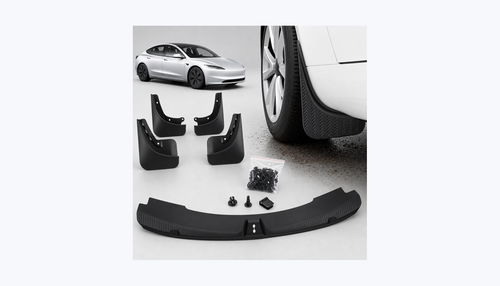
Gear up your Model 3 with tested, custom-fit BASENOR accessories — shop Model 3 accessories →
Sources & reporting notes
The links below identify the material source records used for this report.
- @wholemars on X (2026-04-01T03:46:39.000Z) — Direct source
- @wholemars on X (2026-04-01T03:45:17.000Z) — Direct source
Source links are preserved as published or accessed. See our editorial standards and corrections policy.
The BASENOR Editorial Desk covers Tesla, SpaceX, and related technology, curating reporting from primary sources — official accounts, regulatory filings, and software release data. Every article passes source-record and fact-checking review before publication. About the newsroom.
This report was curated by the BASENOR Editorial Desk from the sources listed above. Read our editorial standards or email editorial@basenor.com to report an error.