⚡ 30-Second Brief
The News: Tesla North America officially confirmed both Model 3 and Model Y now start below $40,000 and include Full Self-Driving (Supervised) trial capability.
Why It Matters: This pricing milestone makes Tesla's most popular vehicles more accessible than ever, potentially expanding the buyer pool while highlighting FSD as a key differentiator in the sub-$40K EV market.
Source: @tesla_na on X
📊 Key Figures
| Model | Starting Price | Context |
|---|---|---|
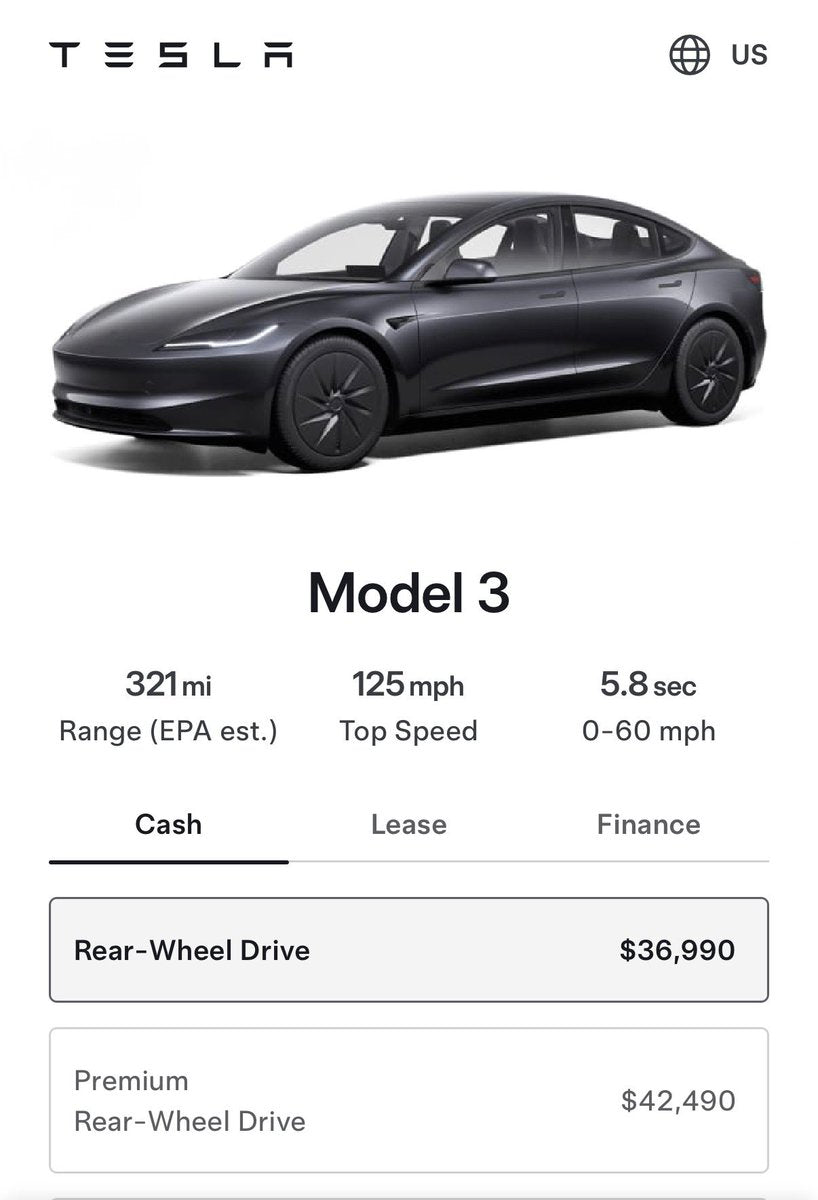
| Model 3 RWD | $36,990 | Vehicle price; $38,630 estimated purchase price with destination and order fees |
| Model Y | $39,990 | Base version; Long Range RWD effectively $39,130 after $7,500 federal tax credit |
| FSD Trial | 30 days free | Included with both models; $99/month subscription after trial ends |

🔭 The BASENOR Take
Timeline: Immediate impact — pricing active now
Impact Level: High for prospective buyers, Medium for current owners
Confidence: 95% — Direct confirmation from official Tesla North America account
Tesla North America's announcement represents more than just a marketing message — it's a strategic positioning play in an increasingly competitive EV landscape. By emphasizing the sub-$40K threshold, Tesla is directly addressing the psychological pricing barrier that has historically separated "affordable" vehicles from "premium" offerings.
The Model 3 Rear-Wheel Drive at $36,990 (base vehicle price) has been the company's entry point for some time, with an estimated purchase price of $38,630 after destination and order fees according to Tesla's configurator. What's notable is Tesla choosing to highlight this pricing publicly through its official North American account — a signal that the company wants to broaden market awareness of its accessibility.
The Model Y's position is more nuanced. Tesla recently introduced a base version priced at $39,990, while the Model Y Long Range Rear-Wheel Drive sits at $46,630 before incentives. With the $7,500 federal EV tax credit, the effective cost for qualifying buyers drops to $39,130 — just squeaking under the $40K mark that Tesla is now marketing.
The FSD Angle: A Trial That Could Reshape Perception
Equally significant is Tesla's decision to bundle the message with Full Self-Driving (Supervised) capability. The phrase "can drive themselves under supervision" is carefully worded — it's technically accurate while emphasizing capability over limitation.
Currently, both models include a 30-day free trial of FSD (Supervised). This trial period is critical because it allows new owners to experience advanced driver assistance features that would otherwise require a $99/month subscription. As of February 14, 2026, Tesla transitioned FSD to a subscription-only model, eliminating the previous $8,000 one-time purchase option.
For buyers evaluating Tesla against competitors in the sub-$40K segment, the FSD trial becomes a differentiator that most rival manufacturers cannot match. While the feature requires active driver supervision and doesn't make the vehicle autonomous, the 30-day window gives owners a taste of capabilities like Navigate on Autopilot, Auto Lane Change, and Autopark.
What This Means for the EV Market
Tesla's emphasis on the $40K threshold isn't arbitrary. This price point represents a critical mass-market segment where monthly payments become manageable for median-income households, especially when combined with available tax incentives and potential fuel savings compared to combustion vehicles.
The announcement also arrives during a period when EV adoption rates are being closely watched. By highlighting affordability alongside advanced technology (FSD trial), Tesla is addressing two common objections: "EVs are too expensive" and "Tesla's tech isn't worth the premium."
For current Tesla owners, this pricing confirmation may raise questions about residual values and market positioning. However, it's worth noting that the Model 3 pricing has been relatively stable in recent months, while the Model Y base version represents a newer configuration option rather than a price cut on existing trims.
The Subscription Strategy
Tesla CEO Elon Musk has indicated that FSD subscription pricing will increase as the system's capabilities improve. The current $99/month rate positions FSD as a premium add-on that, over a typical 6-year ownership period, would cost approximately $7,128 — comparable to the previous one-time purchase price but with the flexibility to cancel if the feature doesn't meet expectations.
This subscription model also creates a recurring revenue stream for Tesla, potentially improving the company's service attachment rates and customer lifetime value metrics that investors increasingly scrutinize.
📰 Deep Dive
Tesla North America's decision to publicize the under-$40K positioning for both Model 3 and Model Y reveals a company increasingly focused on volume and market penetration. While Tesla has long positioned itself as a premium brand, the acknowledgment of aggressive pricing suggests a shift toward capturing broader market share as competition intensifies from both legacy automakers and EV-focused startups.
The timing of this announcement is particularly interesting given the current state of the EV market in early 2026. With several manufacturers launching or expanding their sub-$40K electric offerings, Tesla appears to be proactively reinforcing its value proposition. The Model 3, already the best-selling EV in North America for multiple consecutive years, becomes even more competitive at its current price point. The Model Y, consistently ranking among the top-selling vehicles of any powertrain type, now has a configuration that can legitimately claim the same affordability benchmark.
What makes this positioning especially effective is the inclusion of the FSD trial message. By framing these vehicles as not just affordable but also technologically advanced ("can drive themselves under supervision"), Tesla is attempting to avoid the perception that lower prices mean compromised features. The 30-day FSD trial serves as both a product differentiator and a potential conversion funnel for the $99/month subscription.
For prospective buyers currently shopping in the $35K-$45K range, Tesla's announcement creates a compelling consideration set. The effective pricing after federal tax credits makes both models accessible to a wider audience than the sticker prices might suggest. Combined with Tesla's established Supercharger network, generally high owner satisfaction ratings, and the opportunity to trial advanced driver assistance features, the value equation becomes harder for competitors to match at similar price points.
Related Gear
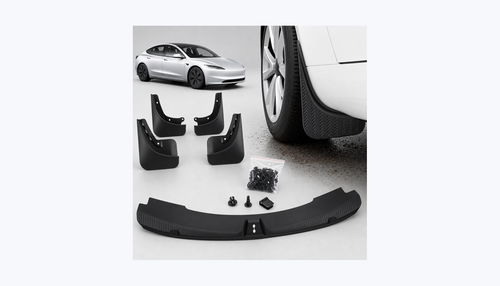
Gear up your Model 3 with tested, custom-fit BASENOR accessories — shop Model 3 accessories →
Sources & reporting notes
The links below identify the material source records used for this report.
- @tesla_na on X (2026-02-11T02:06:51.000Z) — Direct source
Source links are preserved as published or accessed. See our editorial standards and corrections policy.
The BASENOR Editorial Desk covers Tesla, SpaceX, and related technology, curating reporting from primary sources — official accounts, regulatory filings, and software release data. Every article passes source-record and fact-checking review before publication. About the newsroom.
This report was curated by the BASENOR Editorial Desk from the sources listed above. Read our editorial standards or email editorial@basenor.com to report an error.