30-Second Brief
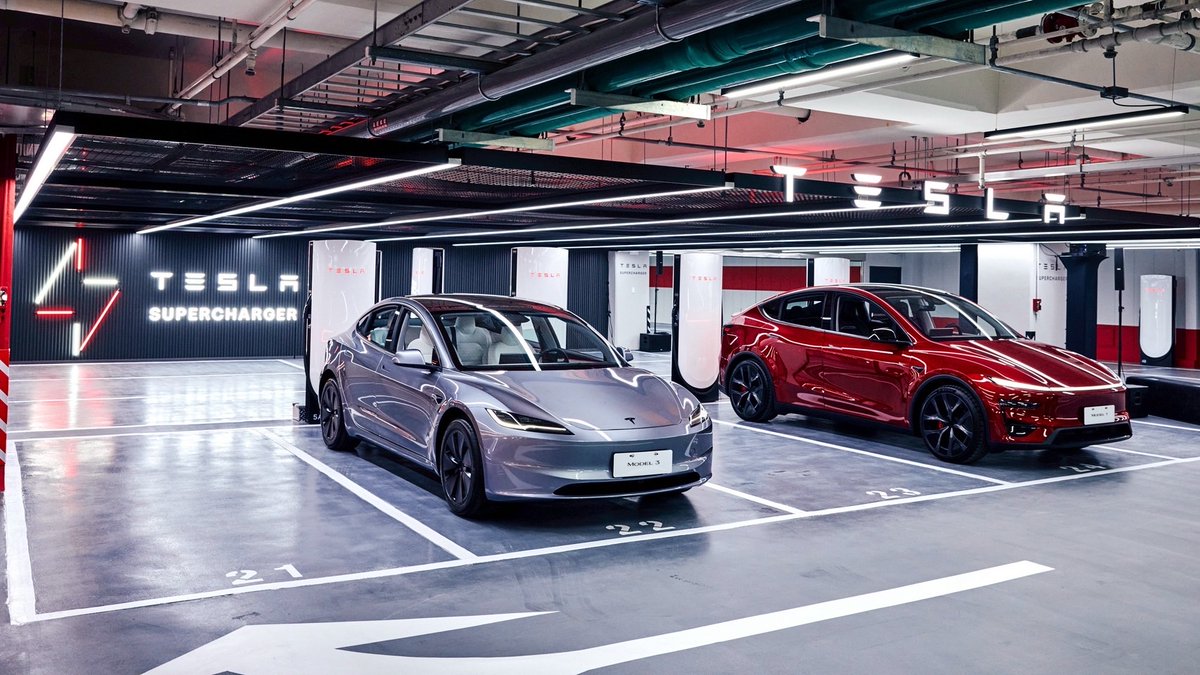
The News: Tesla has officially opened a new 18-stall Supercharger station at Taipei Dome, marking Taiwan's first V4 Supercharger installation and the country's largest charging hub to date.
Why It Matters: This milestone represents Tesla's 700th Supercharger stall in Taiwan and signals accelerated infrastructure expansion across the island, with 125 total stations targeted by year-end 2026.
Source: @TeslaCharging on X
🔌 The Installation
Tesla Charging announced the opening via its official account, confirming the high-capacity installation at one of Taipei's most recognizable landmarks.

The station is located on the B1 level of the Taipei Dome, providing convenient access for Tesla owners visiting the multi-purpose arena, which hosts concerts, sports events, and exhibitions. According to verified reports, the installation went live on February 11, 2026, making it Taiwan's first deployment of Tesla's V4 Supercharger hardware.
📊 Key Figures
| Metric | Figure | Context |
|---|---|---|
| Stall Count | 18 stalls | Largest single station in Taiwan |
| Hardware Version | V4 | First V4 deployment in Taiwan |
| Maximum Power | 250 kW | 120 km range in 5 min, 300+ km in 15 min |
| Taiwan Milestone | 700th stall | Total Supercharger stalls across Taiwan |
| 2026 Target | 125 stations | Planned total stations by end of 2026 |
🚀 V4 Technology Arrives in Taiwan
The V4 Supercharger represents Tesla's latest charging hardware iteration, featuring several upgrades over the widely-deployed V3 stations. According to verified technical specifications, V4 stalls deliver up to 250 kW of charging power—sufficient to add 120 km of range in just 5 minutes, or over 300 km in a 15-minute charging session for compatible Tesla vehicles.
One of the most owner-friendly improvements in V4 hardware is the longer cable design. Previous V3 installations sometimes required precise parking to align charging ports, particularly challenging for Model S and Model X owners whose ports are located on the driver's side rear quarter panel. V4's extended cables accommodate varied port locations across Tesla's vehicle lineup and, in some markets, support charging for non-Tesla EVs.
The Taipei Dome installation marks the first time Taiwan-based Tesla owners can experience this next-generation hardware. As of early 2026, V4 deployments remain relatively limited globally compared to the V3 network, making this a significant infrastructure milestone for the island market.
🎯 Strategic Location Selection
Taipei Dome stands as one of the city's premier entertainment and sports venues, drawing thousands of visitors for concerts, exhibitions, and sporting events. The basement-level placement of 18 Supercharger stalls transforms the venue into a dual-purpose destination: attendees can charge their vehicles while enjoying events, and the station serves as a high-capacity urban charging hub even during non-event periods.
This installation strategy aligns with Tesla's broader approach of placing Superchargers at high-traffic destinations rather than solely along highway corridors. Urban destination charging reduces range anxiety for city-based owners and supports longer dwell times compared to traditional gas station models.
According to verified reports, Tesla offered a promotional launch period from February 11-13, 2026, providing free charging and parking to Tesla owners who shared photos of the new station on social media while tagging Tesla Taiwan. This gamified marketing approach drives awareness while collecting user-generated content for the brand.
🔭 The BASENOR Take
Timeline: Immediate impact. V4 hardware is now accessible to Taiwan-based owners, and the 18-stall capacity addresses charging congestion in Taipei's urban core.
Impact Level: HIGH for Taiwan market. This installation represents both a hardware generation leap (V3 → V4) and a 2.5% increase in Taiwan's total Supercharger stall count in a single deployment.
Confidence: CONFIRMED. Official Tesla Charging account announcement with verified opening details from multiple Taiwan-based news sources.
Infrastructure velocity matters. Tesla's stated goal of reaching 125 stations across Taiwan by end-of-2026 implies adding roughly 40-50 new stations over the next 10 months—an aggressive expansion pace for an island market of approximately 23.5 million people. For context, the 700-stall milestone means Taiwan now averages roughly one Supercharger stall per 33,500 residents, approaching parity with mature Tesla markets.
The V4 hardware choice signals long-term thinking. While V4 currently operates at 250 kW (matching V3 peak power), the architecture supports future upgrades. Tesla has demonstrated V4 cabinets capable of delivering higher power levels in other markets, and the longer cables future-proof the installation for potential non-Tesla EV charging if regulatory or business conditions shift.
Watch the network effect. Each high-capacity urban installation like Taipei Dome reduces the effective "distance" between chargers from an owner's perspective. Eighteen stalls dramatically lower the probability of arriving to a fully occupied station during peak hours—a common pain point at older 4-8 stall locations. This reliability improvement compounds the value of Taiwan's existing Supercharger network.
📰 Deep Dive
Tesla's Taiwan expansion trajectory reveals a market-specific strategy that differs from the company's North American playbook. Rather than prioritizing long-distance highway corridors first, the Taiwan network emphasizes high-density urban installations that serve daily charging needs for owners without home charging access. The Taipei Dome installation exemplifies this approach: it's not a highway rest stop, but a destination that integrates charging into existing urban activities.
The 125-station target by end-of-2026 also suggests Tesla views Taiwan as a testbed for rapid V4 rollout. If the company maintains current deployment pace, Taiwan could achieve higher V4 penetration than larger markets where V3 infrastructure remains dominant. This creates a natural upgrade cycle: as V3 stations age and require maintenance, Taiwan's newer V4 fleet will set service expectations that influence global standards.
From a competitive standpoint, this installation arrives as legacy automakers accelerate EV launches in Taiwan. The charging infrastructure gap remains the primary barrier to mass EV adoption across Asia-Pacific markets. By establishing a 700+ stall network before competitors build meaningful fast-charging alternatives, Tesla creates a structural moat that's expensive and time-consuming to replicate. An owner choosing between a Tesla and a competitor EV now factors in access to 18 reliable stalls at Taipei Dome versus hoping third-party networks expand to similar scale.
The promotional launch strategy—free charging in exchange for social media posts—demonstrates Tesla's continued reliance on word-of-mouth marketing in markets where traditional advertising remains minimal. Each tagged photo extends organic reach to potential buyers who see real owners using premium infrastructure, not paid celebrity endorsements. It's a low-cost customer acquisition strategy that works precisely because the underlying product (V4 Superchargers at a premier venue) delivers tangible value worth sharing.
Related Gear
Gear up your Tesla with tested, custom-fit BASENOR accessories — shop Tesla accessories →
Sources & reporting notes
The links below identify the material source records used for this report.
- @TeslaCharging on X (2026-02-12T08:26:31.000Z) — Direct source
Source links are preserved as published or accessed. See our editorial standards and corrections policy.
The BASENOR Editorial Desk covers Tesla, SpaceX, and related technology, curating reporting from primary sources — official accounts, regulatory filings, and software release data. Every article passes source-record and fact-checking review before publication. About the newsroom.
This report was curated by the BASENOR Editorial Desk from the sources listed above. Read our editorial standards or email editorial@basenor.com to report an error.