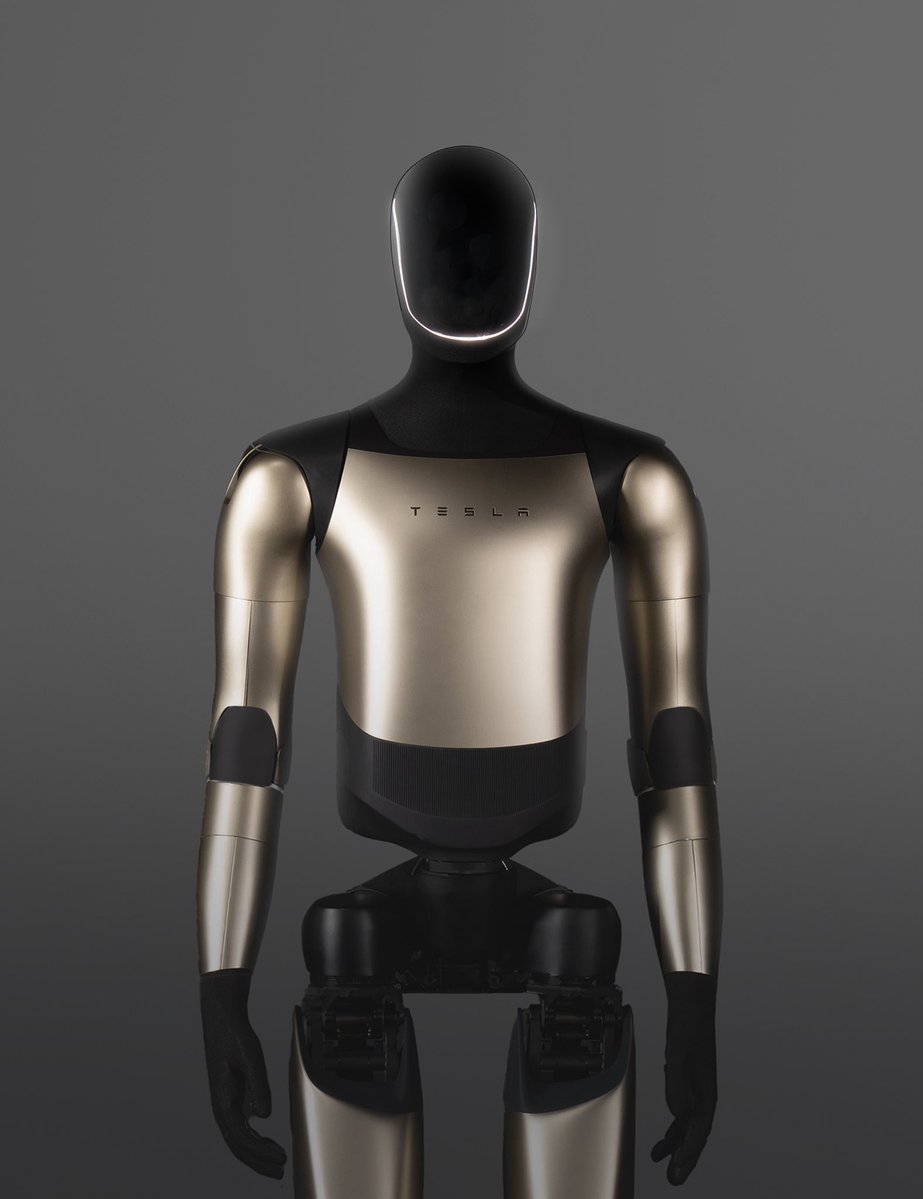
Tesla's humanoid robot program just cleared a significant milestone. According to a report from The Information, Optimus V3 production has increased roughly tenfold in recent months — from a few dozen units per week to several hundred — and the company is now targeting a continuous automated line capable of exceeding 1,000 units per week before the end of 2026. Here's what the numbers actually tell us.
1. The 10x ramp is real — and recent
Production of Optimus V3 at Tesla's Fremont factory climbed from "a few dozen" units per week in Q2 2026 to "several hundred" per week by August, according to The Information. That's not incremental progress — a tenfold increase in roughly two to three months reflects a deliberate push to stress-test the production line before committing to the next scale-up. The speed of the ramp matters as much as the number itself.
2. The 1,000-unit/week target is an end-of-year goal, not a current rate
Tesla managers are reportedly aiming for a continuous automated production line capable of building more than 1,000 Optimus robots per week by the end of 2026. That's roughly a 3–5x jump from August's "several hundred" baseline. Supply-chain reporting from earlier in September indicated Tesla had already ordered parts for approximately 15,000 Optimus units for the full year — consistent with a late-year rate approaching 1,000 per week.

3. The Fremont line was purpose-built for this moment
Tesla converted its former Model S and Model X production lines at Fremont to Optimus manufacturing in early May 2026. That conversion wasn't a stopgap — the Fremont line carries an annual capacity target of 1 million units. What's being built and refined right now is the production system itself: the tooling, the automation, the supplier relationships. Getting to 1,000 units per week is as much about proving the process as it is about shipping robots.
4. These units are not yet the finished commercial product
The V3 robots currently rolling off the Fremont line are not the final version intended for broad commercialization. According to background reporting, they still need to clear stricter durability and reliability thresholds before Tesla can confidently lease them to external customers. For now, the vast majority of units are being used internally — for testing, AI training, and data collection inside Tesla's own facilities, confined to tightly controlled, supervised areas.
5. The hands remain the hardest part to scale
Production challenges are concentrated in Optimus's hands — 50-actuator, 22-degree-of-freedom assemblies that were confirmed production-ready in February 2026. The intricate assembly process, supplier constraints, and occasional failures of automated equipment are the primary bottlenecks slowing the ramp. This is the kind of problem that gets solved through volume: more units built means more failure modes identified and eliminated. The 10x ramp itself is partly a data-gathering exercise.
6. Gigafactory Texas is where the real scale happens
The Fremont line is a proving ground. The long-term production story is at Gigafactory Texas, where a dedicated Optimus factory is under construction with an eventual annual capacity target of 10 million units and mass production targeted for 2027. Tesla's stated 2026 production goal of 50,000–100,000 units will largely be a Fremont story; anything beyond that requires Texas to come online. How quickly the Texas facility ramps will be the defining variable for Optimus's commercial trajectory over the next two years.
Tesla has not publicly commented on the production figures reported by The Information, and no official unit counts have been published. But the supply-chain data, the converted Fremont line, and the internal deployment footprint all point in the same direction: this is no longer a prototype program. The question now is whether the production system can keep pace with the ambition.
🤖 Tracking Tesla's humanoid robot? See every Optimus production milestone and appearance in our Tesla Optimus Tracker.
Related Gear
Gear up your Tesla with tested, custom-fit BASENOR accessories — shop Tesla accessories →
Sources & reporting notes
The links below identify the material source records used for this report.
- @wholemars on X (2026-09-25T19:32:47.000Z) — Direct source
- @TeslaNewswire on X (2026-09-25T19:56:06.000Z) — Direct source
Source links are preserved as published or accessed. See our editorial standards and corrections policy.
The BASENOR Editorial Desk covers Tesla, SpaceX, and related technology, curating reporting from primary sources — official accounts, regulatory filings, and software release data. Every article passes source-record and fact-checking review before publication. About the newsroom.
This report was curated by the BASENOR Editorial Desk from the sources listed above. Read our editorial standards or email editorial@basenor.com to report an error.