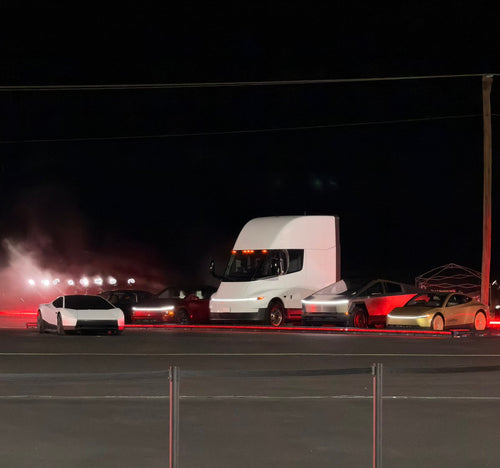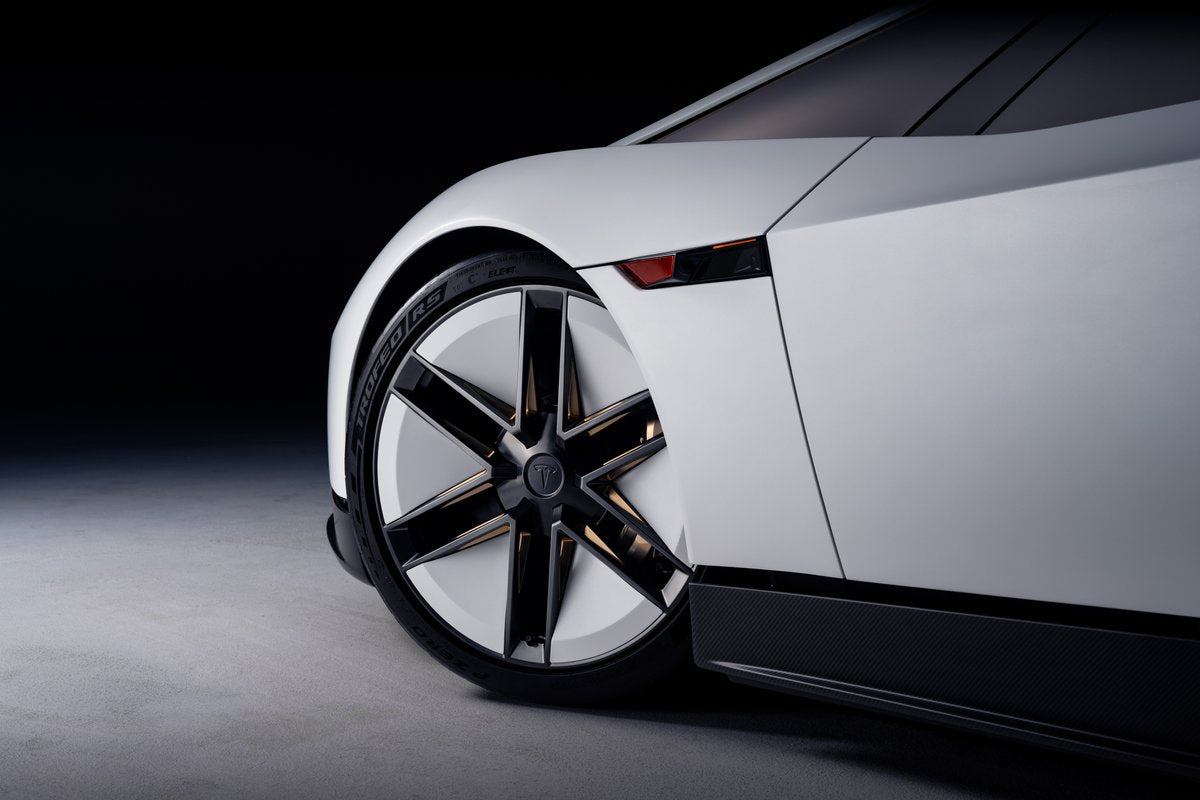
A small but telling design detail is drawing attention across the Tesla community: the Roadster and the Cybercab — two vehicles separated by price, purpose, and powertrain configuration — appear to share the same approach to side repeater cameras. Both units feature camera housings that visibly protrude from the bodywork rather than sitting flush with the panel surface.

A Design Language Starting to Take Shape
The observation, flagged by Whole Mars Catalog on X, is straightforward on the surface — but it carries some weight when you consider how deliberately Tesla tends to engineer exterior elements. The Cybercab was designed from the ground up for autonomous operation, which means it has no traditional side mirrors at all. In their place, camera pods on each front fender handle side visibility. Those pods, spotted on Cybercab prototypes as recently as late 2025, were described at the time as having been repositioned slightly forward, presumably to improve their field of view.
The Roadster, re-revealed in October 2026, was pitched by Tesla around a "hidden-aero approach" — concealed headlights, a full-width taillight, and flush-mounted aerodynamic surfaces intended to give the car a deceptively clean silhouette. That framing makes the protruding side repeaters an interesting exception. Tesla clearly made a deliberate choice to let those camera housings stand proud of the bodywork rather than integrating them into a panel recess.
Function Over Flush
The likely explanation is practical. Camera-based side visibility systems need unobstructed sightlines — a housing that sits proud of the fender can achieve a wider effective field of view than one recessed behind a body line. On the Cybercab, where cameras are the only means of monitoring lateral traffic, that field of view is safety-critical. On the Roadster, which is a performance car that will presumably be driven in close-quarters track and road scenarios, the same logic applies.
What's notable is that Tesla appears to have landed on the same hardware solution for two vehicles that are otherwise very different in character. That kind of cross-platform component sharing is standard practice in the industry, but it's less common to see it surface so visibly in exterior styling. If the repeater housings are functionally identical — or close to it — there are obvious manufacturing and supply chain advantages to standardizing them across models.
What It Suggests About Upcoming Tesla Design
Tesla has been moving away from traditional side mirrors across its newer vehicle programs. The Cybercab has none by design. The Roadster's configuration hasn't been fully detailed yet, but the presence of dedicated camera repeaters suggests mirrors may be absent or vestigial on that car as well — pending regulatory approval in each market. Camera monitoring systems (CMS) are now accepted as mirror substitutes in the EU and several other jurisdictions, though U.S. federal rules still technically require mirrors on most road vehicles.
If Tesla is standardizing a repeater camera form factor across the Roadster and Cybercab, it would be consistent with a broader push to unify hardware across platforms — the same philosophy that drove the consolidation of compute hardware and wiring architecture across Model 3, Model Y, and Cybertruck. A shared repeater design also makes it easier to run a common software stack for side-camera processing, which matters when FSD and the underlying vision pipeline need to interpret inputs from multiple vehicle types.
It's a small detail in isolation. But small details, when they repeat across unrelated products, tend to be early signals of a deliberate platform strategy — and Tesla's track record suggests this one is worth watching as more Roadster and Cybercab production details emerge.
🚕 Following the Robotaxi rollout? See every operating city, launch date and announced market in our Tesla Robotaxi Tracker.
Related Gear
Gear up your Tesla with tested, custom-fit BASENOR accessories — shop Tesla accessories →
Sources & reporting notes
The links below identify the material source records used for this report.
- @wholemars on X (2026-10-16T09:24:23.000Z) — Direct source
Source links are preserved as published or accessed. See our editorial standards and corrections policy.
The BASENOR Editorial Desk covers Tesla, SpaceX, and related technology, curating reporting from primary sources — official accounts, regulatory filings, and software release data. Every article passes source-record and fact-checking review before publication. About the newsroom.
This report was curated by the BASENOR Editorial Desk from the sources listed above. Read our editorial standards or email editorial@basenor.com to report an error.