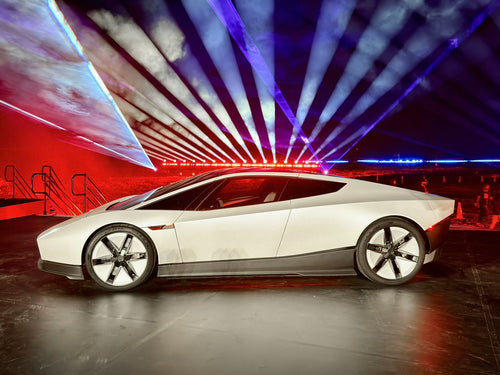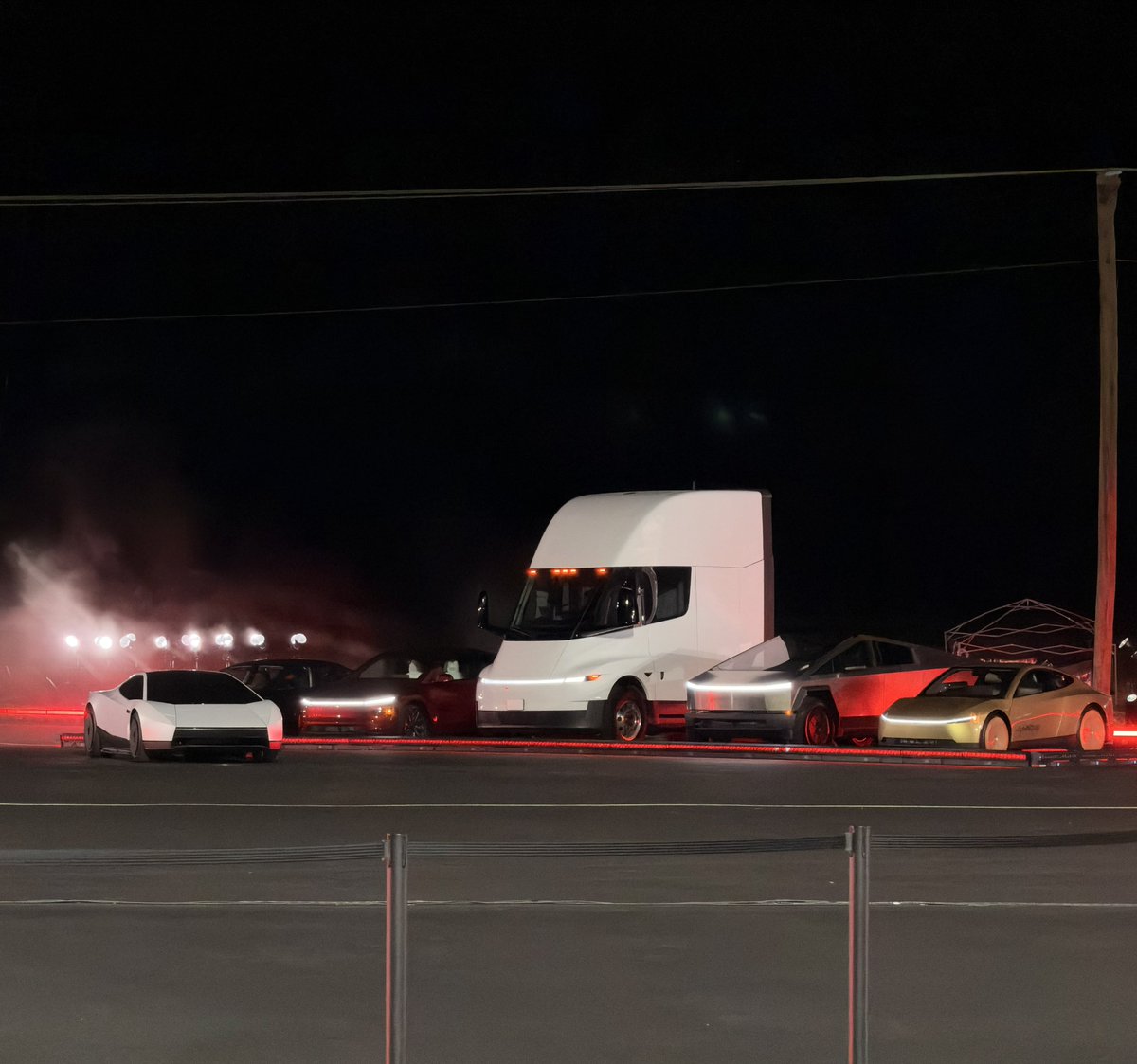
A visual of Tesla's future vehicle lineup is making the rounds — and sharp-eyed observers immediately noticed what's not in it: the Robovan. Sawyer Merritt flagged the omission on October 15, 2026, reigniting questions about where Tesla's autonomous people-mover actually stands in the product roadmap.

The Robovan isn't vaporware — it was officially unveiled at Tesla's "We, Robot" event in October 2024 — but its path to production has remained conspicuously vague. Here are five details that put the omission in context.
1. The Robovan Was Officially Unveiled Nearly Two Years Ago
Tesla pulled the wraps off the Robovan concept on October 10, 2024, at Warner Brothers Studio in Los Angeles during the "We, Robot" event. Elon Musk stood in front of it and said plainly: "We're going to make this, and it's going to look like that." That statement set expectations — but it didn't come with a production date, a price, or a reservation window. Two years on, those specifics remain unconfirmed.
2. The Design Is Deliberately Radical
The Robovan isn't a stretched Model Y. The prototype shown in 2024 carries up to 20 passengers, features gull-wing doors, and has no steering wheel or pedals — it's fully autonomous by design. It doubles as a cargo van, which gives Tesla a potential play in last-mile logistics as well as mass transit. Musk has also specifically cited accessibility for passengers with disabilities as a design priority, which points to a vehicle built for a different use case than anything currently in the lineup.
3. Musk Reaffirmed It as Recently as Late 2025
In November 2025, a viral clip of the Robovan's debut resurfaced and Musk responded with two words: "It's coming." He also referenced the vehicle at Tesla's 2025 Shareholder Meeting, hinting at timelines that could reshape urban logistics. Those comments kept the Robovan alive in the conversation — but they also underscored that the project is still in a pre-production phase without a locked schedule. Some external reports have speculated on a target around 2028, though Tesla has not confirmed that figure.
4. The Cost-Per-Mile Ambition Is the Real Story
Tesla has floated a target of under $0.20 per mile for Robovan rides — a number that, if achievable at scale, would undercut virtually every existing transit option. That economics case depends entirely on full autonomy working reliably in dense urban environments, which is the same prerequisite as the Cybercab. The Robovan's production timeline is therefore tied closely to how quickly Tesla's unsupervised FSD progresses through regulatory approvals and real-world deployment. The vehicle can't deliver on its promise without the software catching up first.
5. Its Absence From the Lineup Visual Isn't Necessarily a Demotion
It's worth being precise about what Merritt's post actually shows: a visual representation of Tesla's future lineup that doesn't include the Robovan. Tesla has not issued a statement confirming or denying the accuracy of that graphic, and no official lineup document has been published. The omission could reflect the Robovan's genuinely uncertain production timeline, or it could simply mean the graphic predates or excludes vehicles without confirmed launch windows. Reading it as a cancellation signal would be a stretch — but reading it as confirmation the Robovan is on track would be equally unsupported.
The honest summary: the Robovan exists as a concept with serious intent behind it, but it remains the least-defined vehicle in Tesla's pipeline. Until Tesla assigns it a production date or opens reservations, it occupies a category of its own — confirmed in spirit, undefined in practice.
Related Gear
Gear up your Tesla with tested, custom-fit BASENOR accessories — shop Tesla accessories →
Sources & reporting notes
The links below identify the material source records used for this report.
- @SawyerMerritt on X (2026-10-16T03:47:43.000Z) — Direct source
Source links are preserved as published or accessed. See our editorial standards and corrections policy.
The BASENOR Editorial Desk covers Tesla, SpaceX, and related technology, curating reporting from primary sources — official accounts, regulatory filings, and software release data. Every article passes source-record and fact-checking review before publication. About the newsroom.
This report was curated by the BASENOR Editorial Desk from the sources listed above. Read our editorial standards or email editorial@basenor.com to report an error.