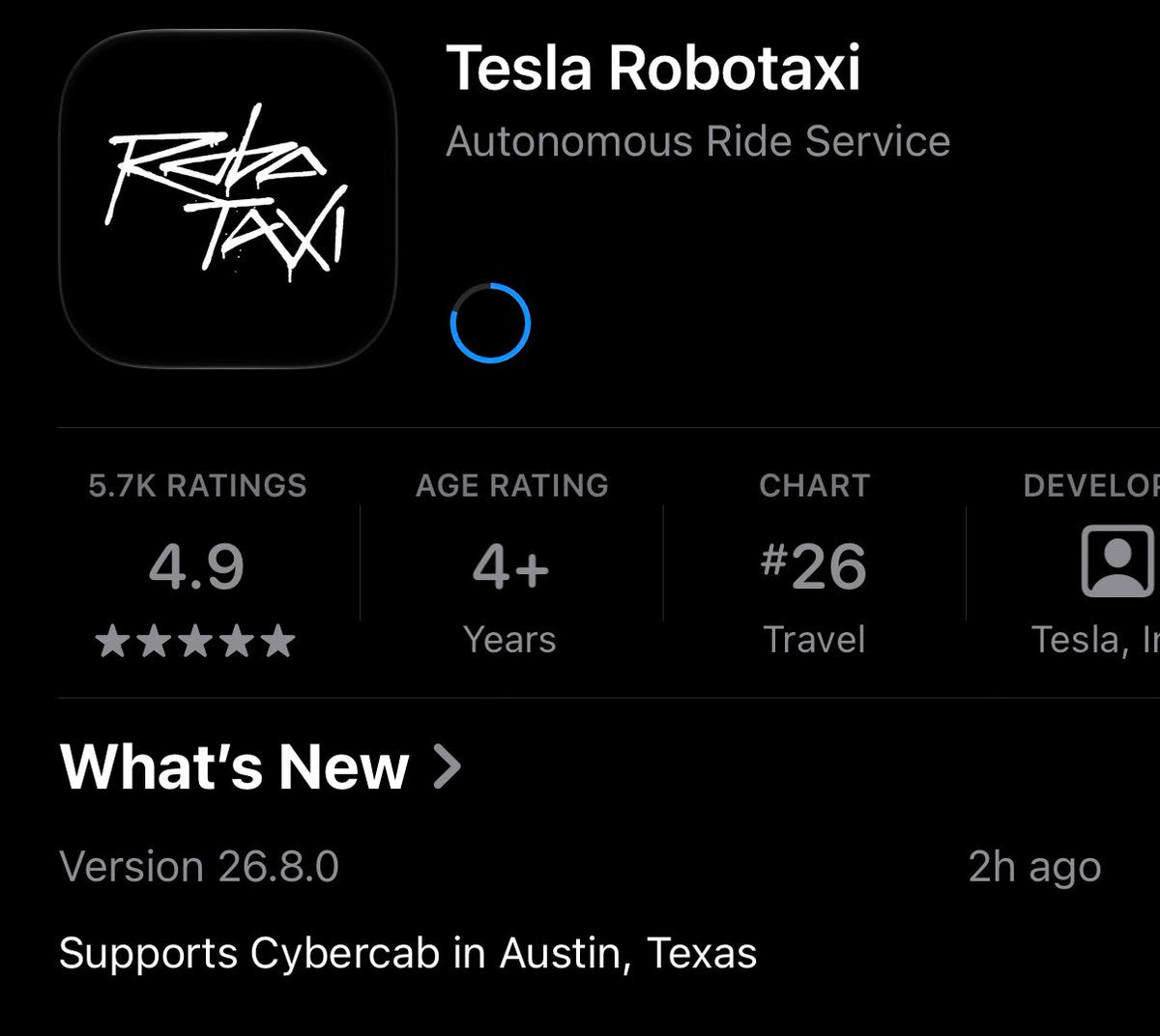
Tesla has pushed a Robotaxi app update that officially adds Cybercab support, marking the moment the purpose-built two-seat autonomous vehicle becomes hailable alongside the existing Model Y fleet. The update also introduces a seating-capacity indicator, a small but revealing UI change that signals Tesla now expects riders to choose between vehicle types with different passenger limits.
The app changes were surfaced by Whole Mars Catalog on the morning of September 3, 2026 — the same day Tesla is holding its invite-only Cybercab launch event in Austin, Texas. Together, the two updates confirm that the Cybercab has crossed from prototype to a live component of Tesla's autonomous ride-hailing network.

What the App Update Actually Does
Two concrete changes are visible in the update. First, Cybercab is now a selectable, hailable vehicle type inside the existing Tesla Robotaxi app — riders in Austin no longer need a separate app or waitlist to summon one. Second, the app now displays the seating capacity of the specific vehicle being called, a feature that did not previously exist because the earlier fleet was uniformly Model Y.

The seating display matters because the Cybercab is a two-passenger vehicle, according to Tesla's own specifications reported by Autoblog and Teslarati. A Model Y Robotaxi seats five. Without a capacity indicator, groups of three or four could easily book the wrong vehicle and end up stranded at the curb — a friction point Tesla clearly wants to eliminate before Cybercab volumes ramp.
Why Today Matters
Tesla's Cybercab has been telegraphed for years but only reached pilot production at Gigafactory Texas in February 2026, per reporting from Electrek and Teslarati. The vehicle is designed without a steering wheel or pedals and is intended solely for autonomous operation, meaning it cannot function as a private consumer car — it exists to run on Tesla's own ride-hailing network.
That makes today's app update the first time a member of the general public (via invite) can actually be picked up by one. Every prior Robotaxi ride in Austin has been served by a modified Model Y. The Cybercab is intended to be the long-term backbone of the network, eventually displacing the Model Y fleet as production scales.
Key Cybercab Figures
| Spec | Value |
|---|---|
| Seating | 2 passengers |
| Motor output | 163 kW / 219 hp (FWD) |
| Battery | 47.6 kWh, 326V nominal |
| Curb weight | 3,113 lbs (1,412 kg) |
| Estimated range | ~293–300 miles (EPA-adjusted) |
| Efficiency | ~165 Wh/mile |
| Pilot production start | February 2026, Giga Texas |
Specifications above sourced from Autoblog, Teslarati, and Electrek. Tesla has not published an official spec sheet in the app itself.
How We Got Here
Tesla launched its supervised Robotaxi service in Austin in mid-2025 using a small, geofenced fleet of Model Y vehicles running on FSD with remote monitoring. The service expanded gradually through late 2025 and into 2026, adding riders, service area, and eventually eliminating the front-seat safety monitor on select routes.
Cybercab has always been described as the endgame — a vehicle whose entire industrial design (no steering wheel, two seats, low curb weight, single motor) is optimized for the economics of autonomous ride-hailing rather than private ownership. Today's app update is the visible seam between those two eras of the network.
What It Means for Riders
For riders inside Tesla's current Austin service area, the practical change is choice. Solo riders and pairs can now opt for a Cybercab, which is likely to be positioned as the lower-cost option given its smaller battery and single-motor architecture. Groups of three or more will still need to select a Model Y, and the new seating indicator makes that decision explicit before booking.
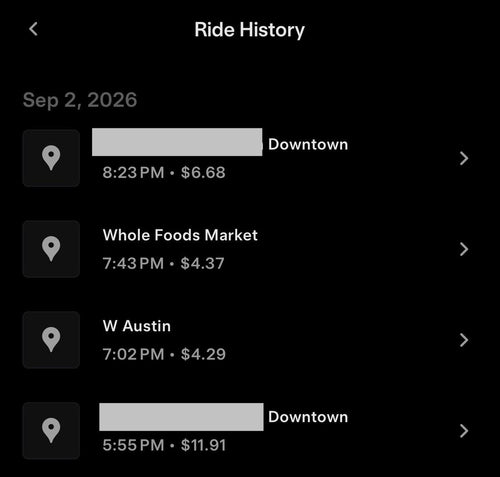
Tesla has not published Cybercab-specific fare data through the app screenshots shared so far. The Robotaxi app already displays estimated fare and wait time for Model Y rides, and it is reasonable to expect the same fields will populate for Cybercab bookings once broader access opens.
What to Watch Next
- Public access timeline — Today's event is invite-only. Watch for Tesla to open Cybercab hails to the wider Austin waitlist in the days after the launch livestream.
- Pricing disclosure — Tesla has repeatedly cited a per-mile cost target well below current rideshare rates. First real fares shown in the app will be the first hard data point.
- Service area expansion — Cybercab availability outside Austin (particularly Bay Area and Phoenix, where Model Y Robotaxi already operates in some form) is the next milestone.
- Fleet mix — How quickly Tesla shifts new autonomous rides from Model Y to Cybercab will indicate confidence in production ramp at Giga Texas.
Editor's View
The seating-capacity readout is a small UI element, but it is the clearest sign yet that Tesla is designing the Robotaxi app for a heterogeneous fleet rather than a single vehicle. Once you accept that riders will be choosing between two-seat and five-seat autonomous vehicles at different price points, the network starts to resemble a real transportation utility rather than a beta test. Today is when that transition became visible in the app itself.
🚕 Following the Robotaxi rollout? See every operating city, launch date and announced market in our Tesla Robotaxi Tracker.
Related Gear
Gear up your Tesla with tested, custom-fit BASENOR accessories — shop Tesla accessories →
Sources & reporting notes
The links below identify the material source records used for this report.
- @wholemars on X (2026-09-03T11:15:52.000Z) — Direct source
- @wholemars on X (2026-09-03T11:55:52.000Z) — Direct source
Source links are preserved as published or accessed. See our editorial standards and corrections policy.
The BASENOR Editorial Desk covers Tesla, SpaceX, and related technology, curating reporting from primary sources — official accounts, regulatory filings, and software release data. Every article passes source-record and fact-checking review before publication. About the newsroom.
This report was curated by the BASENOR Editorial Desk from the sources listed above. Read our editorial standards or email editorial@basenor.com to report an error.