Tesla has adjusted its Robotaxi operating window to 6 AM–10 PM, trimming the late-night hours that had previously stretched to 2 AM. The change is subtle on paper, but the reasoning behind it points to something owners and riders actually care about: fewer human-supervised rides slipping into what's supposed to be a fully driverless experience.

1. The New Hours Are 6 AM to 10 PM
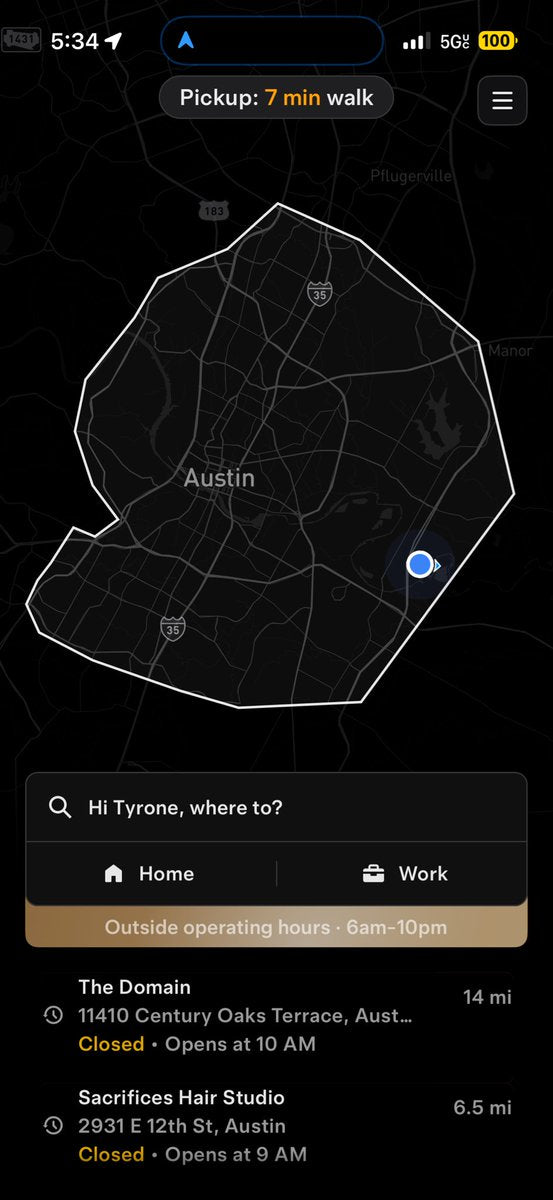
As noted by @wholemars, Tesla Robotaxi service now operates within a 6 AM–10 PM window. That's a 16-hour daily service window, down from the 20-hour window (6 AM–2 AM) that had been in place since September 2025. The cutoff previously sat at midnight when the Austin service first launched in June 2025, was extended to 2 AM, and has now been pulled back to 10 PM. Tesla has not issued a formal statement explaining the change.
2. Late-Night Supervised Rides Are the Likely Culprit
The most plausible explanation for the rollback: Tesla was still deploying human-monitored vehicles during late-night hours in markets where unsupervised operation isn't fully cleared. As @wholemars put it, getting a supervised car when you booked expecting a driverless ride is a "major buzzkill." By capping hours at 10 PM, Tesla appears to be ring-fencing the service to times when it can consistently deliver the fully autonomous experience — rather than mixing driverless and supervised rides in the same booking pool.
3. Austin Is Fully Driverless; California Still Requires Safety Drivers
The supervised-versus-driverless split matters because the two markets operate under different rules. As of June 4, 2026, Tesla's Austin service runs entirely without human safety drivers across the metropolitan area. California is a different story: state regulations require 50,000 miles of supervised testing before an operator can apply for driverless permits, so Bay Area Robotaxis still carry safety drivers. The new 10 PM cutoff likely reflects an effort to standardize the experience across both markets rather than let California's regulatory constraints quietly degrade the Austin product.
4. The Service Has Expanded Well Beyond Austin
It's easy to think of Robotaxi as an Austin-only pilot, but the footprint is larger now. According to previous reports, the service has expanded to limited areas of Miami, Orlando, and Tampa in Florida, as well as Dallas and Houston in Texas alongside the original Austin market. The Bay Area in California went live on July 31, 2025. All of these markets are currently running on Model Y vehicles; Cybercab integration is expected when volume production ramps, with Model 3 to follow.
5. Tighter Hours Can Be a Sign of Maturation, Not Retreat
A shorter operating window might look like a step backward, but the logic is the opposite. Early-stage robotaxi programs often run the longest hours to maximize data collection and demonstrate capability — even if that means leaning on safety drivers to fill gaps. Pulling back to a tighter, fully driverless window signals that Tesla is prioritizing ride quality and consistency over raw availability numbers. For riders, a 16-hour window of genuinely driverless service is more valuable than a 20-hour window where the last few hours might hand you a supervised car without warning.
Whether 10 PM becomes a permanent ceiling or a temporary calibration point will depend on how quickly Tesla can clear the regulatory and operational hurdles that currently make late-night driverless operation inconsistent. For now, if you're planning a Robotaxi trip, book before 10 PM — and expect the ride to actually be driverless.
🚕 Following the Robotaxi rollout? See every operating city, launch date and announced market in our Tesla Robotaxi Tracker.
Related Gear
Gear up your Tesla with tested, custom-fit BASENOR accessories — shop Tesla accessories →
Sources & reporting notes
The links below identify the material source records used for this report.
- @wholemars on X (2026-08-07T12:39:04.000Z) — Direct source
Source links are preserved as published or accessed. See our editorial standards and corrections policy.
The BASENOR Editorial Desk covers Tesla, SpaceX, and related technology, curating reporting from primary sources — official accounts, regulatory filings, and software release data. Every article passes source-record and fact-checking review before publication. About the newsroom.
This report was curated by the BASENOR Editorial Desk from the sources listed above. Read our editorial standards or email editorial@basenor.com to report an error.