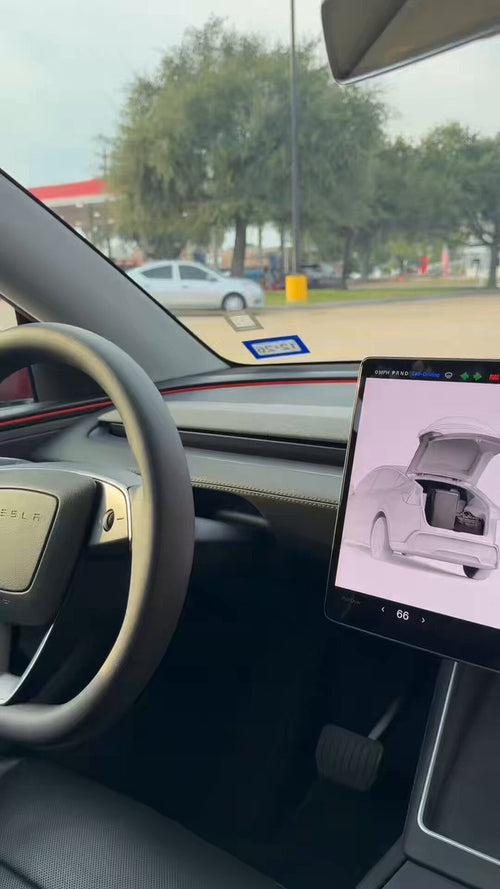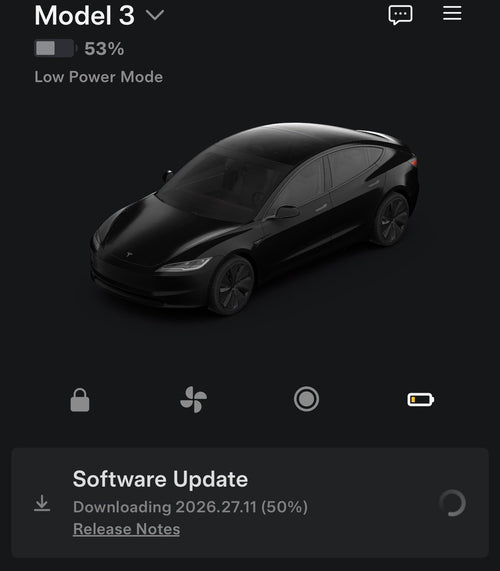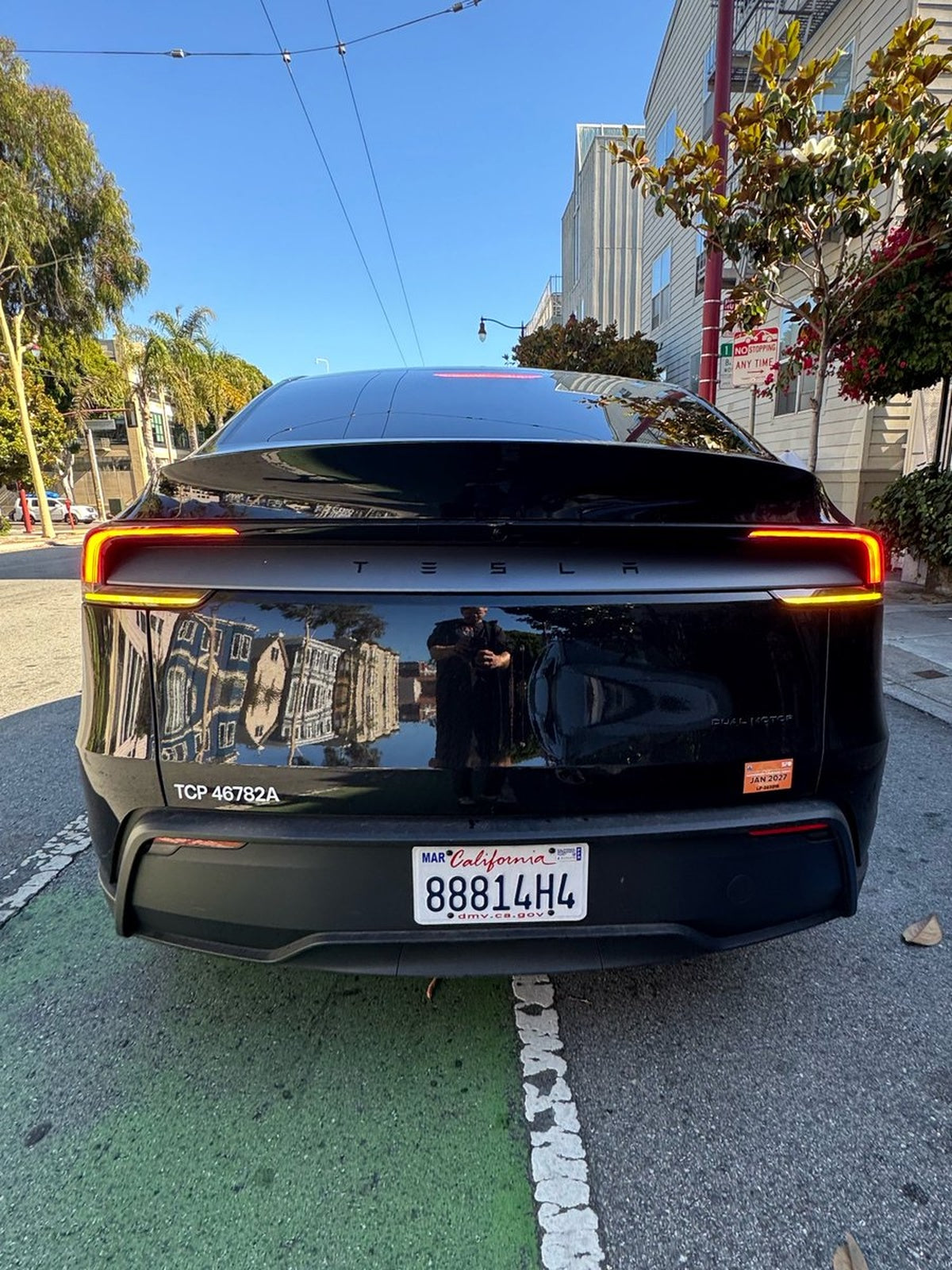
Another Tesla Robotaxi Model Y has been spotted carrying an official "SFO Authorized Limousine Permit" sticker — permit LP-263002, valid through January 31, 2027 — suggesting Tesla's ride-hailing service is actively working toward commercial operations at San Francisco International Airport. It's a quiet but concrete step in Tesla's broader push to expand its supervised autonomous service across the Bay Area.

What the Permit Actually Means
The permit was issued by the City and County of San Francisco under California's Transportation Charter Party (TCP) framework — the same regulatory category that covers traditional limousine and black car services. That classification matters: it means Tesla's vehicles operating at SFO are legally treated as chauffeur services, not autonomous vehicles.
Under current California law, that distinction is significant. The California Public Utilities Commission (CPUC) and California DMV have not granted Tesla permits for driverless passenger service anywhere in the state. The Full Self-Driving system is still classified as SAE Level 2 by regulators, which legally requires an attentive human driver behind the wheel at all times. California regulators have explicitly pushed back on Tesla's use of the term "Robotaxi" for this service, noting it does not meet the state's definition of an autonomous vehicle operation.
In short: the vehicles you'll see picking up passengers at SFO will have a human safety driver onboard. The permit is a commercial ground transportation credential, not an autonomous deployment milestone.
How Tesla Got Here
Tesla formally began engaging with Bay Area airports in September 2025, initiating approval processes at SFO, San Jose Mineta International Airport (SJC), and Oakland International Airport (OAK). SJC was the first to come online, with Tesla's ride-hailing service expanding there on October 27, 2025. The appearance of an SFO-permitted vehicle now suggests that process is well advanced for the region's largest and busiest airport.
The TCP permit (LP-263002) runs through January 31, 2027 — a roughly 12-month window that aligns with Tesla's apparent goal of establishing a stable, permitted presence at major transit hubs before any potential regulatory shift toward unsupervised operation in the state.
The Bigger Picture: Supervised Now, Autonomous Later
While the SFO permit is a human-supervised operation, Tesla's fully autonomous Cybercab program is advancing on a separate, faster track in other states. Production of the two-passenger Cybercab — which has no steering wheel or pedals — began at Gigafactory Texas in February 2026, with mass production targeted for April 2026. Elon Musk has indicated the Cybercab will be priced under $30,000.
On the software side, FSD version 14.33 is in active deployment, and Musk has stated the 14.3 software stack is sufficient for unsupervised operation. Tesla has confirmed Cybercab testing in downtown Austin (34 vehicles) and the San Francisco Bay Area (5 vehicles), with the nearest confirmed commercial launch for the fully autonomous version targeting Las Vegas. The goal Musk has outlined is deployment across a dozen or so states by end of 2026.
California, with its stricter regulatory environment, appears to be on a slower timeline — but the SFO permit suggests Tesla is methodically building the commercial infrastructure and regulatory relationships it will need when the rules eventually change.
For Bay Area Tesla owners, the practical near-term implication is straightforward: the Robotaxi app may soon offer airport pickups and drop-offs at SFO, with a human-supervised Model Y as the vehicle. Whether that expands to a driverless Cybercab at SFO depends entirely on Sacramento — not on Tesla's technology or ambition.
🚕 Following the Robotaxi rollout? See every operating city, launch date and announced market in our Tesla Robotaxi Tracker.
Related Gear
Gear up your Model Y with tested, custom-fit BASENOR accessories — shop Model Y accessories →
Sources & reporting notes
The links below identify the material source records used for this report.
- @TeslaNewswire on X (2026-06-29T08:13:02.000Z) — Direct source
Source links are preserved as published or accessed. See our editorial standards and corrections policy.
The BASENOR Editorial Desk covers Tesla, SpaceX, and related technology, curating reporting from primary sources — official accounts, regulatory filings, and software release data. Every article passes source-record and fact-checking review before publication. About the newsroom.
This report was curated by the BASENOR Editorial Desk from the sources listed above. Read our editorial standards or email editorial@basenor.com to report an error.