The Tesla Robotaxi community just got its own data layer. Whole Mars Catalog's robotaxitracker.com is now aggregating license plate sightings, ride receipts, and fleet data — and it's asking riders and spotters to contribute. Here's what the tracker does, how it works, and why the numbers it's already surfacing are worth watching.

1. What the Tracker Actually Collects
Robotaxi Tracker is a community-driven platform that aggregates data on Tesla's autonomous fleet through user submissions, automated collection, and statistical modeling. Contributors can submit license plate numbers, upload up to three verification photos, specify exterior and interior vehicle colors, and note the service area where they spotted a vehicle. It's not just a sightings log — it's structured data with enough fields to build a meaningful picture of fleet composition and geographic spread over time.
2. How to Submit Your Ride Receipt
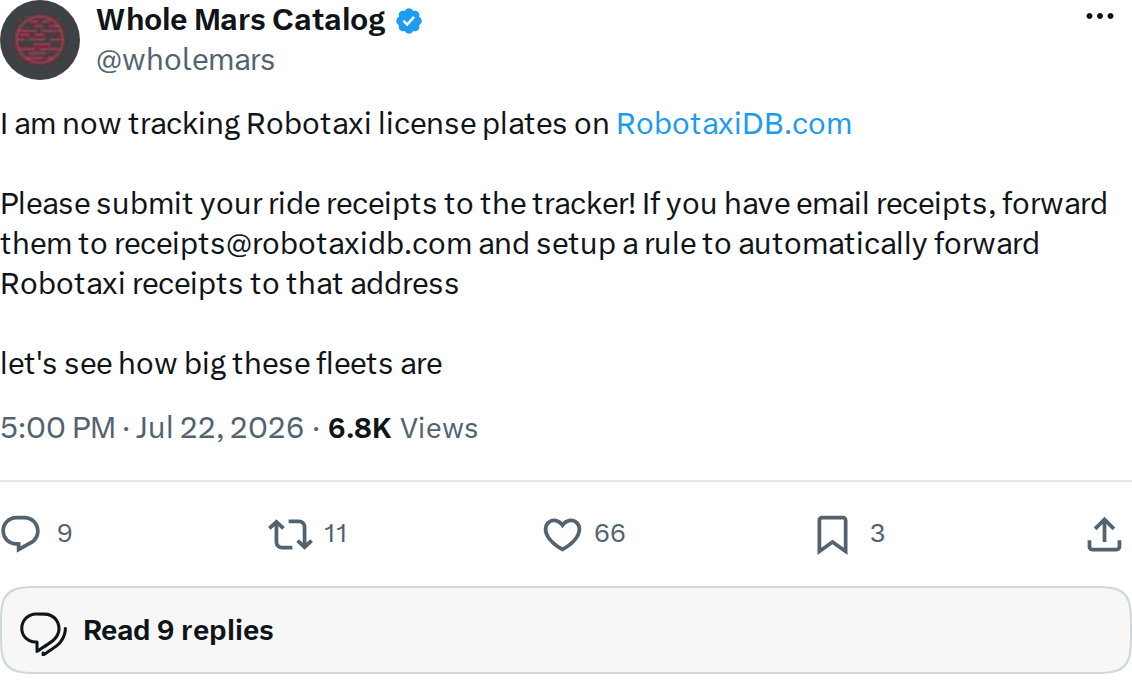
If you've already taken a Robotaxi ride, your email receipt is a direct data point. Whole Mars Catalog is asking riders to forward receipts to receipts@robotaxidb.com — and recommends setting up an automatic forwarding rule so future receipts go straight to the tracker without any manual effort. This is the fastest way to contribute without needing to physically spot a vehicle. If you're in Austin, Dallas, or Houston, it takes about 30 seconds to set up the rule once and forget it.
3. Submissions Don't Go Live Instantly — There's a Moderation Layer
All submitted data enters a moderated queue before appearing in the database. Administrators verify license plate formats against provider-specific patterns, review photo authenticity, and check for duplicate entries. Notably, verified photos are deleted after approval to protect submitter privacy — so contributors aren't permanently handing over images. This moderation step is what separates the tracker from a raw crowdsourced spreadsheet; the goal is clean, reliable data rather than volume for its own sake.
4. The Fleet Numbers Already on Record
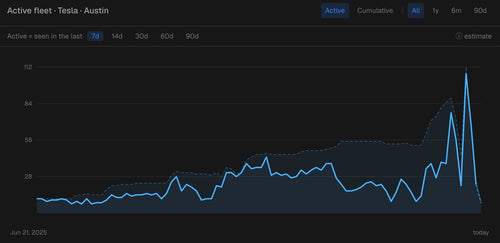
According to data from Robotaxi Tracker as of April 30, 2026, Tesla's unsupervised Robotaxi fleet had reached 25 cumulative vehicles operating across three Texas cities: Austin, Dallas, and Houston. That figure will have grown since then — which is precisely why the tracker exists. A separate independent safety tracker, robotaxi-safety-tracker.com, adds another dimension: as of July 19, 2026, the Austin fleet of 96 unsupervised vehicles had driven 1,059,840 miles since its last incident, with the latest interval between incidents clocking in at 329,015 miles.
5. Why Community Tracking Fills a Real Gap
Tesla doesn't publish granular fleet deployment data in real time. Official figures arrive in quarterly earnings calls, if at all. A community-run tracker that pulls from rider receipts, street sightings, and moderated photo submissions can surface ground-level deployment trends — which cities are seeing more vehicles, how quickly the fleet is expanding, and how ride frequency is changing — weeks before any official disclosure. For anyone following the Robotaxi rollout closely, this database is now a primary reference point.
The tracker is live now at robotaxitracker.com. If you're riding, spotting, or just watching the rollout, the data gets better the more people contribute — and the email forwarding setup takes under a minute.
🚕 Following the Robotaxi rollout? See every operating city, launch date and announced market in our Tesla Robotaxi Tracker.
Related Gear
Gear up your Tesla with tested, custom-fit BASENOR accessories — shop Tesla accessories →
Sources & reporting notes
The links below identify the material source records used for this report.
- @wholemars on X (2026-07-22T17:00:40.000Z) — Direct source
Source links are preserved as published or accessed. See our editorial standards and corrections policy.
The BASENOR Editorial Desk covers Tesla, SpaceX, and related technology, curating reporting from primary sources — official accounts, regulatory filings, and software release data. Every article passes source-record and fact-checking review before publication. About the newsroom.
This report was curated by the BASENOR Editorial Desk from the sources listed above. Read our editorial standards or email editorial@basenor.com to report an error.