30-Second Brief
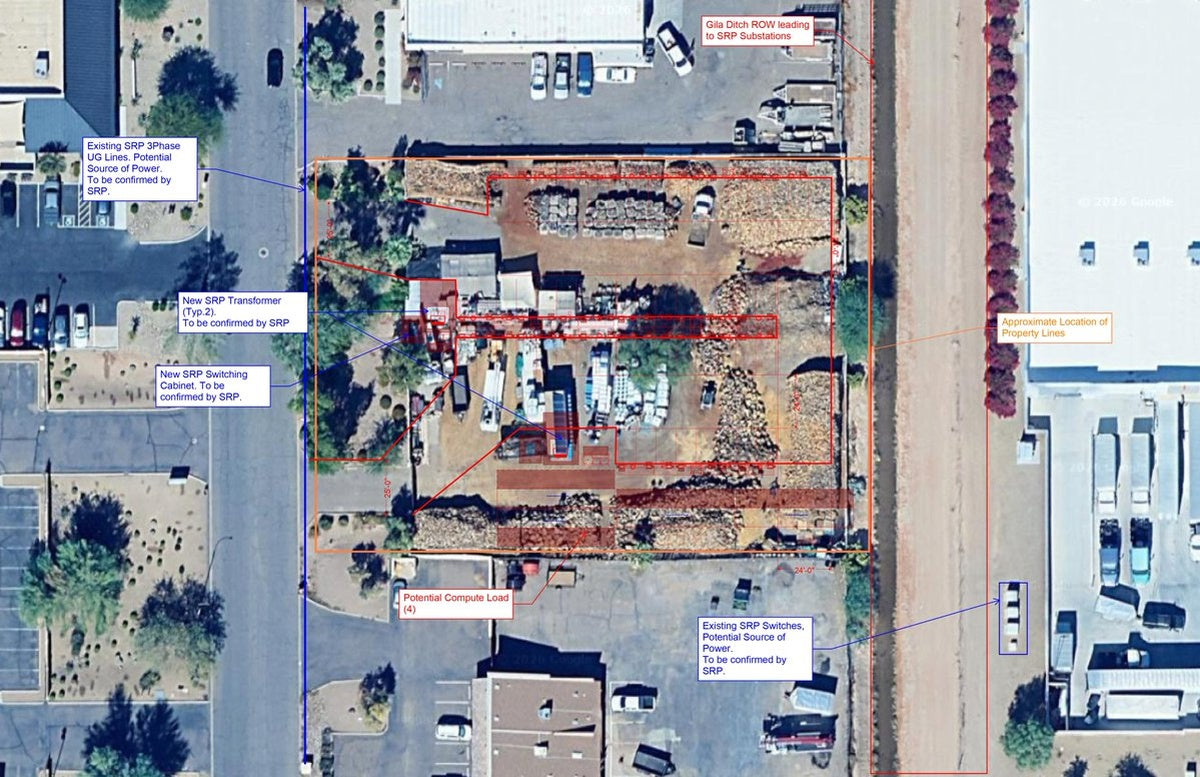
The News: A permit application for a new Tesla Semi charging station explicitly states the chargers will not be available for public use, confirming Tesla is building a private, fleet-dedicated charging infrastructure for its Semi trucks.
Why It Matters: This signals Tesla is treating Semi charging as a closed, logistics-grade network — separate from the consumer Supercharger grid — with significant implications for fleet operators and the broader EV trucking space.
Source: @SawyerMerritt on X
Tesla Semi Charging Stations Confirmed as Private Fleet-Only — Not Open to the Public
Tesla's Semi charging infrastructure is taking shape — and it's not coming to a Supercharger stall near you. A newly surfaced permit application for a dedicated Tesla Semi charging station contains a critical line: the chargers will not be for public use. This isn't a minor footnote. It's a deliberate architectural decision that tells us exactly how Tesla intends to operate its Class 8 electric truck network.

As noted by Sawyer Merritt, Tesla is expected to roll out significantly more of these stations as Semi operations expand. The permit language removes any ambiguity: this is a private, controlled charging network — not an extension of the public Supercharger footprint.
📊 Key Figures
| Detail | What We Know |
|---|---|
| Public Access | Explicitly denied — permit states chargers are NOT for public use |
| Network Type | Private, fleet-dedicated infrastructure |
| Wireless Charging | No confirmation — still unannounced as of this filing |
| Rollout Pace | Expected to accelerate significantly as Semi operations expand |
🔭 The BASENOR Take
Timeline: Permit applications are surfacing now — expect physical station buildouts to accelerate through 2026 as Tesla scales Semi deliveries.
Impact Level: 🟡 Medium — directly affects fleet operators and logistics companies; no immediate impact on consumer Tesla owners.
Confidence: 🟢 High — based on primary permit documentation language cited by a reliable source.
📰 Deep Dive
The decision to keep Semi charging stations private is strategically sound — and it's worth understanding why. Class 8 trucking operates on tight schedules, and a charging station shared with consumer vehicles would create unpredictable wait times that fleet operators simply cannot absorb. By building a closed network, Tesla can guarantee throughput, uptime, and service-level agreements that logistics companies need to commit to electrifying their fleets.
This also insulates the consumer Supercharger network from the enormous power demands of a Semi charge session. A single Semi charging event draws power at a scale that dwarfs even a Cybertruck top-up. Keeping these networks physically separate is the right call for grid management and for maintaining the Supercharger experience that consumer owners rely on.
The notable absence of wireless charging in this filing is worth flagging. Wireless charging for heavy-duty trucks has been discussed in the industry as a way to enable opportunity charging at depots without driver intervention. Tesla has not confirmed any such capability for the Semi, and this latest application makes no mention of it — suggesting that, at least for this wave of infrastructure, wired high-power charging remains the approach.
For fleet operators currently evaluating the Tesla Semi, the expansion of dedicated charging infrastructure is a meaningful de-risking signal. Range anxiety at the truck level is largely a charging infrastructure problem, not a battery problem. As these private stations multiply alongside Semi deliveries, the operational case for fleet electrification gets considerably stronger. Watch for more permit filings in logistics corridors — that will be the clearest early indicator of where Tesla is prioritizing Semi deployment.
Related Gear
Gear up your Tesla with tested, custom-fit BASENOR accessories — shop Tesla accessories →
Sources & reporting notes
The links below identify the material source records used for this report.
- @SawyerMerritt on X (2026-04-17T19:30:00.000Z) — Direct source
Source links are preserved as published or accessed. See our editorial standards and corrections policy.
The BASENOR Editorial Desk covers Tesla, SpaceX, and related technology, curating reporting from primary sources — official accounts, regulatory filings, and software release data. Every article passes source-record and fact-checking review before publication. About the newsroom.
This report was curated by the BASENOR Editorial Desk from the sources listed above. Read our editorial standards or email editorial@basenor.com to report an error.