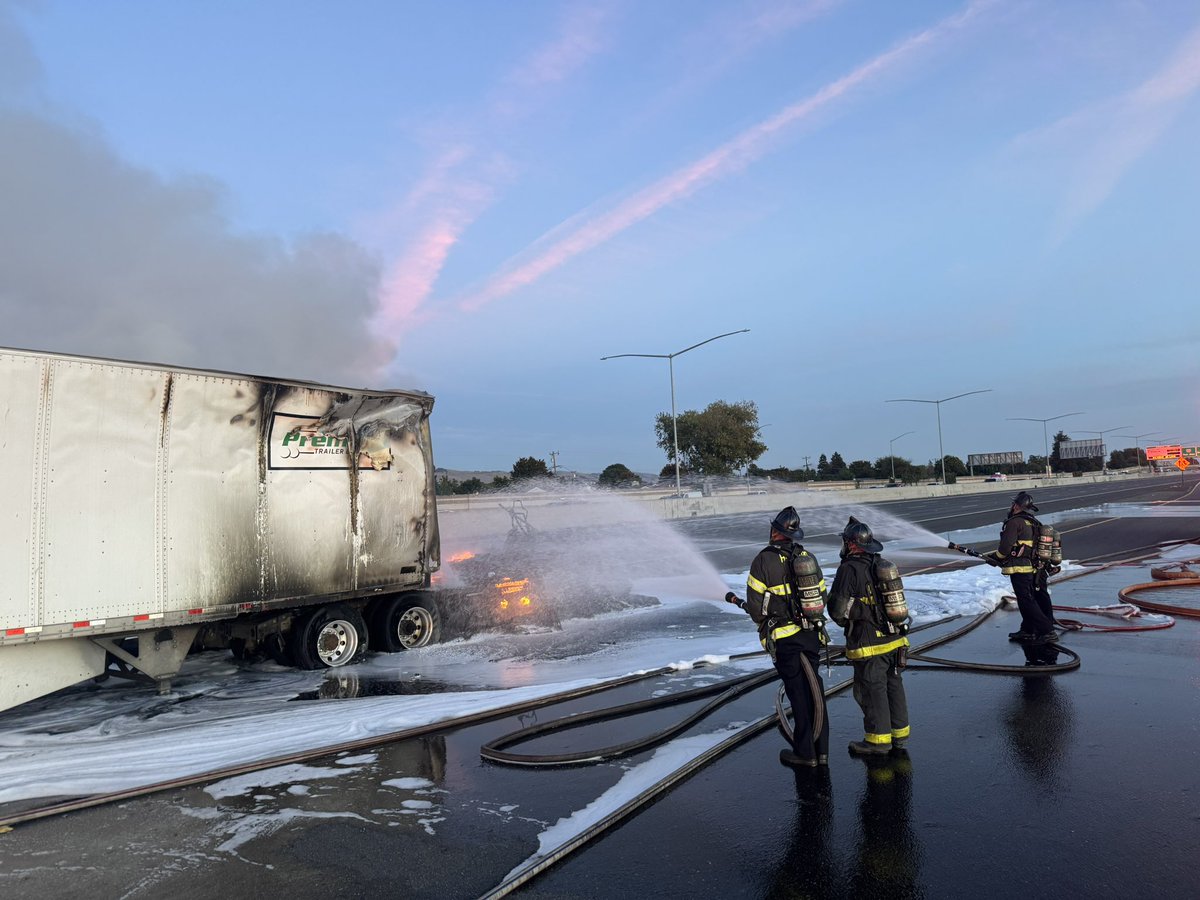
A Tesla Semi truck was completely destroyed by fire on Interstate 880 in Hayward, California on the evening of October 27, 2026. The driver escaped without injury, no other vehicles were involved, but the incident closed portions of one of the Bay Area's busiest freeways for nearly ten hours — and raises real questions for commercial fleet operators running electric semis today.

What Happened
According to the California Highway Patrol, the fire was first reported at approximately 5:35 p.m. PT on Tuesday, October 27, in the southbound lanes of I-880 near the Route 92 interchange. The driver told CHP officers the truck "simply caught fire" and that they did not know why. Investigators have since confirmed the Semi's lithium-ion battery pack ignited, though the root cause remains under investigation.
CHP shut down both northbound and southbound lanes of I-880 between Winton Avenue and Route 92 due to the risk of hazardous chemical smoke from the burning battery. Northbound lanes reopened at 8:40 p.m. that evening; southbound lanes weren't fully accessible again until around 3:30 a.m. on October 28 — roughly ten hours of closure on one of the Bay Area's primary freight corridors.
Some reports indicate the truck was one of the early Frito-Lay Semis that PepsiCo has been operating since Tesla's initial commercial deliveries, though this has not been officially confirmed. Tesla has not yet released a public statement on the incident.
What Fleet Operators Should Do Now
If your company operates Tesla Semis, this incident warrants an immediate internal review — not a panic, but a deliberate checklist. Here's where to start:
- Pull your maintenance and inspection logs. Check when each Semi in your fleet last received a battery thermal system inspection. If it's been more than the manufacturer's recommended interval, schedule a service appointment now — don't wait for the next routine cycle.
- Brief your drivers on early warning signs. Drivers should know to watch for any unusual battery temperature alerts on the center display, unexpected loss of range, burning smells, or visible smoke. The driver in this incident told CHP the truck "simply caught fire" with no apparent warning — but in many EV battery incidents, subtle alerts do precede thermal events. Make sure your team knows to pull over and evacuate immediately if anything seems off.
- Review your emergency response protocol. Lithium-ion battery fires behave differently from conventional diesel fires — they can reignite hours after appearing extinguished and require large volumes of water to cool the pack. Confirm your drivers know not to attempt to fight the fire themselves, and that your dispatch team knows to communicate the vehicle type to emergency responders immediately when calling 911.
- Contact Tesla Fleet Support for guidance. Until Tesla issues an official statement or service bulletin, reach out directly to your fleet account manager or Tesla's commercial support line to ask whether any diagnostics or precautionary inspections are recommended. Don't assume silence means no action is needed.
- Document and report. If you observe any anomalies — unusual heat, unexpected alerts, range degradation — document them and report them to Tesla. The NHTSA also accepts consumer complaints at nhtsa.gov. Early reporting helps investigators identify patterns faster.
Context for Tesla Semi Operators
The Tesla Semi has been in limited commercial operation since late 2022, with PepsiCo among the earliest and most visible fleet customers. The vehicles use a large-format lithium-ion battery architecture and have generally accumulated strong reliability reviews in early fleet data. Battery fires in electric commercial vehicles are statistically rare, but when they do occur, the extended road closures and hazmat considerations make them disproportionately disruptive compared to conventional vehicle fires.
The cause of this specific fire is still under investigation. Until Tesla or the NHTSA issues findings, fleet operators should treat this as a prompt to verify their own readiness — not as evidence of a systemic defect. That determination requires an investigation, and that investigation is just beginning.
Related Gear
Gear up your Tesla with tested, custom-fit BASENOR accessories — shop Tesla accessories →
Sources & reporting notes
The links below identify the material source records used for this report.
- @TeslaNewswire on X (2026-10-28T16:16:04.000Z) — Direct source
Source links are preserved as published or accessed. See our editorial standards and corrections policy.
The BASENOR Editorial Desk covers Tesla, SpaceX, and related technology, curating reporting from primary sources — official accounts, regulatory filings, and software release data. Every article passes source-record and fact-checking review before publication. About the newsroom.
This report was curated by the BASENOR Editorial Desk from the sources listed above. Read our editorial standards or email editorial@basenor.com to report an error.