📌 UPDATE — August 18, 2026
Tesla has refreshed its Semi webpage again, this time adding new videos and expanded information focused specifically on fleet management features and available service options. The update goes deeper into the operational side of running a Semi fleet, complementing the earlier cabin and service center details covered in this article. This signals Tesla is actively targeting fleet operators with more detailed support documentation and tooling info directly on the product page. Check the official Tesla Semi page for the latest content.
Via @TeslaNewswire · Aug 18, 2026
📌 UPDATE — August 18, 2026
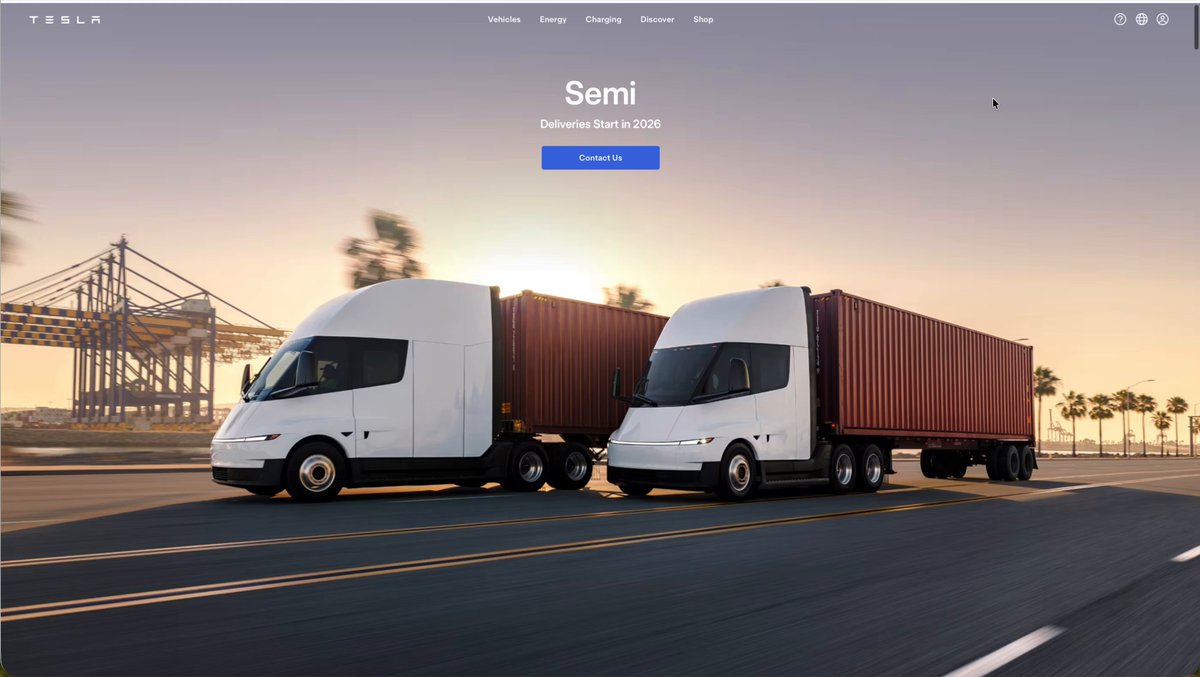
Tesla's official Semi webpage is now fully live at tesla.com/semi, offering a comprehensive look at the all-electric truck including specs, cabin details, and multimedia. Notably, the page explicitly markets the Semi as "ready for autonomy" — a forward-looking phrase that goes beyond its electric powertrain story and signals Tesla's intent to deploy Full Self-Driving capabilities on the Semi platform. This is the clearest official language yet tying the Semi's future to autonomous freight operations. The dedicated webpage launch aligns with Tesla's broader push to scale Semi production and expand its commercial trucking footprint.

Via @wholemars — "All electric, and ready for autonomy"
Tesla is making a visible push to professionalize the Semi program. On August 18, the company launched a dedicated Tesla Semi website packed with specs, photos, and videos — and simultaneously announced an expanding network of Semi Service Centers capable of same-day support for common repairs in major metro areas. Taken together, the moves signal that Tesla is treating the Semi less like a pilot project and more like a mature commercial product line.

What the New Website Reveals About the Cabin
The new Semi site gives prospective fleet operators their most detailed look yet at the driver environment. According to Tesla's own copy surfaced by the launch, the cabin offers enough headroom to stand upright — a meaningful detail for drivers spending 10-plus hours a day behind the wheel. There's a dedicated spot to hang a coat, and the seat offers both heating and ventilation. Acoustic glass and sound-damping materials are called out specifically, suggesting Tesla has engineered the cab with driver fatigue in mind, not just powertrain efficiency.
That focus on ergonomics and comfort isn't incidental. Fleet operators evaluating a transition to electric freight care deeply about driver retention, and a cab that feels premium rather than utilitarian is part of the pitch. Tesla appears to understand that selling the Semi to a logistics company means selling it to the drivers who will actually live in it.
The Service Network Is the Bigger Story

A polished website is table stakes. The service network expansion is the operational commitment that fleet buyers actually need to see before signing purchase agreements. Tesla's announcement that Semi Service Centers will offer same-day support for common repairs in major metropolitan areas — and beyond — directly addresses the single biggest objection commercial operators have raised since the Semi's early deliveries: what happens when a truck goes down mid-route?
Downtime on a commercial truck isn't an inconvenience — it's a contractual and financial liability. A fleet operator running tight delivery windows can't absorb a multi-day wait for a service appointment. By framing the expansion explicitly around same-day capability, Tesla is positioning its service infrastructure as a competitive differentiator, not just a support function.
Reading the Strategic Signal
Launching a dedicated website and a service expansion on the same day isn't coincidental. It's a coordinated message aimed at fleet decision-makers: the Semi is ready, and the infrastructure to support it at scale is being built in parallel. The website handles the top-of-funnel awareness and spec validation; the service network announcement handles the operational risk objection that kills deals at the procurement stage.
Tesla has historically under-invested in commercial vehicle marketing relative to consumer vehicles. A purpose-built Semi site — separate from the main Tesla.com vehicle pages — suggests the company is now treating freight as a distinct sales motion with its own buyer journey. That's a maturation worth noting.
How quickly the service footprint actually expands, and which corridors get coverage first, will determine whether this announcement translates into accelerated fleet adoption or remains an aspirational statement. But the direction is clear: Tesla is building the Semi program for volume, not just headlines.
Related Gear
Gear up your Tesla with tested, custom-fit BASENOR accessories — shop Tesla accessories →
Sources & reporting notes
The links below identify the material source records used for this report.
- @SawyerMerritt on X (2026-08-18T17:41:33.000Z) — Direct source
- @SawyerMerritt on X (2026-08-18T17:44:48.000Z) — Direct source
Source links are preserved as published or accessed. See our editorial standards and corrections policy.
The BASENOR Editorial Desk covers Tesla, SpaceX, and related technology, curating reporting from primary sources — official accounts, regulatory filings, and software release data. Every article passes source-record and fact-checking review before publication. About the newsroom.
This report was curated by the BASENOR Editorial Desk from the sources listed above. Read our editorial standards or email editorial@basenor.com to report an error.