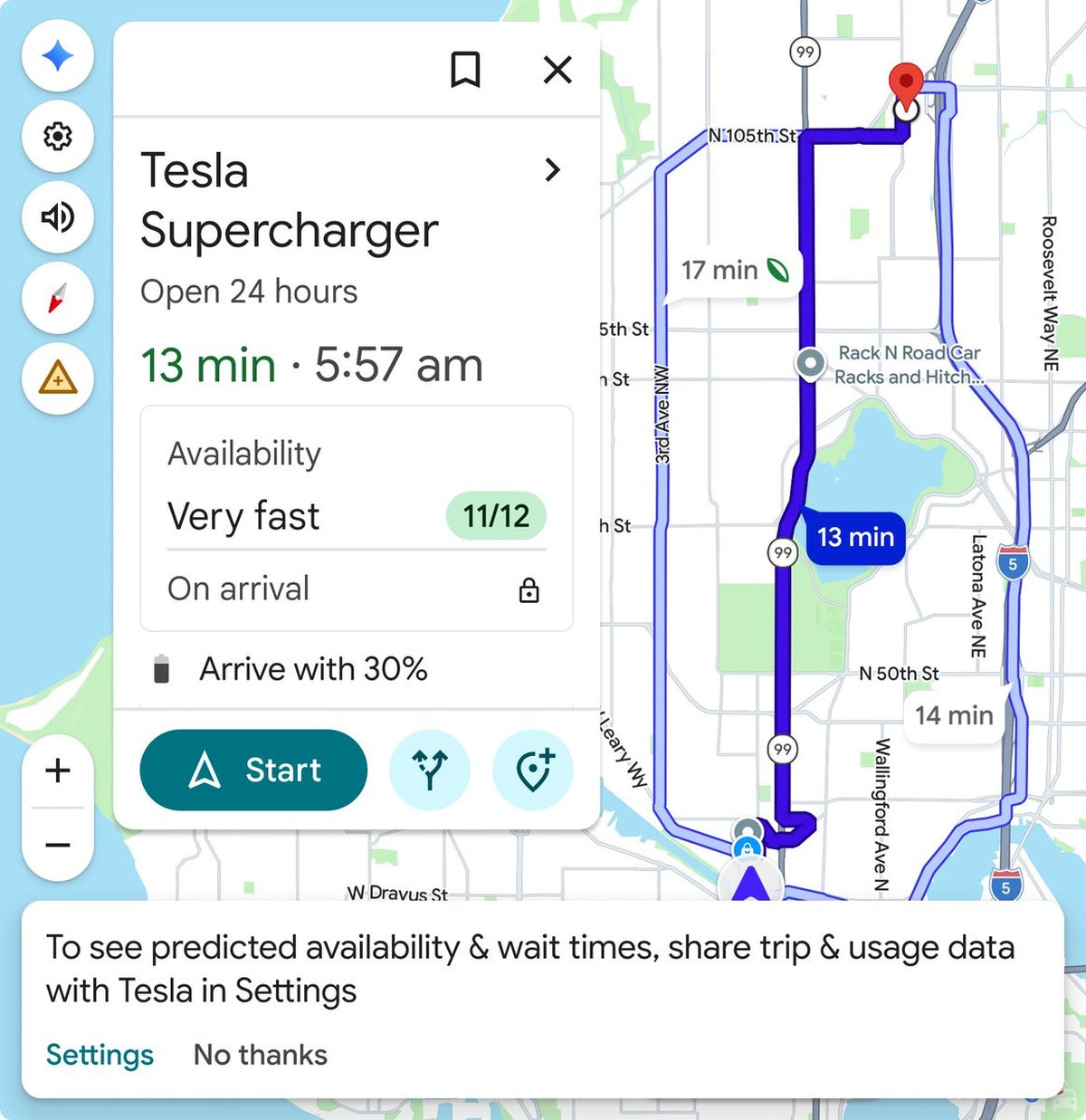
Tesla has officially begun rolling out forecasted Supercharger stall availability to electric vehicles with Google Maps built in — and the deployment is global, with Europe now confirmed. The feature lets drivers see predicted charger availability before they arrive, taking some of the guesswork out of long-distance EV trips. Crucially, this isn't just for Tesla owners: any EV with Google Maps integration is eligible.

What the Feature Actually Does
Until now, Tesla's Google Maps integration showed live stall availability — how many stalls were open right at that moment. Forecasted availability goes a step further: it predicts how busy a Supercharger is likely to be by the time you arrive, based on historical usage patterns and real-time fleet data.
This is a meaningful upgrade for trip planning. If you're routing a two-hour drive and a Supercharger along the way typically fills up mid-afternoon, the forecast can flag that before you commit to the stop. Tesla's own in-car Trip Planner has offered similar intelligence for years — now that same logic is surfacing inside Google Maps for any compatible EV.

Who Gets It
Eligibility requires a vehicle with Google Maps built into the infotainment system. That covers a wide range of EVs beyond Tesla — including models from Rivian, Ford, and others that have adopted NACS or use Android Automotive-based systems with native Google Maps. European drivers are confirmed in today's rollout, making this a true global launch from day one.

How to Enable It
Tesla's announcement specifies that drivers need to opt in to access predictions — the feature isn't on by default. Opting in also contributes your vehicle's data to the forecast model, which helps improve accuracy for everyone at that station. Here's how to get started:
- Open Google Maps on your vehicle's built-in display (or on your phone if using Android Auto/CarPlay with a compatible setup).
- Search for a Supercharger along your route or near your destination.
- Look for the opt-in prompt within the Supercharger location details panel. Tesla has indicated this will appear for eligible vehicles during the rollout.
- Accept the opt-in to enable forecasted availability data and contribute anonymized usage data back to the network.
- Plan your stop using the predicted availability alongside the live stall count already visible in Google Maps.
If you don't see the opt-in prompt immediately, the rollout is still in progress — check back over the next few days as Tesla pushes it to more vehicles globally.
Why This Matters Beyond Convenience
The opt-in mechanism is deliberate. By pooling anonymized arrival and charging session data from participating vehicles, Tesla can build more accurate forecasts for every driver — Tesla and non-Tesla alike. It's a network effect: the more drivers opt in, the better the predictions get. For a Supercharger network that now serves multiple brands, that shared intelligence has real value in reducing congestion at busy stations.
For non-Tesla EV owners in particular, this closes a gap that has existed since the Supercharger network opened to third parties. Tesla drivers have long benefited from predictive routing inside the native app; now Google Maps users get a version of that same foresight, directly inside the navigation tool most of them already rely on.
Related Gear
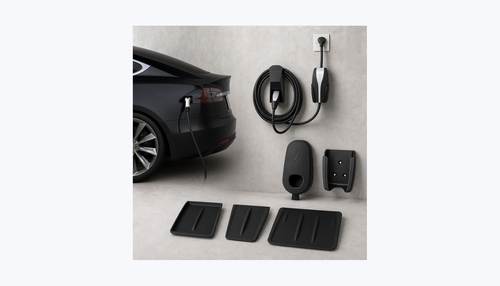
Gear up your Tesla with tested, custom-fit BASENOR accessories — shop Tesla accessories →
Sources & reporting notes
The links below identify the material source records used for this report.
- @TeslaCharging on X (2026-06-25T20:21:52.000Z) — Direct source
- @TeslaNewswire on X (2026-06-25T20:59:10.000Z) — Direct source
- @TeslaNewswire on X (2026-06-25T20:52:10.000Z) — Direct source
Source links are preserved as published or accessed. See our editorial standards and corrections policy.
The BASENOR Editorial Desk covers Tesla, SpaceX, and related technology, curating reporting from primary sources — official accounts, regulatory filings, and software release data. Every article passes source-record and fact-checking review before publication. About the newsroom.
This report was curated by the BASENOR Editorial Desk from the sources listed above. Read our editorial standards or email editorial@basenor.com to report an error.