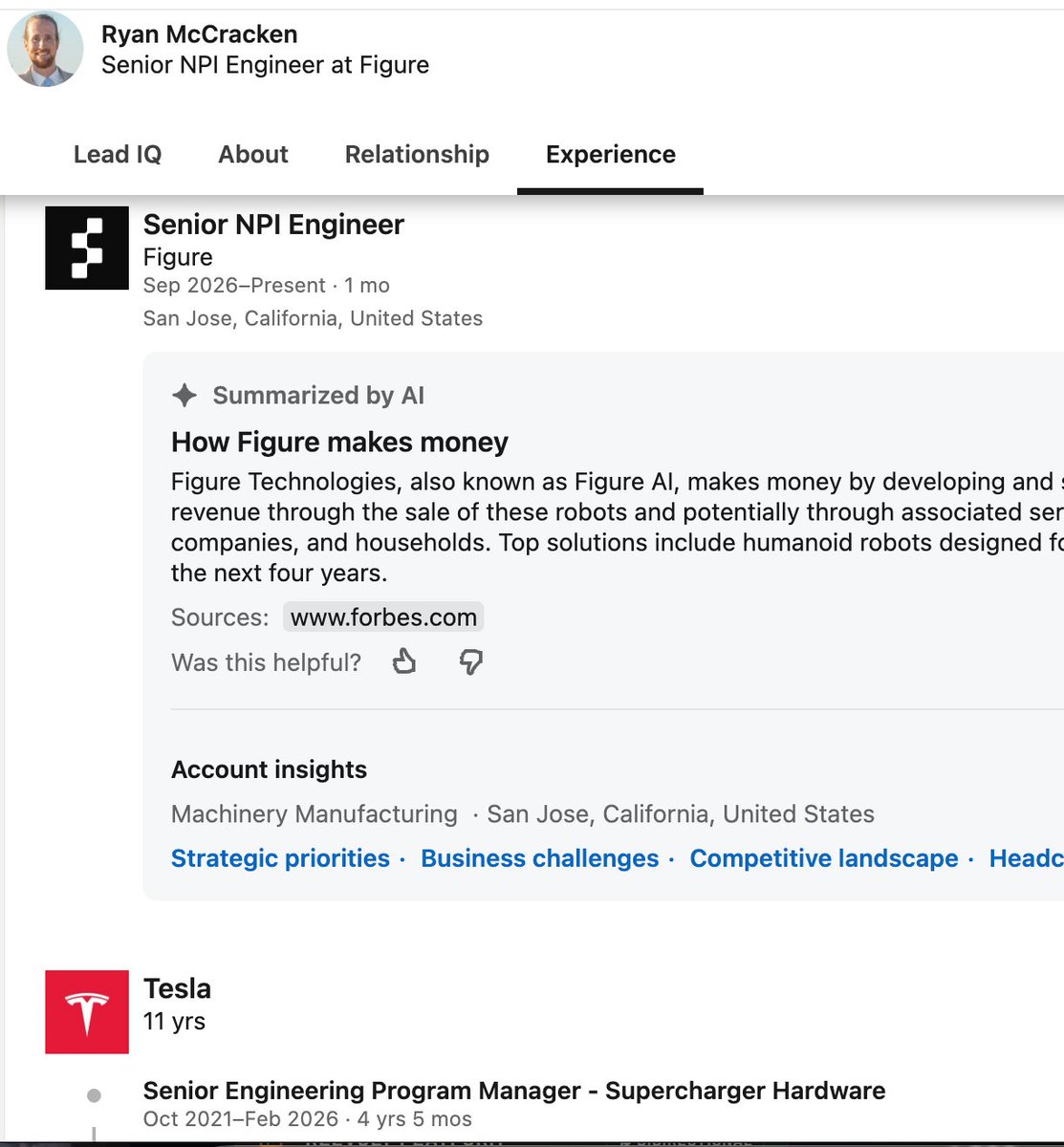
An 11-year Tesla veteran who most recently led Supercharger hardware engineering has confirmed he is leaving the company to join Figure, the AI humanoid robotics startup. The departure, reported by Fred Lambert of Electrek, adds another senior name to a growing list of experienced Tesla engineers who have crossed over to the robotics industry in recent years.

What This Departure Signals
Eleven years at Tesla is a long tenure by any measure — it spans the era of the original Supercharger rollout through the network's expansion to over 60,000 stalls globally and its opening to non-Tesla vehicles. Someone leading hardware engineering on that team would have had direct influence on connector design, cabinet architecture, power electronics, and site deployment standards. That's institutional knowledge that doesn't walk out the door quietly.
Figure is not a random landing spot. The San Jose-based company has been on an aggressive talent acquisition run, particularly targeting engineers with deep hardware and systems experience. According to previous reports, Figure poached Zackary Bernholtz, a seven-year Tesla Staff Technical Program Manager, in June 2025. Milan Kovac, who led Tesla's Optimus engineering program for nine years, also departed that same month — though his exit was attributed to personal reasons rather than a move to a competitor. Figure's Figure 02 humanoid is already being piloted on the BMW factory floor, which gives the company a credible production context to attract hardware-focused engineers.
The pattern here is worth noting. Tesla has spent years building expertise in high-power electrical systems, thermal management, and ruggedized field hardware — all of which translate directly into the challenges of building a deployable humanoid robot. A Supercharger hardware lead understands how to design systems that work reliably at scale, in the real world, under variable conditions. That skill set is exactly what robotics companies are paying for right now.
What It Means for the Supercharger Network
In isolation, one departure does not indicate a structural problem. Tesla's Supercharger team has weathered significant turbulence before — most notably the mass layoffs of May 2024 that briefly gutted the network's expansion team before partial rebuilding. The network has continued to grow and, by most owner accounts, remains the most reliable public fast-charging infrastructure available.
That said, the charging network is entering a more complex phase. Tesla is managing simultaneous demands: expanding stall count for its own growing fleet, maintaining the open-network commitments made to automakers who adopted NACS, and developing next-generation hardware capable of higher output. Losing a senior hardware engineer at this juncture is not ideal timing, even if the organization is deep enough to absorb it.
The broader competitive picture also matters. As Figure, Physical Intelligence, 1X, and others scale up their robotics programs, Tesla's own Optimus initiative is competing for the same pool of experienced hardware talent. Tesla has the advantage of in-house demand — Optimus needs engineers too — but it also means the company is effectively fighting a two-front talent war: retaining people for its core vehicle and infrastructure business while building a robotics team from within.
The name of the departing engineer has not been publicly confirmed in the source reporting. As more details emerge, the full scope of this transition will become clearer — but the directional signal is already plain: Figure is building something that experienced Tesla infrastructure engineers find worth leaving for.
🤖 Tracking Tesla's humanoid robot? See every Optimus production milestone and appearance in our Tesla Optimus Tracker.
Related Gear
Gear up your Tesla with tested, custom-fit BASENOR accessories — shop Tesla accessories →
Sources & reporting notes
The links below identify the material source records used for this report.
- @FredLambert on X (2026-09-17T13:17:05.000Z) — Direct source
Source links are preserved as published or accessed. See our editorial standards and corrections policy.
The BASENOR Editorial Desk covers Tesla, SpaceX, and related technology, curating reporting from primary sources — official accounts, regulatory filings, and software release data. Every article passes source-record and fact-checking review before publication. About the newsroom.
This report was curated by the BASENOR Editorial Desk from the sources listed above. Read our editorial standards or email editorial@basenor.com to report an error.