📌 UPDATE — April 1, 2026
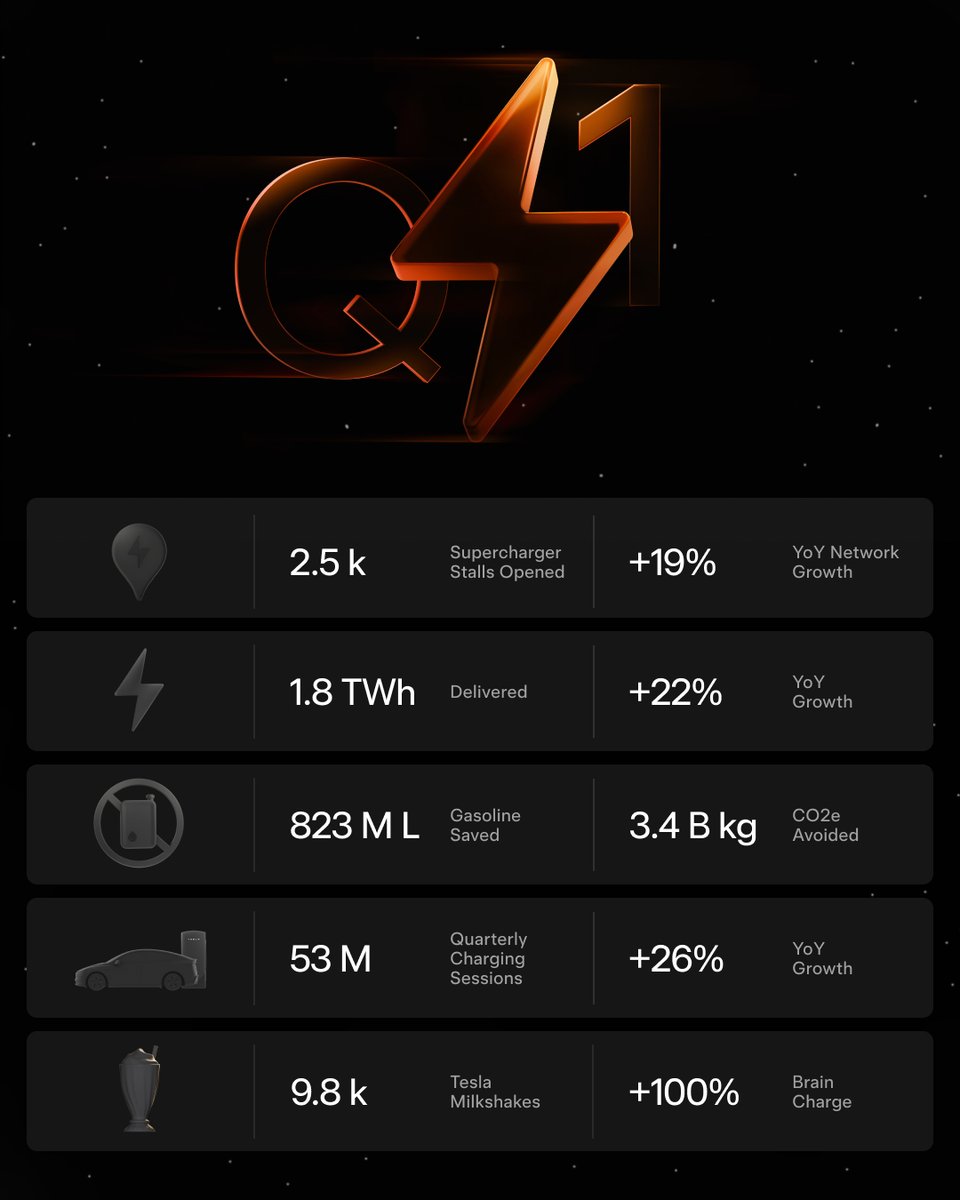
Tesla has released its Q1 2026 Supercharger figures, and the momentum is accelerating. The network grew 19% year-over-year in size, while quarterly charging sessions surged 26% YoY — outpacing the 53M session milestone covered below. Most strikingly, energy delivered worldwide reached 1.8 TWh, a 22% YoY increase, underscoring that not only are more drivers plugging in, they're charging more energy per quarter than ever before.


| Metric | Q1 2026 | YoY Change |
|---|---|---|
| Network Size | — | +19% |
| Energy Delivered | 1.8 TWh | +22% |
| Charging Sessions | — | +26% |
The News: Tesla's Supercharging network recorded 53 million charging sessions in Q1 2026, offsetting 823 million liters of gasoline — worth approximately $870 million.
Why It Matters: This is the clearest proof yet that Tesla's charging infrastructure is the backbone of real-world EV adoption — not just for Tesla owners, but for the broader industry.
Source: @wholemars on X
Tesla Supercharger Hits 53 Million Sessions in One Quarter: By the Numbers
Tesla's Supercharging network just posted numbers that are hard to wrap your head around. In a single quarter, the network handled 53 million charging sessions — and in doing so, displaced 823 million liters of gasoline, the equivalent of roughly 217 million gallons, valued at approximately $870 million.
These aren't just impressive statistics. They're a real-time measurement of how fast the world is actually moving away from fossil fuels — and Tesla's charging infrastructure is the engine making it happen.

📊 Key Figures
| Metric | Q1 2026 | Context |
|---|---|---|
| Charging Sessions | 53 million | Up from ~52M in Q4 2025 |
| Gasoline Displaced | 823 million liters | Up from 716M liters in Q2 2025 |
| Gasoline Value Offset | ~$870 million | 217 million gallons equivalent |
| Global Stations (end 2025) | ~8,182 | ~77,682 individual stalls |
| Full-Year Energy Delivered (2025) | 6.7 TWh | More than all other fast chargers outside China combined |
| New Stalls Added (2025) | 12,187 | 75,000th stall milestone hit Nov 2025 |
The Growth Trajectory Is Accelerating
To appreciate how fast this is moving, consider the gasoline displacement trend alone. In Q2 2025, Supercharger usage offset 716 million liters of gasoline. By Q1 2026, that figure has jumped to 823 million liters — a gain of over 100 million liters in roughly three quarters. That's not linear growth; it's compounding.
The session count tells the same story. Q4 2025 came in at approximately 52 million sessions. Q1 2026 just cleared 53 million. The network is absorbing more demand with each passing quarter, and the infrastructure is keeping pace: Tesla added 12,187 new Supercharger stalls across 2025 alone, crossing the 75,000-stall milestone in November.
For context on the energy side: Tesla's full-year 2025 Supercharger network delivered 6.7 Terawatt-hours of electricity. According to verified data, that figure surpassed the combined output of every other fast-charging network outside of China. One company's proprietary network outpacing an entire global industry is a remarkable infrastructure story — and it's still scaling.
Not Just a Tesla Story Anymore
The opening of the NACS (North American Charging Standard) connector to other automakers changed the calculus here. Non-Tesla EVs can now access the Supercharger network in growing numbers, which means a portion of those 53 million sessions aren't exclusively Tesla-to-Tesla. The network has effectively become public EV infrastructure — and these utilization numbers reflect that expanding role.
This matters for Tesla owners directly: more sessions mean more revenue flowing back into network maintenance and expansion. A well-funded charging network is a better charging network.
🔭 The BASENOR Take
Timeline: Q1 2026 data, reported April 1, 2026
Impact Level: 🟢 High — Validates Tesla's infrastructure moat and long-term EV adoption thesis
Confidence: High — Numbers sourced from Whole Mars Catalog, consistent with verified Q4 2025 trajectory data
What to Watch: Whether Tesla publishes official Q1 2026 figures in its upcoming earnings release, and whether NACS adoption by other brands begins to meaningfully move the session count higher.
📰 Deep Dive
The $870 million gasoline offset figure deserves more attention than it typically gets. That's nearly a billion dollars in fuel costs that didn't flow to gas stations last quarter — money that stayed in drivers' pockets or went to electricity bills instead. At scale, this is one of the most tangible measurements of EV adoption's real-world economic impact, and it's a number Tesla can point to when making the case for continued infrastructure investment.
There's also a competitive dimension worth noting. Tesla's 2025 full-year energy delivery of 6.7 TWh — exceeding all non-China fast chargers combined — underscores why the Supercharger network remains the single biggest practical advantage Tesla holds over legacy automakers transitioning to EVs. Competitors can build compelling electric vehicles, but replicating a decade of charging infrastructure buildout is a multi-billion-dollar, multi-year undertaking. For our charging news coverage, this milestone represents a structural moat that keeps widening.
For existing Tesla owners, these numbers carry a practical implication: the network you rely on is getting more capable every quarter. More stalls, more sessions handled without degradation in reliability, and more revenue to fund the next wave of expansion. The 53 million sessions figure isn't just a milestone — it's evidence that the infrastructure bet Tesla made over a decade ago is paying off at a scale few anticipated.
Related Gear
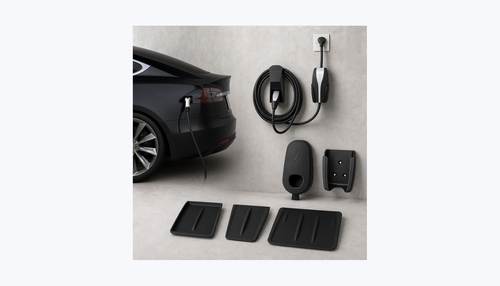
Gear up your Tesla with tested, custom-fit BASENOR accessories — shop Tesla accessories →
Sources & reporting notes
The links below identify the material source records used for this report.
- @wholemars on X (2026-04-01T14:21:30.000Z) — Direct source
- @TeslaNewswire on X (2026-04-01T16:43:11.000Z) — Direct source
- @TeslaNewswire on X (2026-04-01T16:10:43.000Z) — Direct source
Source links are preserved as published or accessed. See our editorial standards and corrections policy.
The BASENOR Editorial Desk covers Tesla, SpaceX, and related technology, curating reporting from primary sources — official accounts, regulatory filings, and software release data. Every article passes source-record and fact-checking review before publication. About the newsroom.
This report was curated by the BASENOR Editorial Desk from the sources listed above. Read our editorial standards or email editorial@basenor.com to report an error.