📌 UPDATE — July 1, 2026
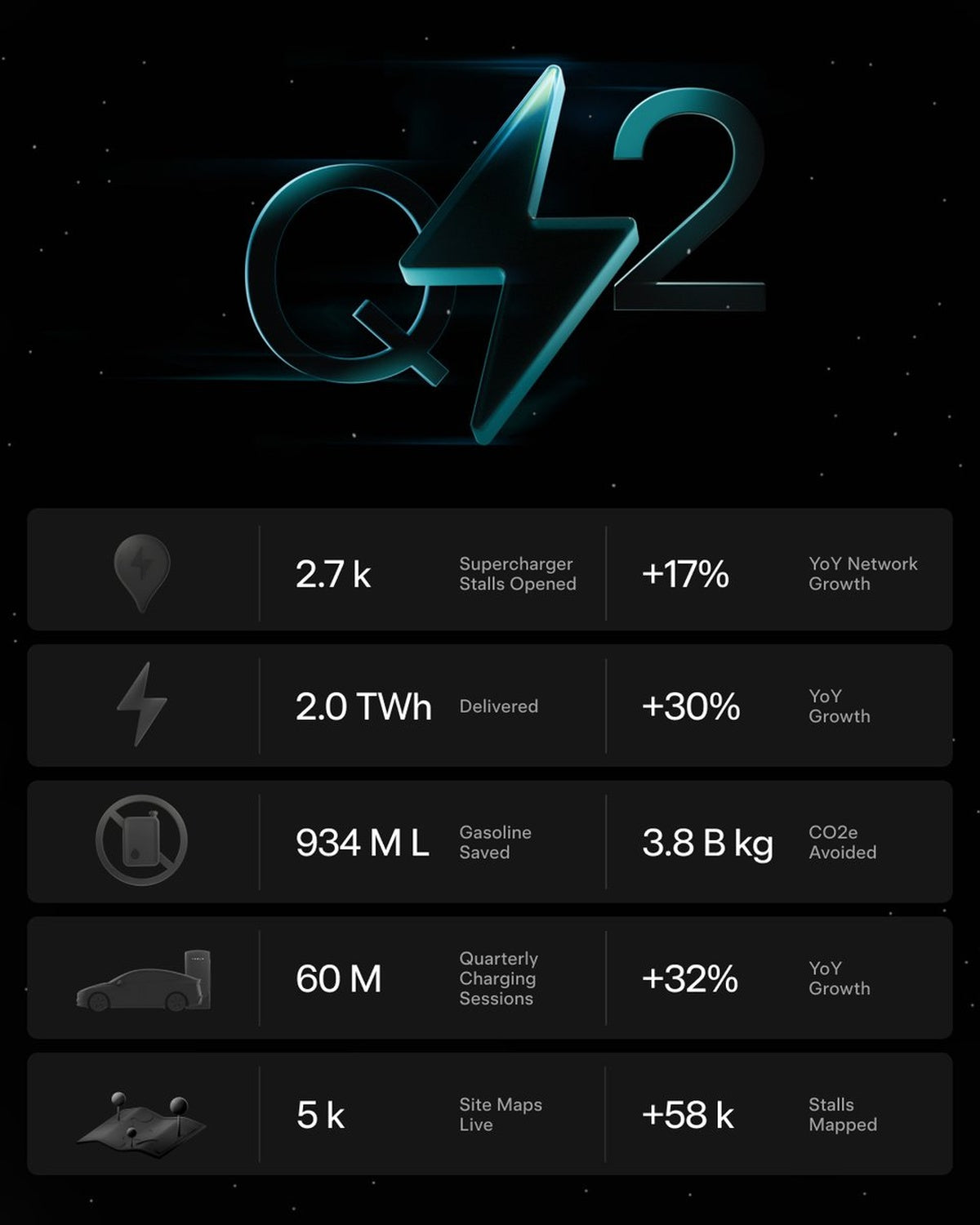
Tesla has now released the full Q2 2026 Supercharger breakdown, adding two key metrics to the headline 2 TWh figure. Beyond the 30% YoY jump in energy delivered, the network also grew 17% YoY in total size and recorded a 32% YoY increase in quarterly charging sessions — suggesting utilization is outpacing even the physical network expansion. The session growth rate edging above the energy growth rate points to more frequent, potentially shorter charging stops as battery technology and charging speeds improve.

via @TeslaNewswire · July 1, 2026
Tesla's Supercharger Network just posted its strongest quarter on record. The network delivered 2.0 terawatt-hours of energy in Q2 2026 — a 30% increase over Q2 2025 — while simultaneously hitting an all-time high in utilization. For context, one terawatt-hour is enough electricity to power roughly 90,000 U.S. homes for a year. The Supercharger Network burned through two of them in 90 days.

The Numbers Behind the Milestone
| Metric | Q2 2026 | Q2 2025 | YoY Change |
|---|---|---|---|
| Energy Delivered | 2.0 TWh | 1.6 TWh | +30% |
| Charging Sessions | 60 million | 45 million | +32% |
| New Stalls Added | ~2,700 | — | +17% YoY |
| Sessions Requiring a Wait | <1% | — | Near record low |
What makes the utilization figure particularly striking is that sessions per stall per day reached an all-time high — even as the network itself expanded by roughly 2,700 stalls during the quarter. Growing the physical footprint while simultaneously increasing per-stall utilization is a difficult balance to strike, and it suggests demand is outpacing supply expansion in a healthy way.
Non-Tesla Drivers Are a Meaningful Part of the Story
The volume jump doesn't come from Tesla owners alone. As of early 2026, over 27,500 Supercharger stalls globally are open to non-Tesla EVs — covering vehicles from Ford, GM, Rivian, Hyundai, Stellantis, and others. The network's shift to an open-access model has clearly added real throughput, and the Q2 numbers reflect that structural change as much as they reflect fleet growth.
For Tesla owners, the practical read is reassuring: despite absorbing significantly more non-Tesla sessions, wait times remained near a record low — under 1% of sessions required waiting for an open stall. The capacity additions appear to be keeping pace with the broader demand the open network has introduced.
V4 Hardware Is Now the Standard
Underpinning the network's throughput gains is a hardware transition already well underway. Gigafactory New York produced its final V3 Supercharger cabinet in March 2026, making V4 the new production standard. V4 cabinets deliver up to 500 kW for compatible passenger vehicles, support 800-volt architectures, and can push up to 1.2 MW per stall for the Tesla Semi. Each V4 cabinet also supports up to eight stalls — double the V3 system's capacity — meaning new station builds pack significantly more throughput per footprint.
The combination of open-access expansion, aggressive stall additions, and a full transition to higher-capacity hardware sets up the second half of 2026 as a genuine test of whether the network can sustain this growth curve. With utilization already at an all-time high entering Q3, the next quarterly figure will be worth watching closely.
Related Gear
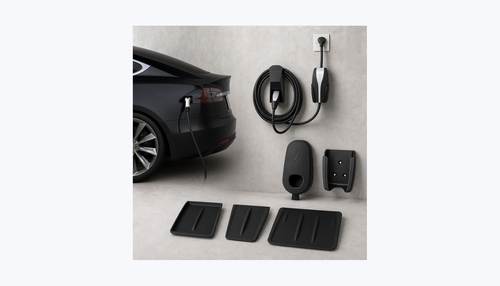
Gear up your Tesla with tested, custom-fit BASENOR accessories — shop Tesla accessories →
Sources & reporting notes
The links below identify the material source records used for this report.
- @wholemars on X (2026-07-01T17:04:58.000Z) — Direct source
- @TeslaNewswire on X (2026-07-01T18:03:58.000Z) — Direct source
Source links are preserved as published or accessed. See our editorial standards and corrections policy.
The BASENOR Editorial Desk covers Tesla, SpaceX, and related technology, curating reporting from primary sources — official accounts, regulatory filings, and software release data. Every article passes source-record and fact-checking review before publication. About the newsroom.
This report was curated by the BASENOR Editorial Desk from the sources listed above. Read our editorial standards or email editorial@basenor.com to report an error.