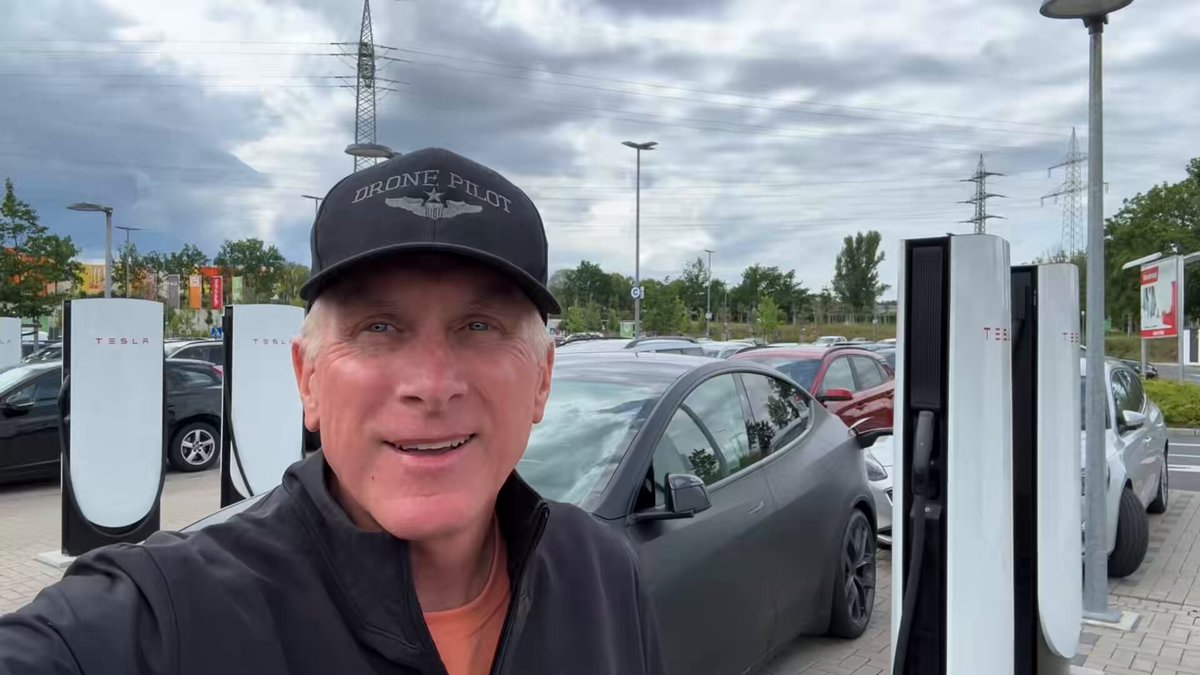
Tesla's Supercharger network has long been the gold standard for EV charging, but if you're driving in Europe — or planning to — there are real differences worth understanding before you hit the road. Joe Tegtmeyer, who has first-hand experience charging across both continents, calls the European experience 'very similar to the US' with a few notable nuances. Here's what that actually means in practice, and how it stacks up against the third-party charging landscape.

Does the plug actually work the same in Europe?
Not quite. In North America, Tesla uses NACS (North American Charging Standard). In Europe, EU regulations mandate the CCS2 (Combined Charging System Type 2) connector — and Tesla vehicles sold in Europe ship with CCS2 as standard. The practical upside: European Tesla owners can use a wider range of third-party fast chargers without needing an adapter, since CCS2 is the dominant multi-brand standard across the continent. The core Supercharger plug-and-charge experience, however, remains identical — pull up, plug in, and billing is handled automatically through your Tesla account.
What generation of Supercharger hardware is in Europe?
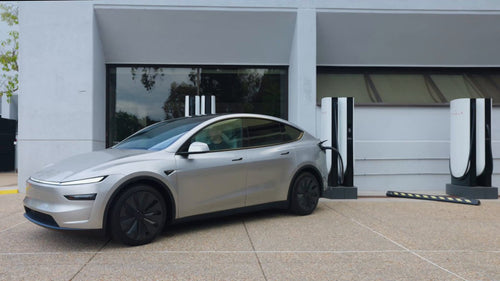
Europe actually got V4 Superchargers first. Tesla introduced V4 hardware in Europe in early 2023, roughly eight months before US deployment began in November 2023. V4 cabinets support voltages up to 1,000V and are designed to deliver up to 500 kW for compatible vehicles — double the 250 kW peak of V3 stalls. Notably, V4 dispensers feature longer cables, which matters when charging non-Tesla EVs whose port locations vary widely. As of early 2026, Tesla has officially ceased V3 Supercharger production at Gigafactory New York, meaning all new stalls being installed globally are V4.
How much does Supercharging cost in Europe compared to the US?
Pricing varies by country and time of day, but the structure is broadly similar. In the US, rates typically run $0.35–$0.50 per kWh, with some stations as low as $0.25 or as high as $0.60. In Western Europe (Germany, France, Netherlands), expect roughly €0.35–€0.55 per kWh at standard rates. Southern Europe (Spain, Italy, Portugal) tends to be slightly cheaper at €0.30–€0.45 per kWh. As of April 2026, Tesla updated its European pricing structure to include a membership tier at €9.99/month, which unlocks off-peak rates as low as €0.20–€0.28 per kWh. Non-Tesla drivers using European Superchargers typically pay a premium of around €0.10 or more per kWh unless they also subscribe. Idle fees apply in both regions — approximately €0.50 per minute in Europe once charging is complete and the station is at least 50% occupied.
How does the in-car navigation and site experience compare?
Functionally, it's the same. Tesla's route planning automatically factors in Supercharger stops, pre-conditions the battery, and displays live stall availability — all identical to the US experience. One newer feature, 3D Supercharger Site Maps, is now rolling out in Europe as well. First piloted in California and Texas in late 2025, these detailed visualizations show stall positions, cable reach, accessibility features, and real-time occupancy. European drivers began seeing them via the 2026.2 software series, with confirmed sites already live in Belgium. The network itself spans approximately 1,300 stations in Europe as of late 2024, compared to nearly 2,700 in North America — smaller in absolute terms, but coverage across major routes and urban centers is solid.
How does Supercharging compare to third-party chargers in Europe?
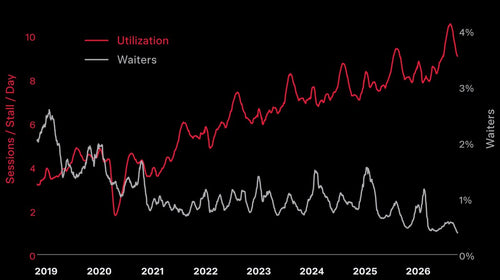
This is where the gap is most visible. Third-party networks in Europe are fragmented — different apps, different payment systems, inconsistent reliability, and varying speed tiers depending on the operator. Tesla's network, by contrast, reports over 99% uptime and requires zero setup beyond your Tesla account. The seamless billing, consistent hardware quality, and in-car integration make a meaningful difference on long trips. That said, Europe's CCS2 standardization means third-party options are more usable for Tesla owners than they historically were in the US, where adapter dependency was a friction point. If a Supercharger is full or unavailable, a CCS2-equipped European Tesla can use most public fast chargers without extra hardware.
Is Tesla opening European Superchargers to other brands?
Yes, selectively. Tesla has been opening Supercharger sites to non-Tesla CCS vehicles in several European countries, a process that began earlier in Europe than in the US. The CCS2 standard makes this technically straightforward. Non-Tesla drivers can access participating stations through the Tesla app, though they pay higher per-kWh rates unless enrolled in a membership plan. This expansion is ongoing, and the number of open sites continues to grow.
📋 Tracking Tesla software? See every firmware, FSD and app version in one place in our Tesla Software Update Tracker.
Related Gear
Gear up your Tesla with tested, custom-fit BASENOR accessories — shop Tesla accessories →
Sources & reporting notes
The links below identify the material source records used for this report.
- @JoeTegtmeyer on X (2026-06-10T10:08:18.000Z) — Direct source
Source links are preserved as published or accessed. See our editorial standards and corrections policy.
The BASENOR Editorial Desk covers Tesla, SpaceX, and related technology, curating reporting from primary sources — official accounts, regulatory filings, and software release data. Every article passes source-record and fact-checking review before publication. About the newsroom.
This report was curated by the BASENOR Editorial Desk from the sources listed above. Read our editorial standards or email editorial@basenor.com to report an error.