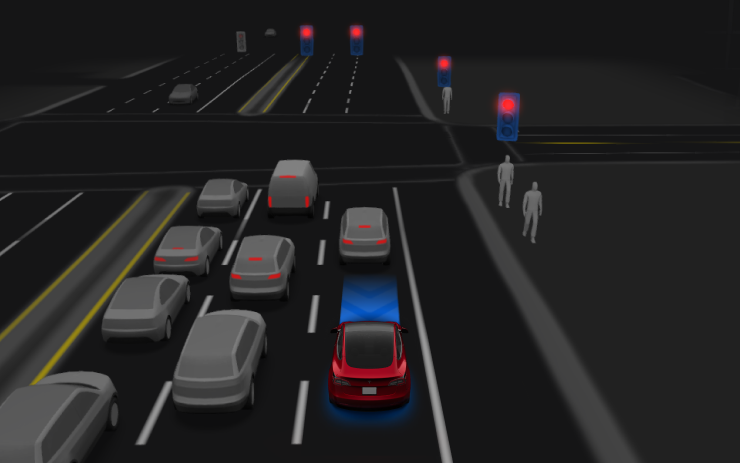
Tesla has begun pushing FSD (Supervised) v14.2 Lite to Hardware 3 vehicles via software update 2026.27.6, according to Teslascope's rollout tracking on September 9. This is the first time a v14-generation FSD build has reached HW3 cars — a milestone Tesla previously committed to during its Q3 earnings call. The Lite version distills capabilities from the HW4 FSD v14 stack into a form the older compute can run, and it lands with a bundle of features that most HW3 owners have never had access to before: Speed Profiles, Arrival Options, Start Self-Driving from Park, and a set of UI refinements.
Separately, HW4 vehicles on FSD v14.3.9 are getting Automatic Collision Evasion, which Whole Mars Catalog called a genuine turning point for how Tesla frames the driver-model relationship. If you drive a Tesla and haven't checked your software tab today, this is a good day to do it.
What's in v14.2 Lite
Teslascope logged five distinct features shipping with this build. Each was posted individually as it was detected in the rollout:

| Feature | Type | Hardware |
|---|---|---|
| FSD (Supervised) v14.2 Lite | Official | HW3 |
| Start Self-Driving from Park | Official | HW3 |
| Speed Profiles | Official | HW3 |
| Arrival Options | Official | HW3 |
| UI Improvements | Official | HW3 |
Action Plan: What to Do Right Now
1. Confirm you're on 2026.27.6
Open Controls → Software on your center screen. If you see 2026.27.6 and the release notes mention FSD (Supervised) v14.2 Lite, you're on the new build. If not, keep the car on Wi-Fi and check again over the next few days — Tesla is rolling this out in waves, and eligible HW3 cars in supported regions should be picked up progressively.
2. Set your default Speed Profile
Per Tesla's rollout pattern with v14+, new FSD activations default to "Sloth," which drives at or below the posted limit. If that's too passive for your commute, you can cycle through Sloth, Chill, Standard, Hurry, and Mad Max using the right scroll wheel or the on-screen menu tied to the Autopilot visualization. Pick your baseline once and the car will remember it.

3. Configure Arrival Options for your frequent destinations
Arrival Options tell FSD how to behave at the end of a route. According to Tesla's rollout of this feature starting with v14.1 in October 2025, the choices include Parking Lot, Street, Driveway, Parking Garage, and Curbside — and preferences save per destination. The practical move: next time you drive home, work, or your gym, set the arrival preference once. The car will apply it automatically on future trips to the same place.

4. Try Start Self-Driving from Park
With a destination set in navigation, a single tap on the touchscreen can now initiate FSD from Park (or from Drive/Reverse) rather than requiring you to pull out and engage. According to prior Tesla documentation, this functionality has been available on HW4 since early 2025 — this rollout brings it to HW3 cars for the first time. Set a destination, tap start, and let the car pull out of the driveway itself.

5. Explore the UI changes before your next drive
UI Improvements in this branch of FSD have typically added quick access to Speed Profile and Arrival Options directly from the Autopilot visualization, along with a Self-Driving stats section, according to Tesla's v14.2.2 release notes from December 2025. Spend five minutes tapping through the Autopilot screen while parked so you know where the new controls live before you're on the highway trying to find them.

The HW4 Side: Automatic Collision Evasion
If you drive an AI4 (HW4) car in North America, the parallel v14.3.9 rollout brings something bigger than a UI refresh. Automatic Collision Evasion lets FSD (Supervised) intervene with steering, braking, or acceleration to avoid an imminent frontal collision — even when you're driving manually and standard automatic emergency braking might not be enough. According to reporting on the feature, the system can also engage if it detects driver inattention or an unintentional FSD disengagement.
Whole Mars Catalog framed it this way: for years the messaging around FSD has been that the driver must remain fully attentive because the model isn't safe to run unsupervised. That is still true. But Automatic Collision Evasion adds a second layer — the model watching the driver, ready to intervene if the human misses something. It's the first time Tesla is publicly positioning the neural net as a safety net for the human, not just the other way around.
Note: v14.3.9 was briefly pulled shortly after its September 8 rollout for reasons Tesla did not disclose, then re-released. If your car is on HW4 and hasn't received the update yet, that pause may be why.
What to Watch Next
Two things worth tracking over the next week or two. First, whether Tesla broadens the HW3 rollout beyond the initial regions — the fact that this is the first v14 build to reach HW3 at all is the story here, and coverage will hinge on how quickly it scales. Second, whether Automatic Collision Evasion behaviors show up in real-world dashcam footage. Features like this only earn credibility once owners see them work in the wild. For our ongoing FSD coverage, that's the next data point to look for.
📋 Tracking Tesla software? See every firmware, FSD and app version in one place in our Tesla Software Update Tracker.
Related Gear
Gear up your Tesla with tested, custom-fit BASENOR accessories — shop Tesla accessories →
Sources & reporting notes
The links below identify the material source records used for this report.
- @teslascope on X (2026-09-09T01:00:57.000Z) — Direct source
- @teslascope on X (2026-09-09T01:01:00.000Z) — Direct source
- @teslascope on X (2026-09-09T01:01:02.000Z) — Direct source
- @teslascope on X (2026-09-09T01:01:05.000Z) — Direct source
- @teslascope on X (2026-09-09T01:01:08.000Z) — Direct source
- @wholemars on X (2026-09-09T01:03:59.000Z) — Direct source
Source links are preserved as published or accessed. See our editorial standards and corrections policy.
The BASENOR Editorial Desk covers Tesla, SpaceX, and related technology, curating reporting from primary sources — official accounts, regulatory filings, and software release data. Every article passes source-record and fact-checking review before publication. About the newsroom.
This report was curated by the BASENOR Editorial Desk from the sources listed above. Read our editorial standards or email editorial@basenor.com to report an error.