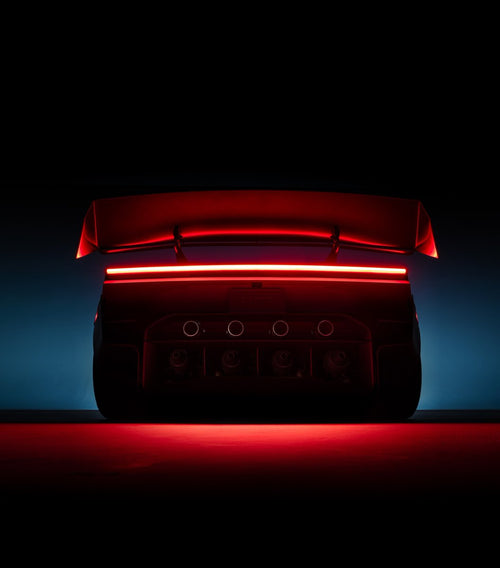

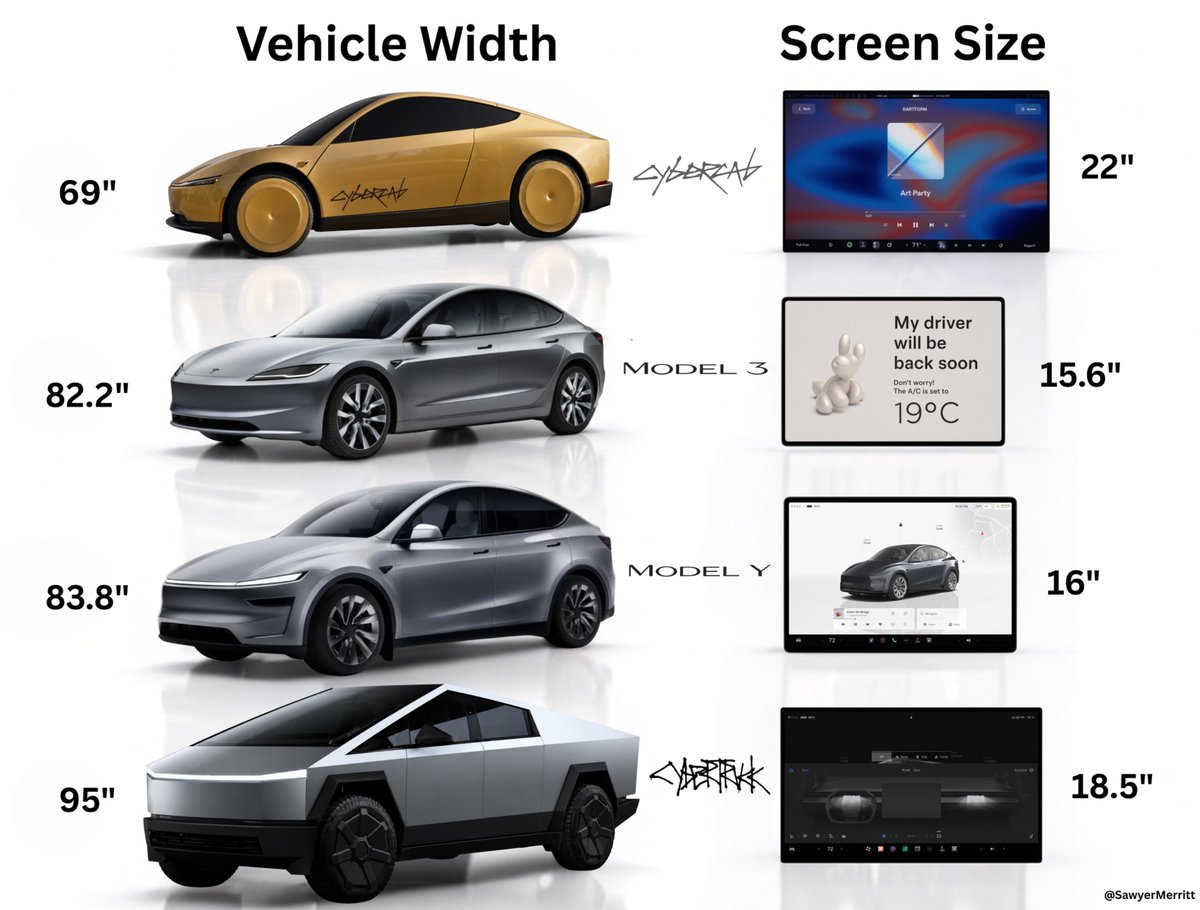
Tesla's Cybercab is not just the company's first purpose-built robotaxi — by the numbers now circulating, it is the most efficient production vehicle ever built. In a Monday post, investor and Tesla-watcher Sawyer Merritt laid out a specification sheet that reframes the two-seater from a novelty into a serious engineering achievement: a 47.6 kWh battery, over 6.1 miles per kWh, a 3,113 lb curb weight, and the largest screen and most legroom of any Tesla despite being the smallest vehicle in the lineup.
The numbers matter because they represent a validated efficiency ceiling the rest of the EV industry has spent a decade chasing. And they explain, more clearly than any keynote slide, why Tesla is betting the future of autonomy on this specific vehicle rather than a retrofitted Model 3 or Model Y.

The Efficiency Number Is the Headline
6.1 miles per kWh — or roughly 165 Wh/mile — is not a marketing figure. According to reporting from Electrek citing Tesla VP of Vehicle Engineering Lars Moravy, this is a certified EPA rating, not an internal projection. For context, the Model 3 RWD, long considered the efficiency benchmark among mainstream EVs, sits closer to 4.0 miles/kWh. The Lucid Air Pure, which held the previous efficiency crown, is rated around 5.0 miles/kWh.
Cybercab clears both by a wide margin. And it does so with a battery that would be considered small even by compact-EV standards. According to the specifications Merritt shared, the pack is 47.6 kWh — a single lithium-ion pack running at 326V and 146 Ah, per data reported by autoevolution and Teslarati. For comparison, the base Model 3 RWD ships with roughly a 60 kWh pack. Cybercab does more with less.
Key Figures
| Specification | Value |
|---|---|
| Battery capacity | 47.6 kWh |
| Efficiency | Over 6.1 miles/kWh (~165 Wh/mi) |
| Curb weight | 3,113 lbs (1,412 kg) |
| Estimated EPA range | ~293 miles (per Electrek) |
| Front motor | 219 HP / 163 kW (front-wheel drive) |
| Interior legroom | 43.4 inches |
| Screen size | ~21 inches (largest of any Tesla) |
| Cargo capacity | 20.2 cu ft / 220 lbs |
How Tesla Got Here
The efficiency story is a compound of three engineering decisions, each visible in the spec sheet.
Weight. At 3,113 lbs, Cybercab is lighter than a Model 3 RWD by roughly 400 lbs, according to autoevolution. Every kWh doesn't have to work as hard because there is less mass to move. Removing the steering wheel, pedals, side mirrors, and traditional driver-side controls freed both space and pounds.
Drivetrain simplification. This is Tesla's first front-wheel-drive vehicle. A single 219 HP front motor replaces the dual-motor complexity that appears in most of the current lineup. Fewer components, fewer parasitic losses, and a single power path from battery to wheels.
Package. Two seats. No steering column intrusion. The wheelbase and low frontal area are optimized for aerodynamic drag rather than for cabin flexibility. The result is a vehicle shaped by its use case — short-to-medium autonomous rides — rather than compromised to serve every possible driver need.
Production began at Gigafactory Texas in February 2026, with volume ramp starting in April, and the vehicle was formally introduced into commerce on May 29, 2026, according to Electrek. Public rides in Austin began in September 2026.
What the Numbers Mean for the Robotaxi Business Model
Efficiency is not a vanity metric when the vehicle is meant to drive tens of thousands of miles per year with no human at the wheel. Tesla has targeted an operating cost below $0.30 per mile, with energy costs estimated near 2.6 cents per mile at average US electricity rates, per reporting from Teslarati and Electrek.
That figure only works if the miles-per-kWh number holds up in the real world. At 6.1 mi/kWh, a Cybercab covering 100,000 miles a year consumes roughly 16,400 kWh — significantly less than a Model 3 doing the same duty cycle. Multiply that across a fleet, and the operating-cost gap between Cybercab and any repurposed passenger EV becomes structural, not incremental.
It also changes the charging math. A smaller battery charges faster in absolute terms, meaning Cybercab spends less time off the road per charging session. Combined with wireless inductive charging (a design element Tesla has previewed but not fully detailed publicly), the vehicle is engineered to maximize revenue-generating hours.
What to Watch Next
Three specific signals will determine whether the spec sheet translates into a working business:
- Real-world efficiency data from the Austin robotaxi fleet as it accumulates miles. EPA-certified numbers and fleet-averaged numbers rarely match exactly, and autonomous driving profiles differ from human ones.
- Volume ramp at Gigafactory Texas. Tesla has previously suggested aggressive production targets for Cybercab. The gap between the current output and any stated goal will define how quickly the fleet can scale.
- Regulatory expansion beyond Austin. The vehicle lacks a steering wheel and pedals, which puts it under FMVSS exemption requirements in the US. Each new market requires its own approval track.
The Editor's View
Cybercab reads, on paper, like the first Tesla designed backward from a unit-economics spreadsheet rather than forward from a driver's wish list. The 6.1 mi/kWh number is not there to impress owners — most Cybercabs will never have an owner in the traditional sense. It's there because at fleet scale, every fraction of a mile per kWh compounds into millions of dollars of margin. For Tesla owners watching from the sidelines, the more interesting question is which of these efficiency lessons — the FWD single-motor layout, the weight reduction, the aggressive aero — filter back into the next generation of Model 3 and Model Y.
🚕 Following the Robotaxi rollout? See every operating city, launch date and announced market in our Tesla Robotaxi Tracker.
Related Gear
Gear up your Tesla with tested, custom-fit BASENOR accessories — shop Tesla accessories →
Sources & reporting notes
The links below identify the material source records used for this report.
- @SawyerMerritt on X (2026-09-08T20:49:25.000Z) — Direct source
Source links are preserved as published or accessed. See our editorial standards and corrections policy.
The BASENOR Editorial Desk covers Tesla, SpaceX, and related technology, curating reporting from primary sources — official accounts, regulatory filings, and software release data. Every article passes source-record and fact-checking review before publication. About the newsroom.
This report was curated by the BASENOR Editorial Desk from the sources listed above. Read our editorial standards or email editorial@basenor.com to report an error.