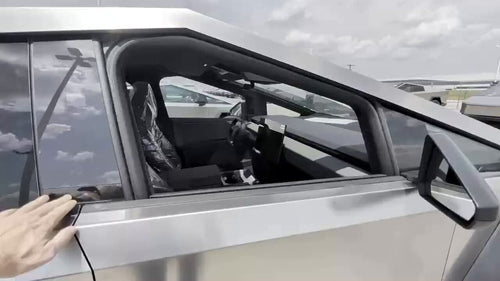
Tesla's Vehicle-to-Home (V2H) capability — the ability to run your house off your car's battery — has moved from long-promised to genuinely available. Teslascope flagged the feature's active inclusion this week, and with the Cybertruck-plus-Powerwall 3 integration confirmed as of September 16, 2026, there are real, practical questions owners need answered before they assume their driveway is now a backup generator.

Which Tesla vehicles actually support V2H right now?
According to available compatibility data, V2H is supported on all Model 3 and Model Y vehicles produced from 2024 onwards, and all Cybertrucks. Older vehicles — pre-2024 Model 3, Model Y, and legacy configurations — lack the onboard power electronics required for bidirectional energy flow. If you're unsure of your build date, check your vehicle's build sheet in the Tesla app under About > Additional Vehicle Information.
Do I need a Powerwall, or can I use V2H without one?
It depends on what you're trying to do. For whole-home backup during a grid outage, you need either a Powerwall 3 or a Powershare Gateway paired with the Universal Wall Connector. The Powerwall 3 integration is the more capable path — it allows the Cybertruck to extend home backup duration by more than three days, effectively adding storage comparable to roughly nine additional Powerwalls. Without a Powerwall, a Powershare Gateway handles the automatic transfer switching that keeps your home safely isolated from the grid during an outage.
What is the Universal Wall Connector, and is it required?
Yes, the Universal Wall Connector is a required component for V2H. Unlike a standard Wall Connector, it acts as an intelligent energy gateway — it contains an integrated inverter and automatic transfer switch, which are the two pieces of hardware that make bidirectional flow safe and practical. It's priced at approximately $800 USD / €850 EUR. For homes without a Powerwall, the full Powershare Home Backup hardware bundle (Universal Wall Connector plus Powershare Gateway) runs $1,990 before installation costs.
How much power can the system actually deliver to my home?
Both the Cybertruck's export feature and the Powerwall 3 support up to 11.5 kilowatts of AC output. That's enough to run essential loads — refrigerator, lighting, a few circuits — comfortably, and with careful load management, most of a typical home. The Cybertruck's large battery pack is the key advantage here: its capacity is comparable to approximately nine Powerwalls stacked together, which is why the three-day backup figure is plausible under moderate consumption.
Is this available for Model 3 and Model Y owners too, or just Cybertruck?
The Cybertruck-plus-Powerwall 3 pairing is the most fully documented configuration right now, with confirmed availability as of September 16, 2026. Model 3 and Model Y (2024 and newer) are listed as V2H-eligible, but the Cybertruck's larger battery makes it the primary use case for extended home backup. The 2026 Model Y Performance, for instance, includes bidirectional charging for Vehicle-to-Load (V2L) via the charge port, though full V2H functionality for that specific variant is still being clarified. Owners of 2024+ Model 3 and Model Y should watch for further OTA and app updates that expand the feature's scope to their vehicles.
Was this feature available before September 2026?
Not fully. Tesla activated the underlying V2H capability in July 2025, but as recently as August 19, 2026, Tesla's own owner-support page noted that Powershare with Powerwall was not yet generally live and was pending an OTA update. The Teslascope report this week and the September 16 Cybertruck-Powerwall 3 confirmation together suggest that OTA has now landed — making this a genuinely recent development rather than a feature that's been quietly running for months.
What do I need to do to get this set up?
First, confirm your vehicle is eligible (2024+ Model 3/Y or any Cybertruck). Second, check whether you already have a Powerwall 3 installed — if so, you need the Universal Wall Connector and to enable the export feature in your vehicle settings and the Tesla app. If you don't have a Powerwall, budget for the $1,990 hardware bundle plus installation. Tesla Energy's configurator and your local Tesla Energy advisor are the right starting points for a site-specific quote, since installation complexity varies significantly by home electrical panel and local permitting requirements.
For owners who've been waiting on this since the Cybertruck's original Powershare debut, the Powerwall integration closes the last major gap — turning a parked vehicle from a passive asset into active home infrastructure. The next question is how quickly Tesla expands full V2H functionality beyond Cybertruck to the broader 2024+ Model 3 and Model Y fleet.
Related Gear
Gear up your Cybertruck with tested, custom-fit BASENOR accessories — shop Cybertruck accessories →
Sources & reporting notes
The links below identify the material source records used for this report.
- @teslascope on X (2026-09-19T04:05:26.000Z) — Direct source
Source links are preserved as published or accessed. See our editorial standards and corrections policy.
The BASENOR Editorial Desk covers Tesla, SpaceX, and related technology, curating reporting from primary sources — official accounts, regulatory filings, and software release data. Every article passes source-record and fact-checking review before publication. About the newsroom.
This report was curated by the BASENOR Editorial Desk from the sources listed above. Read our editorial standards or email editorial@basenor.com to report an error.