📌 UPDATE — July 31, 2026
Despite recent speculation, the new 50W ventilated wireless phone charger will not be coming to the United States at this time, according to Teslascope citing information shared by @SawyerMerritt. The charger appears tied to the newly launched Model Y L — the long-wheelbase 6-seat variant that began arriving in US showrooms in July 2026 — but the wireless charging hardware is currently a China-market feature only. US buyers hoping to see this tech in their Model 3 or Y should temper expectations for now, as no US rollout timeline has been indicated.
@teslascope · Jul 31, 2026
"Despite recent rumors we've seen posted by certain accounts and publications, the new wireless phone charger won't be coming to the United States just yet."
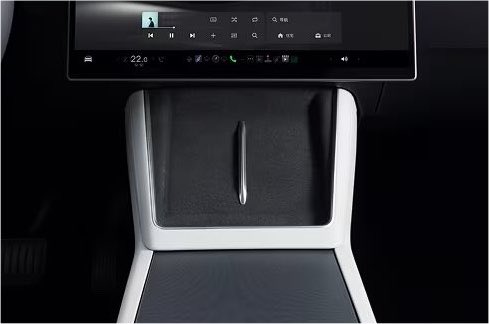
Tesla is reportedly planning to bring its ventilated 50W wireless charging pads — currently exclusive to the Chinese Model Y L — to the broader Model 3 and Model Y lineup. According to Not a Tesla App, the upgrade is coming, and Sawyer Merritt's hands-on look at the Model Y L this week gives us our clearest picture yet of what owners can expect. Here are five details worth knowing.

1. The Current Charger Is a Known Pain Point
Standard wireless charging pads in the Model 3 and Model Y have long drawn complaints from owners — slow speeds (typically 7.5W–10W) and phones that get uncomfortably hot during a long drive. Heat is the enemy of both charging speed and battery longevity, and without any active cooling, the existing pads throttle down when temperatures rise. The problem isn't unique to Tesla, but it's been noticeable enough that it became a recurring topic in owner forums.
2. The Model Y L's Solution: Active Cooling Vents
The ventilated pad in the Model Y L takes a direct approach: small slit-style air vents blow cool air directly onto the phone while it charges. It's a simple mechanical fix that addresses the root cause rather than just tolerating the heat. Sawyer Merritt got a close look at the hardware during his Model Y L walkthrough this week, giving the clearest public confirmation yet of how the system is implemented in a production vehicle.

3. The Speeds Are Asymmetric — and Significant
In the Model Y L, the driver-side pad supports up to 50W charging, while the passenger side runs at 30W. Both figures are a dramatic step up from the current generation. There's an important caveat, though: 50W wireless charging relies on proprietary standards used by Chinese phone manufacturers like Huawei and Xiaomi. The global Qi standard tops out at 15W (Qi2), and Qi2.2 reaches 25W. iPhone and most international Android users will likely see speeds closer to those Qi limits rather than the full 50W — still a meaningful improvement over today's pads, but not the headline number.
4. The Model Y L Rollout Has Been Uneven
The Model Y L launched in China in August 2025 and has since expanded to Australia, New Zealand, the Philippines, and the US (July 2, 2026). But the US rollout has come with a wrinkle: early showroom units reportedly showed the older charging pad design without visible cooling vents, and Tesla sales staff have been uncertain about whether US vehicles will definitively ship with the cooled hardware. That ambiguity makes the reported expansion to standard Model 3 and Model Y all the more interesting — it suggests Tesla is moving to standardize the upgraded pad across its lineup rather than keeping it as a Model Y L exclusive.
5. No Official Confirmation Yet — But the Direction Is Clear
The report comes from Not a Tesla App, a reliable tracker of upcoming Tesla features, but Tesla has not officially announced the upgrade for Model 3 or standard Model Y. There's no timeline, no pricing detail, and no confirmation of whether it will arrive as a factory option, a trim-level inclusion, or a mid-cycle refresh. What is clear: the hardware exists, it's in production, and the trajectory points toward a wider rollout. Owners of current Model 3 and Model Y vehicles shouldn't expect a retrofit — this will almost certainly be a new-build inclusion when it arrives.
The ventilated pad is a small but genuinely useful upgrade, the kind that doesn't show up in a spec sheet headline but makes a real difference on a daily commute. Whether it lands on Model 3 and Y in Q4 2026 or sometime in 2027 remains to be seen — but the signal from Not a Tesla App suggests it's a matter of when, not if.
Related Gear
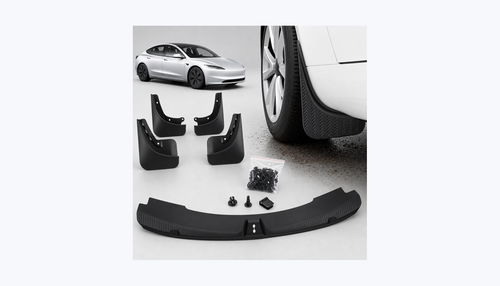
Gear up your Model 3 with tested, custom-fit BASENOR accessories — shop Model 3 accessories →
Sources & reporting notes
The links below identify the material source records used for this report.
- @TeslaNewswire on X (2026-07-30T16:17:24.000Z) — Direct source
- @SawyerMerritt on X (2026-07-30T16:46:23.000Z) — Direct source
Source links are preserved as published or accessed. See our editorial standards and corrections policy.
The BASENOR Editorial Desk covers Tesla, SpaceX, and related technology, curating reporting from primary sources — official accounts, regulatory filings, and software release data. Every article passes source-record and fact-checking review before publication. About the newsroom.
This report was curated by the BASENOR Editorial Desk from the sources listed above. Read our editorial standards or email editorial@basenor.com to report an error.