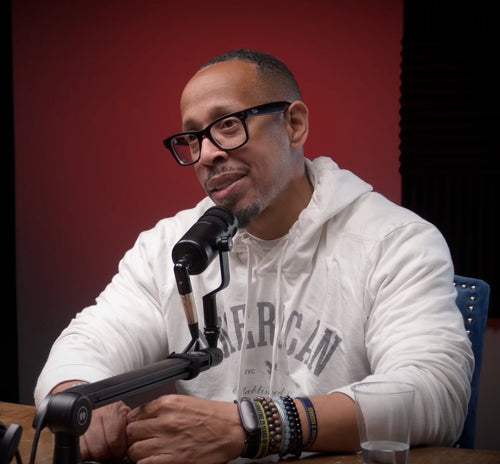
The News: Tesla VP of AI Ashok Elluswamy has affirmed that FSD has surpassed the iPhone as the most transformative technology of the 21st century — and teased that what's coming next will be even more significant.
Why It Matters: This is a rare, direct signal from the engineer running Tesla's AI program that the company's autonomous driving ambitions are on track — and that a major leap beyond current FSD is in active development.
Tesla's VP of AI, Ashok Elluswamy, doesn't make bold public statements often. So when he agrees that Full Self-Driving has replaced the iPhone as the defining technology of the 21st century — and then adds that what's coming next will be even more transformative — the Tesla community should pay close attention.
The comment, shared on March 8, 2026, isn't just corporate cheerleading. It's a calibrated signal from the man who oversees Tesla's entire AI and Autopilot software stack. And it arrives at a moment when Tesla's FSD program is hitting milestones that would have seemed impossible just a few years ago.

📊 Key Figures
| Metric | Value | Context |
|---|---|---|
| FSD Cumulative Miles | 8.4 billion | As of March 2026 |
| Miles Needed for Unsupervised FSD | ~10 billion | Musk's stated training target |
| Reasoning Features Shipped | FSD v14.2 | Earlier than v14.3 target |
| "Real-World Intelligence" Signal | Feb 27, 2026 | Elluswamy post unifying FSD, Robotaxi, Optimus |
The iPhone Comparison — Why It Lands Differently Now
Comparing FSD to the iPhone isn't new in Tesla circles. But hearing it from Elluswamy — not a marketer, not Elon Musk, but the engineer who actually ships the software — gives it a different weight. The iPhone comparison is apt for a specific reason: the iPhone didn't just replace a phone, it created an entirely new category of human behavior. Elluswamy is suggesting FSD is doing the same thing to transportation.
The timing is notable. Tesla's FSD-enabled fleet has now accumulated 8.4 billion cumulative miles, according to verified data as of this month. Elon Musk has previously stated that approximately 10 billion miles of training data are needed to achieve safe unsupervised self-driving. That gap is closing fast — and Elluswamy's comments suggest the team knows it.
"Real-World Intelligence" — The Bigger Signal
Just ten days before this statement, on February 27, 2026, Elluswamy posted a two-word phrase alongside a video: "Real-world intelligence." That post was widely interpreted as a signal that Tesla's AI ambitions are converging — that FSD, Robotaxi (Cybercab), and the Optimus humanoid robot program are being unified under a single AI reasoning framework.
This isn't incremental improvement. It's a architectural shift. Tesla is no longer building separate AI systems for driving, robotics, and autonomy — it appears to be building one generalized intelligence platform that powers all of them. That's the "upcoming tech" Elluswamy is teasing.
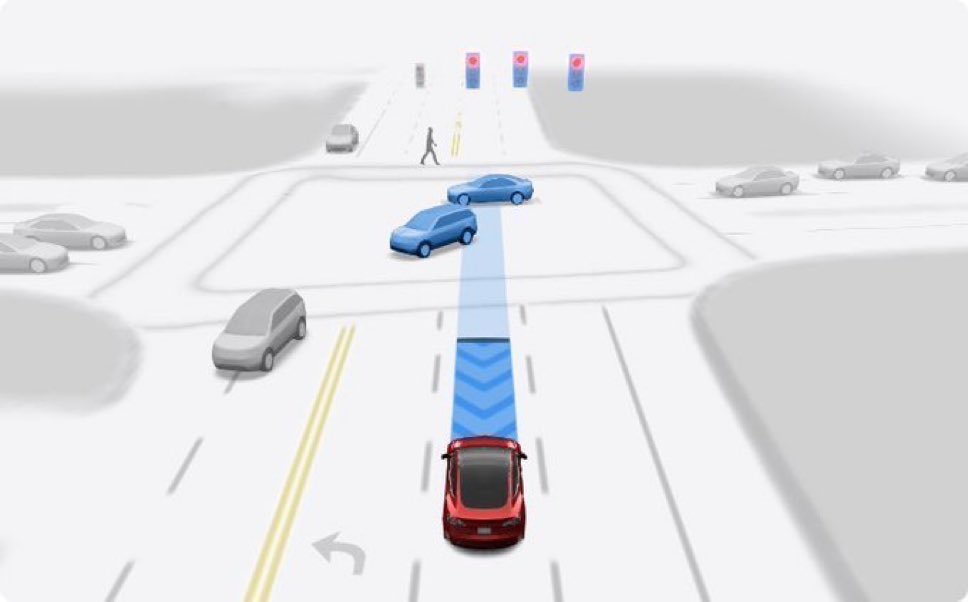
Further context: advanced reasoning capabilities — originally expected in FSD v14.3 — began shipping ahead of schedule in FSD v14.2. These features include the navigation system using reasoning to handle construction zones and identify parking options dynamically. Elluswamy confirmed "more and more reasoning" was planned for Q1 2026. That timeline is now.
🔭 The BASENOR Take
Timeline: Elluswamy's statement lands as Tesla approaches the 10-billion-mile training threshold — the milestone Musk has tied to unsupervised FSD. The convergence of that milestone with the "real-world intelligence" framing suggests a major announcement could be closer than the market expects.
Impact Level: 🔴 High — This is a direct signal from Tesla's AI lead, not a marketing claim. When the engineer says "the upcoming tech will be even more transformative," that's a product roadmap hint, not a tweet for engagement.
Confidence: Medium-High. The background context (8.4B miles, reasoning features already in v14.2, "real-world intelligence" post) all corroborate a narrative of accelerating capability. The specific nature of the "upcoming tech" remains unspecified.
For FSD subscribers: The current system is already more capable than most owners realize — especially with reasoning features now live in v14.2. If you haven't engaged deeply with FSD recently, now is a good time to revisit it. The gap between what it could do six months ago and what it does today is significant. For our full FSD coverage, see our dedicated tag.
📰 Deep Dive
What makes Elluswamy's statement strategically interesting is what he didn't say. He didn't name a version number. He didn't give a timeline. He didn't describe a feature. That level of deliberate vagueness from someone in his position typically means one of two things: either the technology isn't ready to be named publicly, or it's so significant that naming it would create premature expectations. Given Tesla's history with FSD announcements, both are plausible.
The "real-world intelligence" framing from February deserves more attention than it received. Tesla has historically kept its AI programs siloed in public communications — FSD is discussed separately from Optimus, which is discussed separately from Robotaxi. A unified "real-world intelligence" label suggests Tesla is preparing to present these as a single coherent platform. That reframing has enormous implications: it means every mile driven by a Tesla, every task completed by an Optimus unit, and every Cybercab ride feeds the same underlying model.
For existing FSD subscribers, the practical implication is straightforward: the system you're using today is a stepping stone, not a destination. The reasoning capabilities now live in v14.2 — handling construction zones, dynamic parking decisions — are early expressions of a much larger architectural shift. The 10-billion-mile training milestone, now less than 2 billion miles away, may be the trigger for the next major capability unlock.
The iPhone analogy, if it holds, carries one more implication worth sitting with: the iPhone's most transformative applications weren't built by Apple. They were built by developers on top of the platform. If Tesla's AI stack becomes a true general-purpose real-world intelligence layer, the applications that run on top of it — in vehicles, in robots, in logistics — may be things nobody has imagined yet. That's the bet Elluswamy appears to be making public, carefully, one statement at a time.
📋 Tracking Tesla software? See every firmware, FSD and app version in one place in our Tesla Software Update Tracker.
🚕 Following the Robotaxi rollout? See every operating city, launch date and announced market in our Tesla Robotaxi Tracker.
🤖 Tracking Tesla's humanoid robot? See every Optimus production milestone and appearance in our Tesla Optimus Tracker.
Related Gear
Gear up your Tesla with tested, custom-fit BASENOR accessories — shop Tesla accessories →
Sources & reporting notes
The links below identify the material source records used for this report.
- @TeslaNewswire on X (2026-03-08T15:04:35.000Z) — Direct source
Source links are preserved as published or accessed. See our editorial standards and corrections policy.
The BASENOR Editorial Desk covers Tesla, SpaceX, and related technology, curating reporting from primary sources — official accounts, regulatory filings, and software release data. Every article passes source-record and fact-checking review before publication. About the newsroom.
This report was curated by the BASENOR Editorial Desk from the sources listed above. Read our editorial standards or email editorial@basenor.com to report an error.