The United Nations Economic Commission for Europe (UNECE) adopted the world's first unified regulatory framework for fully autonomous driving systems on June 24, 2026 — a development that removes one of the biggest structural barriers Tesla has faced in scaling FSD and Robotaxi internationally. The standard applies across roughly 50 to 60 countries and, critically, is reported to align with Tesla's existing system architecture.

What UNECE Actually Adopted
The UNECE World Forum for Harmonization of Vehicle Regulations voted unanimously to implement the new Automated Driving Systems (ADS) regulations. More than half of the 62 state parties to the 1958 agreement backed the measure, enabling mutual recognition of autonomous vehicles produced under these rules. An additional 13 countries — including the United States, Canada, and China — voted to incorporate the same regulations into a separate 1998 agreement.
The framework is not advisory. Manufacturers operating under it must implement audited safety management systems across the full lifecycle of any ADS, submit a structured safety case with claims, arguments, and supporting evidence, and demonstrate that their system poses no unreasonable risk. Continuous real-world performance monitoring is required post-deployment, and every qualifying vehicle must carry a data storage system for automated driving (DSSAD) to log safety-relevant events.
The regulations are expected to enter into force within approximately one month, with a target implementation date of January 2027.
Why This Is Significant for Tesla
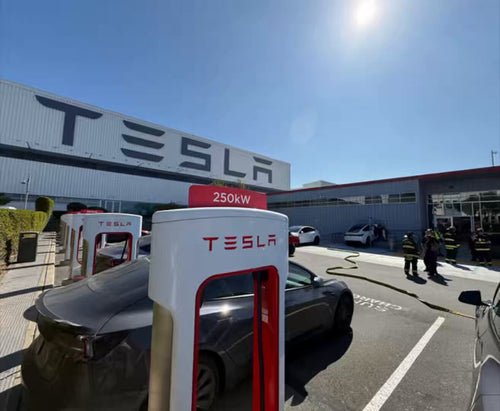
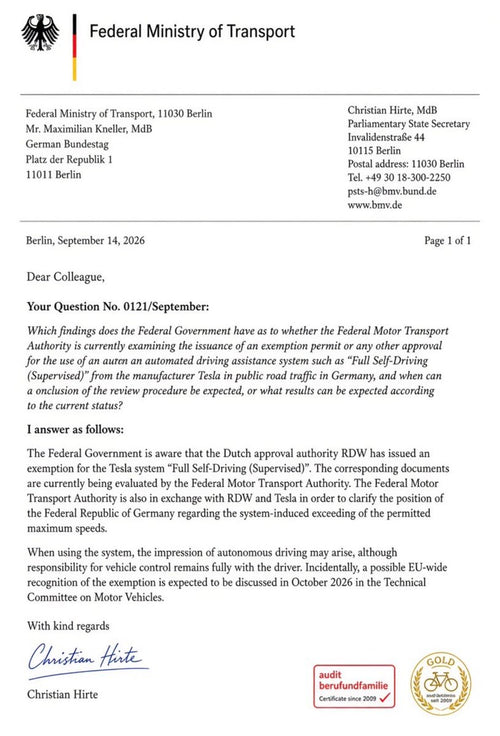
Until now, Tesla has had to navigate a patchwork of national and regional regulations to deploy FSD and any future Robotaxi service outside the United States. Europe alone involves multiple approval bodies. China operates its own certification process. Japan, Canada, and the UK each have distinct frameworks. The result has been a slow, market-by-market slog that delays revenue and limits the network effect that makes autonomous fleets more valuable at scale.
A single harmonized standard changes that calculus. If Tesla can demonstrate compliance with the UNECE framework once — through the required simulation, track testing, and real-world trial process — that approval carries weight across all signatory countries simultaneously. The reported alignment with Tesla's system architecture suggests the company may already be well-positioned to meet the outcome-focused requirements without fundamental redesigns.
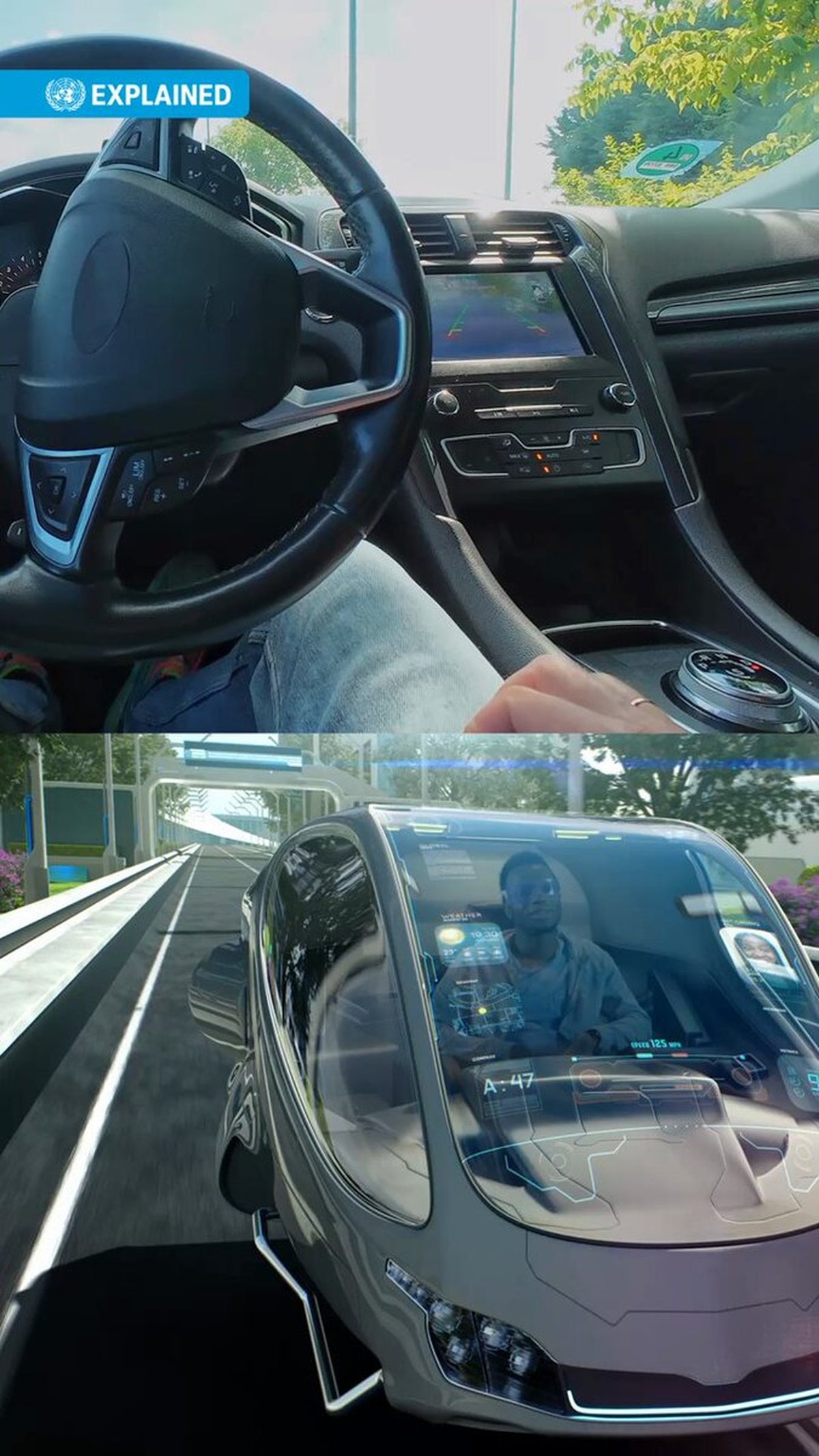
The framework also explicitly targets fully autonomous systems that handle all driving tasks without driver supervision, which maps directly to Tesla's Unsupervised FSD and the Robotaxi model. Assisted driving systems like current Autopilot are out of scope, so this is squarely aimed at the next tier of deployment Tesla has been working toward.
The Bigger Market Picture
The International Energy Agency projects between 700,000 and three million robotaxis operating across 40 to 80 major cities by 2035. That is a substantial addressable market, and the regulatory friction of getting there has been a legitimate constraint — not just for Tesla, but for the entire autonomous vehicle industry. The UNECE framework is designed specifically to prevent the fragmented national approaches that have slowed deployment and created compliance costs that disproportionately affect companies trying to operate globally.
For Tesla owners, the near-term practical effect may be limited — FSD feature availability is still determined by regional software rollouts and local approval processes that will take time to align with the new standard. But the structural groundwork being laid today is what makes a genuinely global Robotaxi network feasible in the 2027–2030 window Tesla has pointed toward. A regulatory environment that recognizes autonomous vehicles the same way it recognizes crash-test-compliant cars is a prerequisite for that vision. As of today, that environment exists.
🚕 Following the Robotaxi rollout? See every operating city, launch date and announced market in our Tesla Robotaxi Tracker.
Related Gear
Gear up your Tesla with tested, custom-fit BASENOR accessories — shop Tesla accessories →
Sources & reporting notes
The links below identify the material source records used for this report.
- @TeslaNewswire on X (2026-06-24T21:51:36.000Z) — Direct source
Source links are preserved as published or accessed. See our editorial standards and corrections policy.
The BASENOR Editorial Desk covers Tesla, SpaceX, and related technology, curating reporting from primary sources — official accounts, regulatory filings, and software release data. Every article passes source-record and fact-checking review before publication. About the newsroom.
This report was curated by the BASENOR Editorial Desk from the sources listed above. Read our editorial standards or email editorial@basenor.com to report an error.