The results from the 2026 xAI Grokathon are in, and the winning projects aren't just clever hackathon demos — they're a window into what Grok can actually do when developers push it past the chat interface. The 12-hour San Francisco event gave participants exclusive access to the latest Grok models and X APIs, and what they built in that window is worth paying attention to.
1. Grok Rebuilt a 1995 Car's ECU From Scratch
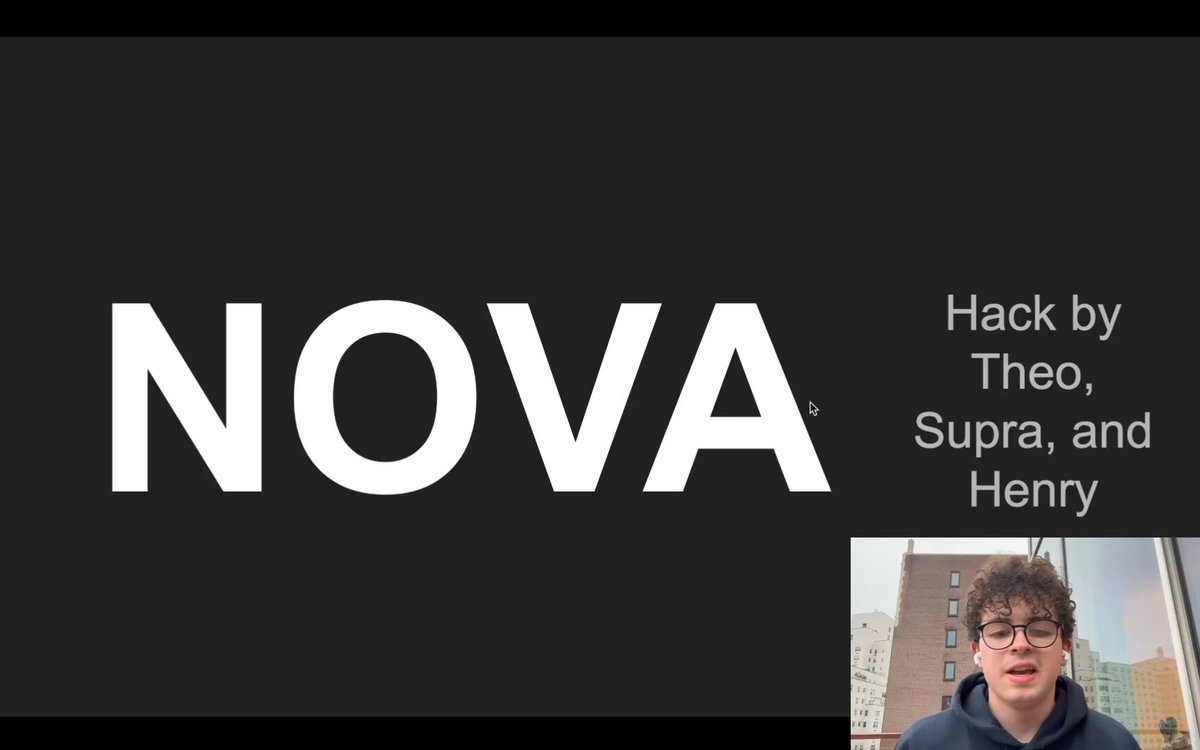
The first-place project, Nova, started with a deceptively simple premise: feed Grok a compiled binary and ask it to produce clean, readable C code. The team — Theo C, Supratik Panuganti, and Henry Zhang — began with 262KB Game Boy ROMs as a proof of concept, then escalated to something far more consequential: reconstructing the runtime of a 1995 car's Electronic Control Unit. According to the xAI announcement, Grok functioned as an 'active reverse-engineering system' rather than a wrapper around existing decompilation tools. That distinction matters. Legacy ECU code is notoriously opaque, and the ability to surface its logic in readable form has real implications for automotive diagnostics, security research, and restoration work.

2. The Jump From Game Boy ROMs to Automotive Code Is the Real Story
It would be easy to read Nova as a fun retro-computing stunt. It isn't. The progression from Game Boy ROMs to an automotive ECU was deliberate — each step increased the complexity, ambiguity, and real-world stakes of the binary being analyzed. A Game Boy ROM has a known architecture and well-documented instruction sets. A 30-year-old proprietary ECU does not. The fact that Grok could make the leap — producing legible C from a binary with no public documentation — suggests the model has developed a genuine capacity for low-level code reasoning, not just pattern-matching against known codebases. For anyone working on older vehicles, embedded systems, or automotive cybersecurity, that's a meaningful capability shift.
3. ThinkVoice Turns Brain Signals Into Spoken Words via Grok Voice
Third place went to ThinkVoice, a project that combined Grok Voice with brain-sensing hardware to enable communication without physical speech. The system reads subtle motor signals, uses Grok to understand conversational context, suggests likely responses, and lets the user select one through minimal movement. According to the xAI announcement, it 'understands the conversation, suggests what you might want to say next, and lets you select a response using subtle motor movements.' The underlying voice layer is likely Grok Voice Think Fast 2.0, which xAI announced on July 29, 2026, and which became the default grok-voice-latest alias on August 5. That model posts a 0.70-second time to first audio response and an 82.9% score on Artificial Analysis' speech-to-speech quality index — fast enough to make real-time assistive communication feel natural rather than labored.

4. Both Projects Treat Grok as Infrastructure, Not a Chatbot
The throughline across Nova and ThinkVoice — and arguably the most important signal from the entire Grokathon — is that neither team used Grok as a conversational assistant. They embedded it as a reasoning engine inside a larger system. Nova used it to drive an active reverse-engineering pipeline. ThinkVoice used it to model conversational intent and generate contextually appropriate responses from non-verbal input. That architectural choice reflects a broader shift in how developers are thinking about large language models: not as endpoints you query, but as components you compose. For Tesla owners, the relevance is direct — Grok is already integrated into Tesla vehicles, and the more developers treat it as composable infrastructure, the more capable in-car experiences are likely to become over time.
Both projects remain hackathon prototypes with no announced path to production. But as demonstrations of what Grok's underlying capabilities can support when developers have 12 hours and full API access, they set a high bar — and suggest the ceiling is still a long way up.
Sources & reporting notes
The links below identify the material source records used for this report.
- @SpaceXAI on X (2026-08-13T21:33:01.000Z) — Direct source
- @SpaceXAI on X (2026-08-13T21:33:02.000Z) — Direct source
Source links are preserved as published or accessed. See our editorial standards and corrections policy.
The BASENOR Editorial Desk covers Tesla, SpaceX, and related technology, curating reporting from primary sources — official accounts, regulatory filings, and software release data. Every article passes source-record and fact-checking review before publication. About the newsroom.
This report was curated by the BASENOR Editorial Desk from the sources listed above. Read our editorial standards or email editorial@basenor.com to report an error.