Should You Buy a Tesla in 2026? The Honest Trade-offs Before You Order
If you are asking whether a Tesla is worth buying in 2026, you probably do not need another hype-heavy EV article. You need the practical trade-offs. Can you charge easily at home? Will the running cost really feel lower than gas? Are you okay with the software-first ownership style? And if you do buy one, what should you have ready before delivery?
This guide stays in that lane. BASENOR does not sell cars, set Tesla pricing, or control incentives, so we are not going to pretend otherwise. Our role here is narrower and more useful: explain the ownership checkpoints that matter before you order, then show which BASENOR accessories make sense once you decide the car fits your life.
Important timing note for 2026 buyers
Tax-credit and charging-infrastructure incentives have changed repeatedly. During research, the U.S. Department of Energy's AFDC pages described federal clean-vehicle tax credits as tied to vehicles acquired before September 30, 2025, and charging-property credits as tied to property placed in service before June 30, 2026. That means 2026 shoppers should treat incentive language as date-sensitive, not as a standing promise.
Quick answer
You should buy a Tesla in 2026 if three things are true. First, home charging is realistic for your routine. Second, you want the EV ownership experience enough to accept some learning curve around charging, planning, and software-first controls. Third, your daily driving pattern actually benefits from lower fueling and maintenance complexity.
You should probably wait if home charging is still a hassle, your parking situation is unstable, or you are expecting a simple gas-car replacement with zero adjustment period. Tesla ownership can be excellent, but it rewards buyers who solve the setup before they solve the purchase.
The 3 questions that matter more than the badge
1. Can you charge at home?
AFDC's home-charging guidance is still the cleanest reality check. Most EV owners charge overnight at home, and Level 2 charging usually uses 240 V service.
If home charging is easy, Tesla ownership feels much smoother. If it is not, the car can still work, but the friction goes up fast.
2. Do the running costs fit your expectations?
FuelEconomy.gov's sample EV charging scenario shows how monthly electricity cost can stay reasonable, but that is not the same as “free driving.”
Buy the car because the total routine fits, not because one low-cost example sounded universal.
3. Are you buying for your real routine?
Daily commute, parking access, weather, passengers, and trip frequency matter more than internet arguments about Tesla in the abstract.
A good Tesla fit is lifestyle-specific, not fan-club specific.
Why home charging is the biggest fork in the decision
The most useful line from the AFDC home-charging guidance is not complicated: most EV drivers charge overnight at home. That one fact explains why some Tesla owners sound completely relaxed while others sound permanently annoyed. If you can plug in where you live, the car feels ready every morning and the ownership model makes sense. If you cannot, public charging becomes part of your weekly planning instead of just a backup.
That does not mean you must have a perfect garage setup before buying. It does mean you should pressure-test your actual routine. Apartment parking, shared parking, curb parking, and unpredictable access all deserve an honest answer before you place the order. The wrong time to discover charging friction is after you are already financially committed.
There is also a speed difference worth understanding. AFDC notes that Level 2 home charging usually uses 240 V service and charges faster than basic Level 1. For some buyers, that is the difference between “easy overnight charging” and “I am always managing the battery.”
| Ownership question | Why it matters | Safer way to answer it |
|---|---|---|
| Can I charge at home most nights? | Home charging is the foundation of low-friction EV ownership | Check your real parking and outlet situation before ordering |
| Will charging actually save me money? | Electricity cost depends on rates and miles driven | Use your own commute and utility pricing, not a generic promise |
| Do I need public charging often? | Frequent dependency changes the ownership experience | Treat public charging as support, not your ideal daily plan |
Running cost is real, but only when you frame it honestly
FuelEconomy.gov gives a useful example for grounding expectations: 97 MPGe, about 35 kWh per 100 miles, 12,000 miles per year, and electricity at $0.13 per kWh. In that scenario, home charging adds about $45.50 to the monthly electric bill. That is helpful because it turns the conversation into a real number instead of vague “EVs are cheaper” language.
But it is still only an example. Local electricity rates, annual mileage, weather, and charging mix can change the picture. So the honest takeaway is not that every Tesla will cost roughly the same to run. The honest takeaway is that a Tesla can make financial sense when your charging setup and mileage pattern line up with the ownership model.
If your life already supports overnight charging and a predictable commute, the cost logic gets stronger. If you expect to rely heavily on public charging or your local power cost is unusually high, the savings story becomes more conditional. Either way, the right answer comes from your routine, not from a screenshot.
What buyers often miss
People spend a lot of time debating the car and not enough time designing the ownership setup. A Tesla usually feels best when charging, first-week cabin protection, sun management, and daily storage are solved before the novelty wears off. That is a readiness problem, not a drivetrain problem.
Who should probably wait
There are three buyer profiles we would tell to slow down. First, anyone whose charging situation is still hypothetical. Second, anyone who expects a Tesla to feel exactly like a gas car except cheaper. Third, anyone who is leaning on expired or unclear incentive assumptions to justify the purchase. Those are all signs that the decision is not fully grounded yet.
Waiting is not failure here. In many cases it is the smarter purchase move. If your parking changes in six months, if home charging becomes easier after a move, or if you want to watch the market a little longer, those are legitimate reasons to delay. A Tesla is a better buy when the setup feels boringly practical, not when you are forcing the fit.
What BASENOR can help with after you decide to buy
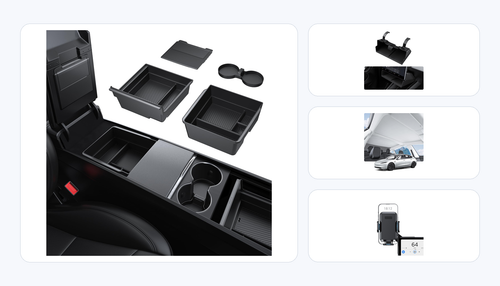
Once the purchase decision is real, the next question is not “How do I sell myself harder on the car?” It is “How do I make the first ownership month smoother?” BASENOR's verified product set supports that exact transition. A windshield sunshade helps with cabin heat when the car sits outside. A rear console organizer or trash can keeps daily clutter under control. An under-seat storage box creates hidden storage for things you do not want sliding around. And a wall-mount cable organizer helps keep the charging area cleaner if you are setting up home charging.

Best for everyday clutter (Juniper)
Model Y Juniper Rear Console Organizer — 2-in-1 Trash Can & Storage
$29.99. Cut for the Juniper rear-bench layout. Most 2026 Tesla buyers are taking delivery of a Juniper Model Y or a Highland Model 3 — Tesla discontinued the pre-Juniper Model Y in late 2024.

Best for hot parking situations
Windshield Sunshade — Foldable Silver Reflective
Universal Model 3 / Model Y fitment (2017–2026). Useful if your Tesla will sit outdoors and you already know cabin heat is going to become part of the ownership routine.

Best for hidden storage (Juniper)
Model Y Juniper Under Seat Storage Box — No-Slip Hidden 2PCS
$39.99. Cut for the 2025+ Juniper seat rail. Pre-Juniper Legacy owners (2020–2024) have a separate $37.99 SKU — buy by your build year, never by photo similarity.
A simple buy-or-wait framework
- Buy now if charging is solved, your commute fits EV ownership, and the car clearly improves your daily routine.
- Wait if charging is still messy, incentives are the main reason the math works, or your living situation is about to change.
- Prepare first if you are emotionally ready to buy but your practical setup is still half-finished.
What the first 90 days of ownership usually look like
One useful way to judge whether buying a Tesla makes sense is to stop thinking about order day and start thinking about the first three months. Week one is mostly setup: app access, charging rhythm, parking habits, and learning where the car fits into your routine. Weeks two through six are where the real ownership pattern shows up. You learn whether home charging feels effortless or annoying, whether cabin heat or clutter becomes a daily issue, and whether the software-first layout feels intuitive or distracting. By the 90-day point, most owners are no longer reacting to the purchase decision. They are living with the routine they built.
That is why we keep pushing the same point. A Tesla is a better buy when the routine is already visible before you order. If you know where the car will charge, where daily clutter will go, how often passengers ride with you, and how often the car sits in full sun, the ownership decision becomes much easier to test honestly. If all of that still feels abstract, the purchase decision is usually more emotional than operational.
Where buyers misread the Tesla ownership experience
Most buying mistakes happen because shoppers over-weight the headline and under-weight the routine. They compare 0 to 60 numbers, software features, or tax-credit headlines, but they do not spend enough time on the daily pattern. How easy is it to charge at night. How annoying is your parking situation in bad weather. How often do you leave items loose in the cabin. Will kids, pets, or work gear make the interior harder to keep clean than you expect. Those details sound small, but they shape whether the car feels easy to own.
Tesla ownership also tends to amplify your habits instead of hiding them. If you are organized, have stable parking, and like planning a little up front, the experience usually feels smooth. If your life is more improvisational, the weak points show up faster. That is not a criticism. It is just the honest trade-off. The car rewards a prepared setup more than a casual one.
We would frame it this way. Do not ask only whether the Tesla is good. Ask whether your current routine is Tesla-friendly. That single shift usually produces a better answer than hours of reading generic owner arguments online.
Three buyer scenarios we would judge differently
| Buyer profile | Why Tesla may fit | Why Tesla may not fit yet |
|---|---|---|
| Homeowner with stable overnight parking | Easy charging and repeatable routine reduce daily friction fast | If the electrical setup still is not ready, the smoothest part of ownership is delayed |
| Apartment driver with changing parking access | Can still work if charging access is reliable and close | Unstable parking can turn charging into a weekly management problem |
| Family buyer using the car every day | Low routine fueling friction can be a real quality-of-life gain | Cabin protection, heat control, and storage need to be solved early or the car gets messy fast |
Generation and vehicle-fit reality matters too
Not every Tesla ownership conversation is really about the same vehicle. BASENOR's own fitment work constantly reminds us that generation and body style change the ownership details. A Model Y family buyer thinking about sun exposure, back-seat use, cargo clutter, and hidden storage is solving a different problem from a performance-focused Model 3 owner. That does not mean one is better. It means the purchase decision gets sharper when you match the car to the life stage and cabin use pattern you actually have.
For 2026 shoppers, that also means avoiding generic “all Teslas are like this” claims. Charging needs, accessory priorities, and first-month pain points depend on the vehicle and how you use it. The right buying question is not whether Tesla ownership is universally good. It is whether a Tesla, in the version you would actually own, fits the routine you already have.
How to stress-test your decision in one evening
- Walk your parking situation at night. Stand where the car will really live and decide whether charging access is convenient or merely possible.
- List your weekly mileage honestly. Separate your routine from occasional road trips so you do not overbuild the problem.
- Decide what lives in the cabin every day. Water bottles, bags, work gear, kids' items, pet gear, and charging accessories all affect what “easy ownership” feels like.
- Price your own electricity. A government example is useful, but your own utility bill is better.
- Remove incentive wishful thinking. If the purchase only works when a date-sensitive benefit definitely lands, that is a fragile buying case.
Our honest recommendation
If you have stable parking, a realistic home-charging path, and a daily routine that benefits from overnight charging, buying a Tesla in 2026 can still be a very rational move. If your living situation is about to change, your charging plan is still vague, or your decision depends on incentive assumptions you have not verified, we would slow down. The goal is not to talk yourself into the car. The goal is to make sure the ownership model already fits before the order turns emotional.
That answer sounds less exciting than a hard yes or no, but it is more durable. Good EV buying decisions usually feel calm before they feel exciting. Once the routine is solved, then you can think about the nicer details, cabin heat control, storage, cleanup, and day-one readiness gear. That is where BASENOR products fit naturally, after the ownership math and daily routine already make sense.
Final takeaway
Buying a Tesla in 2026 can be a smart move, but only when the setup is real. Home charging matters more than internet excitement. Running costs matter more when you calculate them with your own routine. And tax-credit or deal language only helps if it still applies on the day you buy.
If you can solve those basics, the decision gets much easier. Then BASENOR becomes relevant in the right way, not as a fake reason to buy the car, but as a practical way to make the first months of ownership cleaner, cooler, and easier to live with.
Sources used for research and fact framing: U.S. Department of Energy AFDC home charging, AFDC EV and charging tax-credit summary, and FuelEconomy.gov charging-cost guidance.
Is home charging mandatory before buying a Tesla?
No, but it is the clearest divider between low-friction ownership and higher-friction ownership. You should know your charging plan before ordering.
Are federal EV tax credits guaranteed in 2026?
No. Credit language is timing-sensitive, so 2026 buyers should verify the current rules instead of relying on older headlines. For deeper context on Tesla Model Y lease pricing and trade-offs, see our guide on Model Y lease offers.
What should you buy first after deciding to get a Tesla?
Start with readiness items that match your real routine, like a sunshade, basic organizer, or charging-area cleanup accessory, instead of impulse-buying random upgrades.