Buying Guide · Updated April 2026
Tesla Model Y Lease Offers: What You Need to Know in 2026
Most shoppers searching Tesla Model Y lease offers are trying to decode one thing: what the headline monthly payment leaves out. This guide keeps the answer practical. We explain how current lease offers are framed, which variables change your real payment, and which BASENOR protection accessories actually make sense once the lease starts, especially if you want to reduce avoidable wear at turn-in.
Quick Answer
A strong Model Y lease offer is not just the lowest advertised monthly number. You need to check down payment, mileage cap, term length, taxes and fees, and what condition standards will apply when you return the car.
BASENOR does not sell leasing itself, so this article stays honest: it explains the offer, then shows which protection accessories can help a leased Model Y age more cleanly.
What this guide covers, and what it does not
This article is about understanding lease structure, not pretending every special offer is equally good. Independent trackers such as RealCarTips and Tesla lease calculators are useful because they show how fast headline lease numbers can move. They also remind shoppers that low monthly pricing often depends on a narrow combination of term, money down, and mileage assumptions.
What this guide does not do is claim BASENOR controls Tesla leasing terms, APR, or incentives. That would be false. BASENOR's credible role here is downstream of the lease decision: helping you protect the cabin and wheel surfaces that lease-return inspections tend to make feel expensive later.
That scope is narrower, but it is also more useful. You get realistic lease-reading advice and product recommendations that are actually backed by live BASENOR catalog pages.
The three parts of a Model Y lease offer shoppers underestimate
1. Cash due at signing
A low monthly payment can look much less impressive once you include down payment, first month, acquisition fees, and local taxes. Always compare the total launch cost, not just the monthly line.
2. Mileage cap
The lease only feels cheap if your annual miles stay inside the contract. If your commute, weekend travel, or family driving runs high, the “good deal” can age badly.
3. Wear exposure
Lease ads rarely lead with wear risk. But dirty carpets, rear-seat scuffs, and curb rash are exactly the kinds of small ownership details that make a return feel more expensive than expected.
How to read a Tesla Model Y lease offer without getting distracted by the headline
Start with the advertised monthly number, but treat it as the beginning of the conversation, not the answer. A useful lease comparison asks five questions in order. How much cash is due at signing? How many months is the term? What annual mileage is included? Are taxes and regional fees already reflected in the example? And what would your effective monthly cost look like if you spread the initial cash across the full term?
That last question matters because shoppers often compare a low-down example against a high-down example as if the monthly line alone were the truth. It is not. A calculator-style tool helps because it turns the structure into something comparable. If one offer saves you $70 a month but asks for several thousand dollars more up front, it may not actually be the better offer for your cash flow.
The other hidden comparison is behavioral. If you already know you will exceed a lower mileage tier, do not choose it just because the ad looks better. Paying for the right mileage up front is usually cleaner than pretending you will drive less than you do.
The honest BASENOR angle
BASENOR's real value in a lease-focused guide is ownership protection, not financing. That means recommending products that help reduce common wear, stains, and visible damage once the lease starts.
If you want lease math, use verified market and calculator sources. If you want to keep the cabin and wheels in better shape over 24 to 36 months, BASENOR has credible products for that job.
Three BASENOR products that make the most sense for leased Model Y owners


Which protection upgrade to buy first
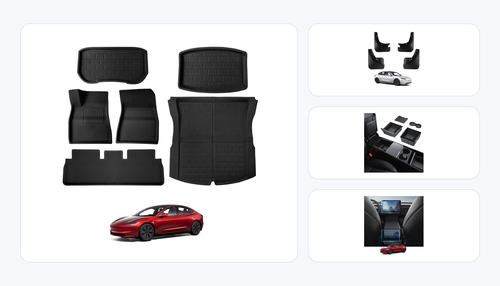
If your Model Y lease is a family vehicle or daily commuter, start with floor mats. They solve the broadest wear problem for the lowest decision complexity. If you have children or routinely carry passengers in back, add seat-back kick protectors next. If your main stress is curb rash on nicer wheels, the rim protector becomes the more emotionally valuable buy, especially on Juniper-spec fitment where that exact product scope is verified.
The important thing is not to oversell these products. They do not eliminate every lease-return charge and they are not financial products. What they do is reduce exposure to the types of visible wear that make a leased car feel more fragile over time. That is enough to justify them, and it is a much more honest claim.
So the right buying order is simple. Understand the lease first. Then spend modestly on the surfaces you are most likely to damage during normal use.
When a Model Y lease offer is actually a good fit
A lease tends to fit best when you value lower short-term commitment, expect to stay within the mileage range, and like the idea of moving on before long-term ownership questions start to matter. It becomes less attractive when you drive heavily, want to modify the vehicle deeply, or dislike the feeling of monitoring wear.
That is why lease-offer shopping should not stop at the calculator. The lifestyle fit matters just as much as the payment. If you know you park in crowded urban areas, haul messy gear, or regularly transport kids, you should factor in not only mileage but also how much daily wear management you are realistically willing to do.
For that reason, the strongest lease setup is not always the mathematically lowest payment. Sometimes it is the offer that matches how you actually drive and how carefully you expect to maintain the car during the lease window.
FAQ
Are Tesla Model Y lease offers the same in every market?
No. Offers vary by timing, region, taxes, fees, and the exact assumptions used in the ad example.
What matters more, monthly payment or due at signing?
Both matter. A lower monthly payment can hide a much larger up-front cost, so you need to compare the total structure.
Does BASENOR offer leasing or financing?
No. BASENOR's role in this guide is lease-friendly ownership protection, not lease origination or financing advice.
Which BASENOR accessory matters most for a leased Model Y?
For most owners, floor mats are the best first purchase because they protect the broadest high-contact area with the least complexity.