Tesla Guides · Updated April 2026 · By BASENOR Product Testing Lab
Tesla at Year 3: The Battery, Tire, and Resale Check We’d Do Before Warranty Anxiety Starts
Year three is where a Tesla stops feeling new and starts showing whether the owner tracked the right things. We check battery confidence, tire wear, software generation, and visible condition before resale anxiety becomes expensive.
Bottom Line Up Front
Battery: do not obsess over one range estimate. Record usable range trends, charging habits, warranty status, and any service alerts.
Tires: year three is often when uneven wear and alignment habits become visible enough to affect buyer confidence.
Resale: accessories cannot guarantee a higher resale price. They can protect the surfaces buyers photograph, touch, and use to judge care.
The 30-minute check we run at year three
A useful year-three Tesla check separates market factors from owner-controlled factors. Used-EV values move with incentives, interest rates, model refreshes, mileage, and regional demand. The owner-controlled side is narrower: battery-use records, tire condition, software and feature clarity, cabin cleanliness, exterior presentation, and whether high-wear surfaces still look cared for.
Our lab sequence starts with photos, not tools. Photograph the odometer, tire sidewalls, wheel edges, screen, front footwells, cargo lip, rear seat backs, lower rocker panels, and trunk area. These photos show the same areas a private buyer or appraiser notices first. If a surface looks rough in a phone photo under garage lighting, it will look rougher in a listing.
| Check area | What to record | Why it matters | Owner action |
|---|---|---|---|
| Battery | Range trend, charge routine, service alerts | Builds confidence without guessing degradation | Keep records and avoid one-day panic readings |
| Tires | Tread depth, shoulder wear, rotation history | Uneven wear hints at alignment or driving habits | Rotate, inspect, and quote replacement before listing |
| Wheels | Curb rash, cover damage, wheel size | Visible damage anchors buyer negotiation | Repair or protect only if the wheel size matches |
| Software generation | Trim, generation, hardware/features | Buyers compare refresh years closely | Describe Highland, Juniper, or legacy details accurately |
| Cabin/cargo | Mats, screen, seat backs, cargo lip | Condition signals care better than decoration | Clean, protect, or replace removable wear items |
This is not a luxury-detailing checklist. It is a confidence checklist. If a buyer sees clean records, clean contact surfaces, and accurate generation language, the car feels easier to trust.
Battery health: look for trends, not one scary estimate
Battery confidence should be trend-based because daily range estimates move with temperature, driving speed, tire setup, preconditioning, and recent consumption. The Department of Energy notes that EVs generally have fewer moving parts than gasoline vehicles, which helps routine maintenance, but the battery still deserves calm, documented observation. Year three is a good time to save service records, note charging habits, and confirm no battery or charging alerts are pending.
We would not present a single dashboard number as proof of battery health. Instead, record three things: your normal charge limit, the displayed range or energy use under similar conditions, and whether the car behaves consistently on familiar routes. If the car suddenly changes behavior, that is worth service attention. If the displayed range simply varies with winter, highway speed, or tire change, that is normal ownership context rather than automatic battery failure.
FuelEconomy.gov lists 2025 Model 3 and Model Y efficiency data as a standardized reference point, but your real car depends on route, speed, weather, wheel size, and tire condition. That is why tire and battery checks belong together. A car with poor alignment, low pressure, or aggressive highway use can look inefficient even when the high-voltage battery is not the root problem.
Tires and wheels are the year-three surprise cost
Tires are the item owners under-budget most often because EV torque, vehicle weight, wheel size, road surface, and rotation habits all matter. At year three, we inspect tread depth, shoulder wear, pressure history, vibration, alignment symptoms, and whether the wheels show curb rash. A buyer can see wheel damage instantly; they cannot see your private charging math.
We also separate tire safety from resale presentation. If tires are near replacement, be honest and price accordingly. If one shoulder is wearing faster than the other, investigate alignment before installing a new set. If wheel edges are scratched, decide whether repair or a wheel-specific protector makes sense before listing photos. Do not install a 20-inch rim protector on a different wheel size just because it looks close online.
For Model Y Juniper owners, confirm wheel size and generation before buying protection. For Model 3 Highland owners, separate Highland-specific cabin and screen products from legacy Model 3 parts. A wrong-fit accessory becomes a negative signal because it tells the next owner you guessed on compatibility.
Software generation and hardware clarity affect buyer trust
Year-three resale conversations often include software, driver-assistance options, hardware generation, screen layout, and refresh details. This is where accurate wording matters. Model 3 Highland removed the physical stalks and uses steering-wheel buttons for turn signals. Model Y Juniper retains the physical turn-signal stalk and uses touchscreen shifting. Mixing those descriptions is a credibility problem.
We recommend building a simple owner note before sale: exact model year, trim, wheel size, generation, charging setup, included accessories, service records, and any software features that transfer with the vehicle. Do not overpromise future software value. Buyers want clear facts, not hype.
The resale principle is the same as fitment: exact beats vague. A 2024-2026 Model 3 Highland part should not be described as a generic Model 3 accessory unless the product page confirms broader compatibility. A 2025-2026 Model Y Juniper part should not be treated as a legacy Model Y part. At year three, these details are no longer trivia; they are buyer-confidence details.
Condition protection that is still rational at year three
Accessories do not erase market depreciation, and we do not claim they create a fixed resale premium. Their job is narrower and more useful: protect or refresh the surfaces that still influence buyer confidence. At year three, floor mats, screen protection, cargo-lip protection, mud flaps, rim protection, and rear-cabin protection are practical if they solve visible wear or prevent more damage before the next ownership stage.
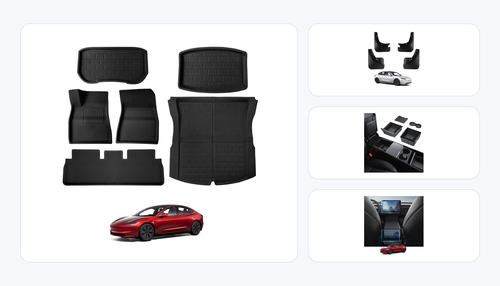
2024-2026 Model 3 Highland Floor Mats
Protects carpet and cargo areas that buyers inspect first.
View product2025-2026 Model Y Juniper Mud Flaps
Reduces rocker-panel road spray before paint wear shows in resale photos.
View productHighland / Juniper Matte Screen Protector
Owner-choice protection for high-touch display glass; not a Tesla-required item.
View product2025-2026 Model Y Juniper Rear Bumper Guard
Prevents loading-sill scratches from luggage, pets, strollers, and gear.
View product2025-2026 Model Y Juniper 20-inch Rim Protector
Helps prevent visible curb-rash damage on 20-inch Juniper wheels.
View product2024-2026 Model 3 Highland Rear Seat Back Cover
Protects the rear cabin from kid, pet, luggage, and cargo marks.
View productThe real tradeoff is timing. Installing protection after damage has already happened may still improve daily usability, but it will not undo old scratches or stains. A rear bumper guard can stop the next stroller scratch; it cannot make an old loading mark disappear. A screen protector can protect from future cleaning marks; it is not a cure for a scratched display. Buy only where the use case is real.
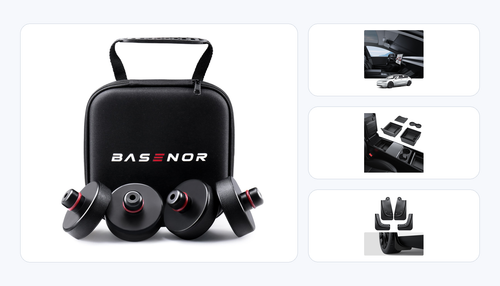
Real product examples we would inspect before resale


What we would do before listing a three-year-old Tesla
First, clean and document. Remove mats, photograph the carpet, wipe the display correctly, clean the cargo area, and record tire and wheel condition. A clean removable protector is a plus; a dirty protector hiding carpet stains is not.
Second, fix only the obvious friction points. Replace worn wipers, deep-clean mats, address odors, inspect cabin filters if they are due, and quote tires honestly. New cars do not need cabin filters immediately, but a three-year-old car deserves a real inspection based on climate and use.
Third, describe the generation correctly. Highland, Juniper, legacy Model 3, and standard Model Y are not interchangeable labels. The buyer should understand what is included, what fits, and what should not be transferred from another generation.
Fourth, do not over-accessorize for sale. A buyer wants the car to feel cared for, not cluttered. Keep exact-fit protection that looks clean and remove anything that rattles, blocks storage, looks worn, or creates questions.
Five mistakes that hurt year-three confidence
1. Treating displayed range as a laboratory battery test. It is a useful clue, not the whole diagnosis. Compare similar conditions and look for trends.
2. Ignoring tires until the buyer sees them. Uneven wear and curb rash are easy negotiation points because they are visible in photos.
3. Using wrong-generation accessory language. Highland and Juniper details matter. Juniper retains the turn-signal stalk; Highland does not.
4. Claiming accessories add a guaranteed resale amount. That is not how used-car markets work. Accessories protect condition; markets set value.
5. Waiting until year three to protect daily-contact surfaces. Protection is most useful before damage happens, but a clean refresh can still improve presentation and ownership comfort.
The battery record we would keep from month 36 onward
The best battery record is simple enough that an owner will actually maintain it. Once a month, write down odometer mileage, average energy use, normal charge limit, any unusual charging behavior, and whether a service alert appeared. Do the note after a normal week, not after one unusually cold road trip. The goal is not to produce a laboratory report; it is to show that the car behaved consistently under known conditions.
For resale, this matters because buyers fear vague battery stories. A calm record is more persuasive than a dramatic claim. If you can say, “Here is how I charged it, here is the range trend I watched, here are the service records, and here is the current tire and efficiency context,” the conversation becomes practical. If all you have is a screenshot of one estimated range number, the buyer has to guess what it means.
We also recommend separating battery condition from charging convenience. A home charging setup, cable organization, and clean garage routine make ownership easier, but they are not proof of high-voltage battery condition. Keep the language honest: charging habits are owner-care context, not a substitute for a diagnostic inspection when the car shows real symptoms.
A practical tire and alignment calendar for year three
Month 36 is a good time to stop relying on memory and start using a written tire log. Record tire brand, size, installation date if known, rotation dates, pressure habits, and any vibration or pulling. If the car has spent winters on salted roads or summers on hot highways, note that too. Tire wear is not only a safety issue; it tells a story about how the car was driven and maintained.
Inspect the inner and outer shoulders in daylight. Many owners look only at the easy visible face and miss uneven wear on the inside edge. If the tread looks uneven, get an alignment check before buying replacements. Installing new tires on an unresolved alignment problem simply moves the cost into the next set.
Wheel presentation deserves the same honesty. Small curb marks are common, but they should not be hidden in listing photos or disguised with the wrong product. If the car uses 20-inch Juniper wheels, use a protector designed for that size. If it uses a different wheel setup, do not force-fit a part because the color looks right.
The resale photo pass: what buyers judge before the test drive
Before a buyer asks detailed questions, they judge the car from photos. That is why we use a photo pass as a condition audit. Open every door, photograph both front footwells, rear seat backs, trunk floor, cargo lip, screen, steering area, lower paint areas, tires, and all four wheel edges. Do this before deep cleaning so you see the car honestly, then repeat after cleanup.
The most valuable protection pieces are the ones that make this photo pass boring. A clean all-weather mat should lift out without exposing stained carpet. A cargo-lip guard should show that luggage did not chew up the loading edge. Rear seat-back protection should make kid or pet use look managed rather than neglected. A screen protector, if used, should look cleanly installed and easy to remove if the buyer does not want it.
Do not leave tired accessories in place just because they are accessories. A curled mat edge, cloudy screen film, loose organizer, or scratched trim cover can make the car look less cared for. At year three, the right move may be cleaning, replacing, or removing a worn accessory rather than adding more parts.
Model 3, Model Y, Highland, and Juniper: how the check changes
Model 3 owners usually focus on front footwell wear, screen condition, trunk organization, tire discipline, and sedan-use records. Highland owners should be especially clear about the refreshed interior and stalkless controls because buyers compare 2024+ cars against older Model 3 listings. A Highland accessory should be described as Highland-fit unless the product page proves legacy compatibility.
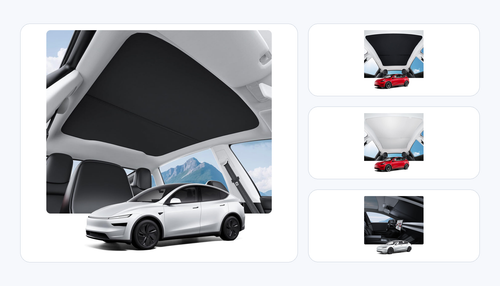
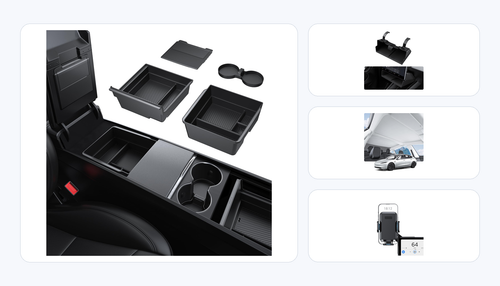
Model Y owners usually have a more cargo-heavy condition story. Pets, kids, sports gear, strollers, grocery bins, road-trip bags, and home-improvement loads leave marks in places a commuter sedan may never stress. Juniper owners should confirm exact refreshed-generation fitment for mud flaps, bumper protection, cargo accessories, console pieces, and roof or cabin products. Juniper also retains the physical turn-signal stalk, so it should not be described like a Highland steering-control setup.
Legacy Model 3 and standard Model Y owners still need a serious check. Older cars are not automatically worse, but they need clean separation from refreshed-generation parts. Good resale communication says exactly what the car is and exactly what fits it. Bad resale communication says “Model 3/Model Y accessory” and leaves the buyer to discover the generation mismatch later.
What we would not do at year three
We would not buy a large cosmetic bundle the week before listing. Buyers can tell when accessories are added to distract from basic condition. We would not claim a fixed dollar increase from mats, guards, protectors, or organizers. Used-car value is market-driven, and the honest claim is that protection helps preserve visible condition.
We would not ignore a tire or alignment issue just because the cabin looks clean. A well-protected interior does not compensate for unsafe tread or obvious uneven wear. We would not hide scratches with a product that does not fit the vehicle generation. And we would not use software or battery language that the seller cannot support with records.
The better approach is disciplined and slightly boring: document the car, fix maintenance items that are due, clean the surfaces that show care, keep exact-fit protection that still looks good, remove worn clutter, and describe the vehicle generation accurately. That is the year-three check we would trust.
The handoff package we would give a future buyer
A three-year-old Tesla is easier to sell when the next owner receives a clean handoff package. We would include the window sticker or configuration summary if available, service records, tire records, charging-equipment notes, accessory receipts for exact-fit protection, and clear photos of the areas normally hidden by mats or cargo pieces. This turns the conversation from “trust me” into “here is the evidence.”
Keep the package factual. Do not promise that a mat, guard, or protector changes the resale market. Say what it protected, when it was installed, and whether it is removable. If a product is generation-specific, name the generation clearly. A Model 3 Highland rear-seat protector, a Model Y Juniper mud flap set, and a legacy Model 3 floor mat solve different fitment problems. The cleaner the language, the easier it is for the buyer to understand what stays with the car.
This is also where small omissions hurt trust. If the car had a tire replacement, include it. If an accessory was removed because it rattled or no longer looked clean, do not pretend it was never there. Honest documentation makes normal three-year wear feel manageable instead of suspicious.
FAQ
How do I check Tesla battery health at year three?
Record range and energy use under similar conditions, check for service alerts, and compare trends over time rather than judging one estimate.
Should I replace tires before selling a Tesla?
If tires are near replacement or wearing unevenly, disclose it or address it before listing. Buyers notice tire condition quickly.
Do BASENOR accessories increase resale value?
We do not claim a fixed resale increase. Exact-fit protection helps preserve visible condition and can support buyer confidence.
What is the most important year-three accessory check?
Inspect floor/cargo protection, wheel edges, screen condition, and rear-seat or cargo-lip wear because those areas show daily use clearly.
Does Model Y Juniper use the same controls as Model 3 Highland?
No. Model Y Juniper retains the physical turn-signal stalk, while Model 3 Highland removed the stalks and uses steering-wheel buttons.
Sources
Make year-three condition easier to defend
Start with the surfaces buyers inspect first: floor, cargo lip, wheel edges, display glass, and rear cabin wear.
Shop BASENOR Tesla accessoriesAuthor: BASENOR Product Testing Lab — our team evaluates Tesla accessory fitment by generation and focuses on measurable protection, not decoration.
Last updated: April 2026, with verified maintenance, efficiency, and resale-reference sources.