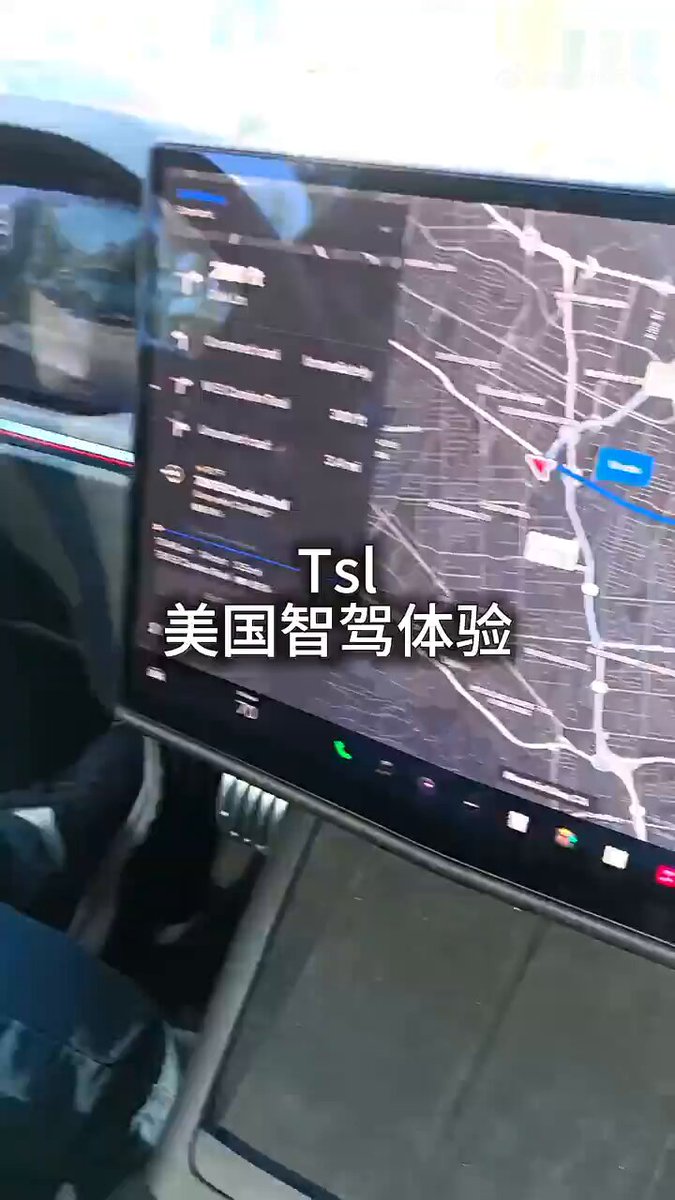
The News: Chinese influencer Li Chi flew 25,000 km from China to California solely to experience Tesla's Full Self-Driving firsthand and compare it against Huawei's smart driving system.
Why It Matters: When someone crosses half the globe to test your product, it signals something powerful about Tesla's standing in the global autonomous driving race — especially as Chinese EV rivals aggressively market their own systems.
Source: @ray4tesla on X
Tesla Full Self-Driving has racked up over 8.4 billion cumulative miles as of late February 2026. But numbers on a press release don't generate the kind of conviction that makes someone book a transpacific flight. That's exactly what Chinese influencer Li Chi did — and it says everything about where Tesla FSD stands in the global conversation around autonomous driving.

A 25,000 km Benchmark Test Nobody Asked For — But Everyone Needed
Li Chi's stated mission was direct: fly from China to California, ride in a Tesla with FSD active, and stack it up against Huawei's competing smart driving system. This isn't a sponsored junket or a manufacturer demo. It's an independent benchmark from a market where Tesla faces its stiffest autonomous driving competition — and where domestic rivals have been loudly claiming parity or superiority.
The framing of the trip matters. Li Chi didn't come to California to see Disneyland. The sole purpose, by his own account, was the technology. That kind of deliberate, costly comparison is the highest form of competitive validation — and it reflects a broader reality: FSD (Supervised) has become the global reference point that serious observers feel compelled to experience directly before forming an opinion.
📊 Key Figures
| Metric | Value | Context |
|---|---|---|
| Distance Li Chi traveled | 25,000 km | ~half the Earth's circumference |
| Cumulative FSD miles (as of Feb 28, 2026) | 8.4 billion | Real-world training data at scale |
| FSD miles in first 50 days of 2026 | 1 billion | Accelerating adoption rate |
| Global FSD users (end of 2025) | 1.1 million+ | Subscriptions + one-off purchases |
| Current production FSD version (HW4) | v14.2.2.5 | Rolling out since mid-March 2026 |
| Next version in testing | v14.3 | Wide rollout expected within weeks |
| FSD subscription price (US) | $99/month | Outright purchase eliminated Feb 14, 2026 |
The Global FSD Race: Where Things Actually Stand
Li Chi's trip is a microcosm of a much larger dynamic. China is home to some of the most aggressive autonomous driving development in the world — Huawei, among others, has invested heavily in smart driving stacks for domestic automakers. Yet a prominent Chinese influencer felt the need to fly to North America to benchmark the competition. That's a telling signal about perceived technological leadership, regardless of how the final comparison shakes out.
Tesla's FSD availability in China is currently limited by local data laws, with a broader rollout expected later in 2026 following local data center operations. That restriction means Chinese consumers and creators can't simply pull up FSD on their own Tesla — they have to go find it. Li Chi did exactly that, and in doing so, created a piece of content that will reach a Chinese audience with firsthand impressions that no marketing campaign could replicate.
Meanwhile, Tesla's global FSD expansion is accelerating on multiple fronts. Europe is on the cusp of its first formal approval — the Netherlands' RDW is slated to greenlight FSD (Supervised) on April 10, 2026, which is expected to trigger broader EU recognition across member states. Tesla has already completed over 13,000 customer ride-alongs in Europe during pre-approval testing. Japan is targeted for a launch by end of 2026, and road trials are underway in the UAE. For owners in these markets, the wait is nearly over.
🔭 The BASENOR Take
Timeline: FSD global expansion is in full swing — EU approval imminent (April 10), Japan by end of 2026, China broader rollout later in 2026.
Impact Level: High — third-party international validation from a competitive market carries significant credibility weight.
Confidence: High on the expansion facts (verified); Medium on Li Chi's final FSD-vs-Huawei verdict (tweet is truncated, full impressions pending).
What to Watch: Li Chi's complete video review. If a Chinese creator who traveled specifically to compare FSD against Huawei comes away impressed, that's the kind of organic credibility that resonates in a market where Tesla faces its toughest autonomous driving competition.
📰 Deep Dive
What makes this story genuinely interesting isn't just the spectacle of a 25,000 km journey. It's what the journey implies about the competitive landscape. Chinese automakers and tech companies have spent years and billions of dollars building smart driving systems, and they've done so with the explicit goal of matching or surpassing Tesla. The fact that a credible Chinese influencer still felt compelled to fly to California to experience FSD firsthand suggests that, at least in the minds of engaged consumers, Tesla hasn't been dethroned as the benchmark — it's still the thing you measure against.
Tesla's data advantage is a core part of this story. With 8.4 billion real-world FSD miles logged and 1 billion more added in just the first 50 days of 2026, the training dataset Tesla is working with dwarfs what any newer entrant can claim. FSD v14.3 is currently in testing and expected to roll out to HW4 vehicles within weeks — and FSD v14 Lite will bring core improvements to older HW3 vehicles by late June 2026. The system is not standing still while the world catches up.
For Tesla owners already using FSD, this kind of external validation is a useful data point. The subscription model — now $99/month in the US following the elimination of the outright purchase option on February 14, 2026 — means the barrier to entry is lower than it's ever been. If you've been sitting on the fence about activating FSD, the combination of a rapidly improving software stack, an accelerating global rollout, and independent international benchmarking suggests the gap between FSD and its competitors remains meaningful. You can follow all the latest developments in our FSD coverage.
📋 Tracking Tesla software? See every firmware, FSD and app version in one place in our Tesla Software Update Tracker.
Related Gear
Gear up your Tesla with tested, custom-fit BASENOR accessories — shop Tesla accessories →
Sources & reporting notes
The links below identify the material source records used for this report.
- @ray4tesla on X (2026-03-31T17:01:23.000Z) — Direct source
Source links are preserved as published or accessed. See our editorial standards and corrections policy.
The BASENOR Editorial Desk covers Tesla, SpaceX, and related technology, curating reporting from primary sources — official accounts, regulatory filings, and software release data. Every article passes source-record and fact-checking review before publication. About the newsroom.
This report was curated by the BASENOR Editorial Desk from the sources listed above. Read our editorial standards or email editorial@basenor.com to report an error.