📌 UPDATE — September 4, 2026
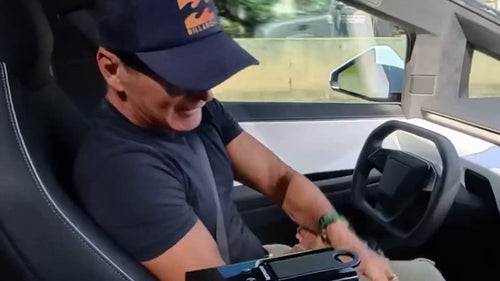
Tesla's Cybercab is now being called the most accessible vehicle ever produced — and notably, the first vehicle ever designed to be operable by a blind person. Braille on physical buttons combined with Grok-powered voice control means visually impaired riders can navigate the Cybercab experience independently, without any sighted assistance. The wheelchair-accessible entry design, previously noted on Tesla's Robotaxi site, is further reinforced by new video footage shared by Whole Mars Catalog showing the ease of entry in practice. Together, these features signal that Tesla is positioning Cybercab's accessibility not as a compliance checkbox, but as a core design pillar for its robotaxi service launch.
📌 UPDATE — September 3, 2026
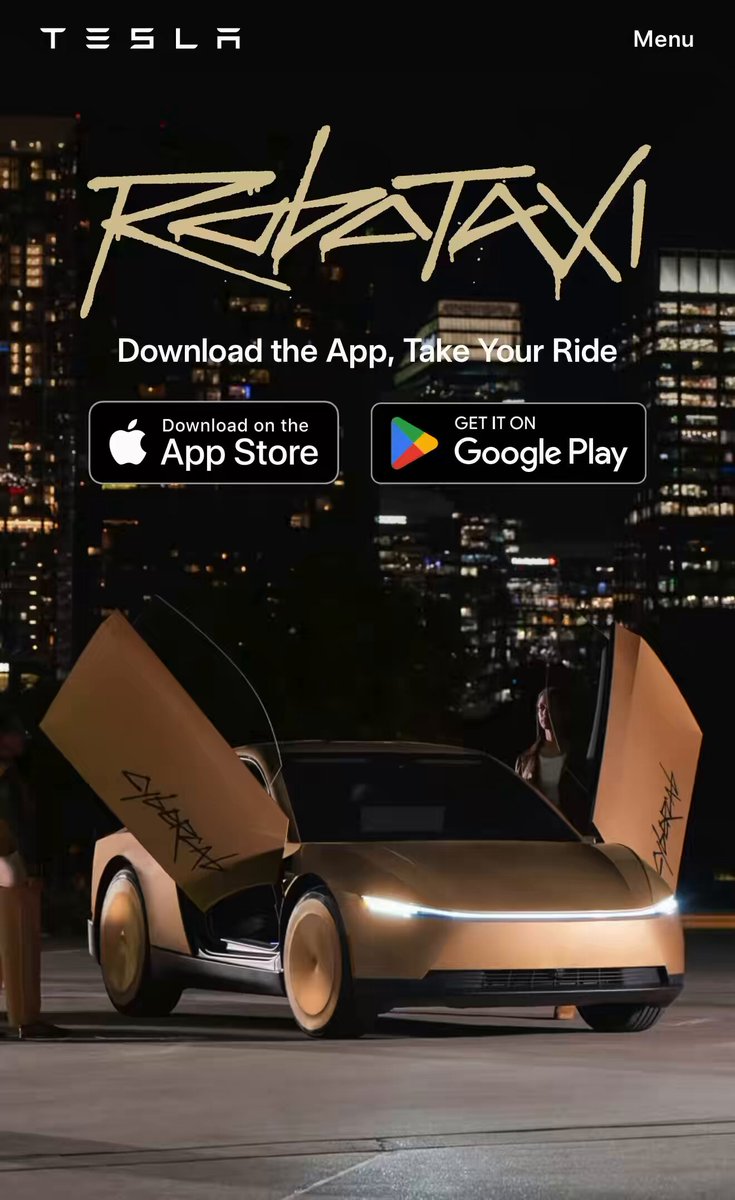
Tesla has refreshed its official Robotaxi webpage to prominently feature the Cybercab, and — notably — now includes a mention of the Robovan alongside it. The update signals Tesla is beginning to position the Robovan as part of its broader autonomous fleet narrative, even as Cybercab remains the primary focus. This is the first time the Robovan has appeared on the Robotaxi landing page, suggesting Tesla may be laying groundwork for future multi-vehicle fleet offerings under the Robotaxi umbrella. The accessibility details covered in this article remain current and apply to the Cybercab as featured on the updated page.
🔍 Undocumented change: The Robovan mention on the Robotaxi page has not been formally announced by Tesla — spotted via page update by @TeslaNewswire (Sept 3, 2026).
📌 UPDATE — September 3, 2026
Tesla has revamped its official Robotaxi website and published a comprehensive Cybercab Rider Guide, marking a significant step toward public launch. The guide offers the first detailed look at the Cybercab's in-cabin UI, giving riders a clearer picture of the onboard experience. A newly confirmed feature: riders can customize the cabin's accent lighting color directly through the app or in-ride interface — a personalization touch not previously disclosed. The updated site and Rider Guide together suggest Tesla is accelerating its public-facing Robotaxi rollout preparations.


Sources: @wholemars, @TeslaNewswire — Sept 3, 2026
📌 UPDATE — September 3, 2026
A new demonstration shared by @SawyerMerritt shows child seats in action inside the Tesla Cybercab, offering the first real look at how families can use the autonomous ride-share service with young children. The footage addresses a practical concern many parents have raised about the Cybercab's driverless format — specifically, how child seat installation and securing works without a driver present to assist. This adds meaningful context to the accessibility picture beyond the wheelchair and Braille features covered below, confirming Tesla has designed the cabin with family use cases in mind.


Source: @SawyerMerritt on X · 55K+ views
Tesla launched its new Robotaxi website on September 3, 2026, alongside a dedicated accessibility video for the Cybercab — and the details go well beyond a checkbox. The vehicle was engineered from the ground up to serve riders who rely on wheelchairs, service animals, and other assistive devices, with Tesla stating its goal is 'an autonomous future that is accessible to all people.' Here are the six design decisions that stand out.

1. Seat Height Matched to Standard Wheelchair Level
The Cybercab's seat height was deliberately set to align with a standard wheelchair, enabling lateral transfers without a significant height differential. For riders who transfer independently, this is one of the most practical design choices Tesla could have made — and it's baked into the hardware, not an afterthought add-on.
2. Butterfly Doors Engineered for Parallel Wheelchair Approach
The Cybercab's distinctive butterfly doors aren't just a style statement. They're configured so a wheelchair user can pull up parallel to the vehicle and transfer directly, without the door arc blocking the approach. In a conventional car, the door swing itself is often the obstacle — Tesla eliminated that entirely.
3. Trunk Space for Foldable Wheelchairs and Assistive Devices
The trunk is sized to accommodate foldable wheelchairs and select bicycles, along with other assistive devices. Tesla's official language specifically calls out 'room in the trunk to store some wheelchairs and other assistive devices,' which sets a clear expectation — though riders with power chairs or larger mobility equipment should note the qualifier 'some.'

▶ Watch Accessibility Video on X
4. Braille on Physical Controls
The Cybercab has no steering wheel or pedals, but it does retain physical controls for the emergency stop/hazard button and interior door releases — and both carry Braille lettering. In a fully autonomous cabin where a touchscreen is the primary interface, having tactile Braille on the two most safety-critical controls is a meaningful accessibility commitment for visually impaired passengers.
5. Interior Space for Service Animals
The open cabin layout — freed up by the absence of a driver's seat, steering column, and pedals — creates genuine floor space for guide dogs and other service animals. Tesla specifically calls this out on the Robotaxi site, and the no-traditional-controls design is what makes it structurally possible. A standard rideshare vehicle simply can't offer the same unobstructed floor plan.
6. A Dedicated WAV Is Already in Development
The Cybercab's built-in features cover a wide range of needs, but Tesla confirmed in July 2026 that a separate, purpose-built Wheelchair-Accessible Vehicle (WAV) is actively under development in Texas for passengers who require it. That distinction matters: the Cybercab handles foldable chairs and ambulatory users who transfer; the WAV will be designed for riders who need to remain in their wheelchair during the trip. The two-vehicle approach suggests Tesla is treating accessibility as a fleet strategy, not a single-model compromise.
Tesla's Robotaxi site states the Cybercab 'will offer rides in the future' — commercial availability for the general public hasn't been confirmed as of today's launch event in Austin. But the accessibility framework is already defined in hardware. The open question is how quickly the WAV follows the Cybercab into production, and whether the fleet that eventually scales will maintain this level of accessibility design across every unit.
🚕 Following the Robotaxi rollout? See every operating city, launch date and announced market in our Tesla Robotaxi Tracker.
Related Gear
Gear up your Tesla with tested, custom-fit BASENOR accessories — shop Tesla accessories →
Sources & reporting notes
The links below identify the material source records used for this report.
- @SawyerMerritt on X (2026-09-03T17:47:55.000Z) — Direct source
- @SawyerMerritt on X (2026-09-03T17:47:56.000Z) — Direct source
- @SawyerMerritt on X (2026-09-03T17:50:33.000Z) — Direct source
Source links are preserved as published or accessed. See our editorial standards and corrections policy.
The BASENOR Editorial Desk covers Tesla, SpaceX, and related technology, curating reporting from primary sources — official accounts, regulatory filings, and software release data. Every article passes source-record and fact-checking review before publication. About the newsroom.
This report was curated by the BASENOR Editorial Desk from the sources listed above. Read our editorial standards or email editorial@basenor.com to report an error.