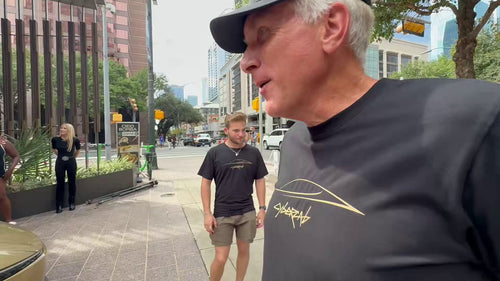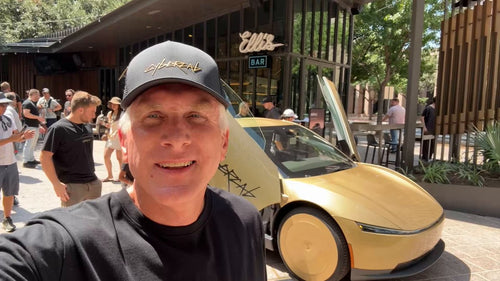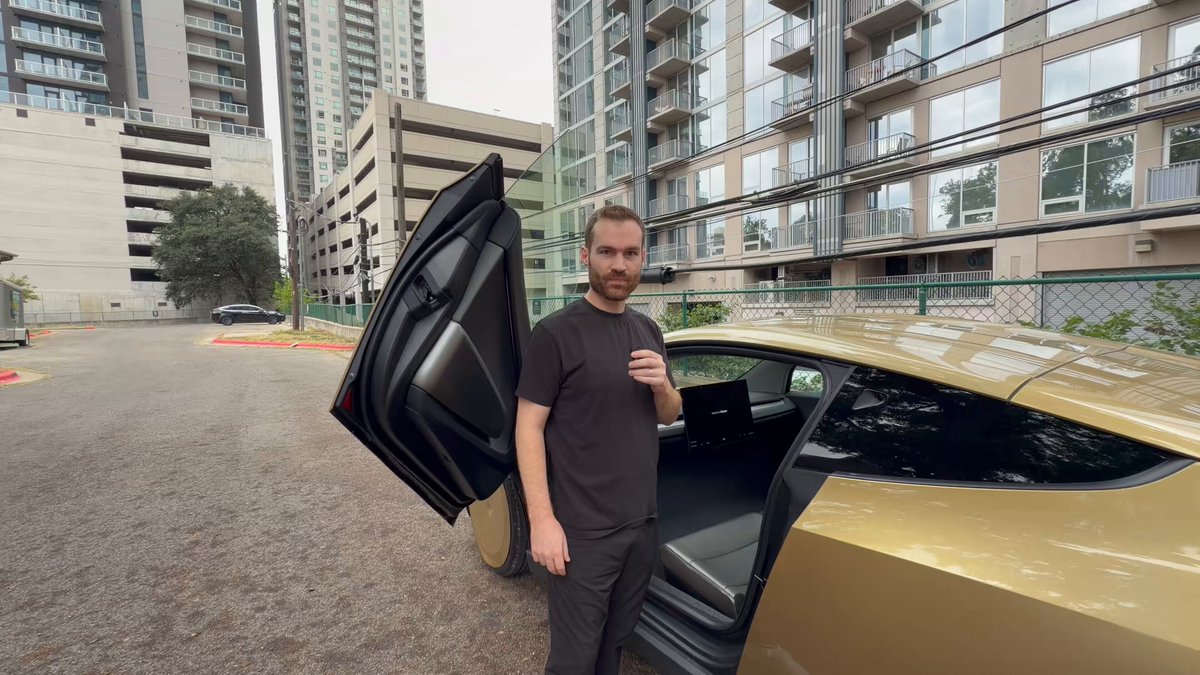
Tesla's Cybercab began carrying public passengers in Austin on September 3, 2026, and the first wave of real-world observations is already filling in the spec sheet. From how the car handles a fire truck to what 47.6 kWh actually means for range, here's what the first day of footage and data reveals.
1. The Seats Recline — and Move as a Unit
Sawyer Merritt posted a close-up video tour of the Cybercab's cabin, showing both seats in action. The seatbacks recline independently, but the seat cushions slide forward and backward together as a single unit rather than individually. It's a deliberate design choice for a two-passenger robotaxi — simpler mechanics, easier to clean between rides. According to verified specs, legroom comes in at 43.4 inches and headroom at 38.3 inches. One notable omission: no seat heating or ventilation, which will matter in Texas summers and winters alike.

2. Emergency Vehicle Response Works in the Wild
Dirty Tesla captured footage of a Cybercab yielding to an emergency vehicle during a live Austin run — the first confirmed real-world instance of this behavior on public roads. According to background specs, the system detects first responders with active lights and sirens, then attempts to slow, yield, or pull to the nearest safe stopping location. In the event of an actual crash, the response goes further: doors auto-unlock, hazards and cabin lights activate, the high-voltage battery disables, windows vent, and the car connects directly to Tesla Robotaxi Support. Seeing it execute correctly on day one is a meaningful data point for regulators and riders alike.

3. The Battery Is Bigger Than Expected — and That's Intentional
Whole Mars Catalog flagged that the Cybercab's battery comes in around 50 kWh — notably above what he'd expected for a purpose-built urban robotaxi. His reasoning: 40 kWh and roughly 250 miles would have been sufficient for city use. The actual certified figure, according to EPA filings, is approximately 47.6 kWh at 326V. That translates to an EPA-adjusted range of roughly 293–300 miles. The unadjusted test numbers are even more striking: 418 miles combined, 375 miles highway. For a vehicle rated at just 163 kW (219 hp) with a curb weight of 3,113 lbs, the efficiency figure of 165 Wh/mile explains the outsized range from a relatively modest pack.
4. The Trunk Is Surprisingly Usable
One spec that hasn't gotten much attention: the Cybercab carries 20.2 cubic feet of cargo capacity in the rear, rated for up to 220 lbs. There is no front trunk. For a vehicle with no steering wheel, no pedals, and a two-seat layout, that's a meaningful amount of storage — enough to handle airport runs or grocery trips without issue. The step-in height of 16.5 inches is also notably low, which should make entry and exit straightforward for most passengers.
5. The Fleet Is Small and Geofenced — for Now
As of the September 3 launch, 45 Cybercabs are authorized for commercial robotaxi use in Texas, all operating within a geofenced area of Austin. The vehicle runs a specialized version of Tesla's Full Self-Driving software developed specifically for the Cybercab — SAE Level 4, meaning no human backup driver is present or required. The constrained initial footprint is standard practice for robotaxi deployments, but the combination of a verified emergency response system, real EPA range data, and a working public service puts the Cybercab ahead of where most observers expected it to be at launch.
The next question is how quickly Tesla expands beyond those 45 vehicles and the Austin geofence. With the hardware clearly capable and the software handling edge cases like emergency vehicles on day one, the limiting factor is now regulatory authorization — not the car itself.
🚕 Following the Robotaxi rollout? See every operating city, launch date and announced market in our Tesla Robotaxi Tracker.
Related Gear
Gear up your Tesla with tested, custom-fit BASENOR accessories — shop Tesla accessories →
Sources & reporting notes
The links below identify the material source records used for this report.
- @SawyerMerritt on X (2026-09-04T17:46:09.000Z) — Direct source
- @wholemars on X (2026-09-04T17:56:16.000Z) — Direct source
- @DirtyTesLa on X (2026-09-04T17:58:22.000Z) — Direct source
Source links are preserved as published or accessed. See our editorial standards and corrections policy.
The BASENOR Editorial Desk covers Tesla, SpaceX, and related technology, curating reporting from primary sources — official accounts, regulatory filings, and software release data. Every article passes source-record and fact-checking review before publication. About the newsroom.
This report was curated by the BASENOR Editorial Desk from the sources listed above. Read our editorial standards or email editorial@basenor.com to report an error.