Elon Musk has publicly confirmed that Tesla remains on track to deliver its first Cybercab to a customer before the end of 2026 — a timeline that carries both product significance and, thanks to a well-known bet with tech reviewer Marques Brownlee, a personal wager on the outcome. The confirmation, surfaced by @TeslaNewswire on September 4, arrives one day after Tesla began public Cybercab rides in Austin, Texas.
Responding to MKBHD's renewed pledge to shave his head if a Cybercab is delivered to a consumer before 2027, Musk quipped: “I guess he really wants to shave his head.” The joke lands harder now than it did in October 2024, when the bet was originally made — because the vehicle is no longer theoretical.

Where the Cybercab Program Actually Stands
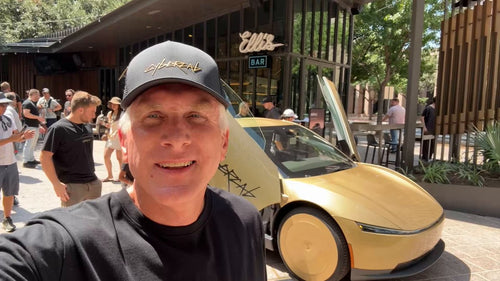
The confirmation is more than a Musk aspirational date. Tesla launched invitation-only public Cybercab rides in Austin on September 3, 2026, according to multiple outlets including Forbes and Electrek. The service is currently folded into Tesla's existing Robotaxi operation in the city, running alongside the modified Model Y vehicles that opened the network earlier in the year. Approximately 45 Cybercabs had been registered to Tesla's Texas robotaxi fleet by late August, according to reporting from Electrek.
On the manufacturing side, pilot production began at Gigafactory Texas in February 2026, with scale production reportedly commencing in April, per Wikipedia's aggregated production data and coverage from BGR. Tesla's stated long-term target is 2 million Cybercabs per year — a figure that assumes both regulatory clearance and demand at price points Tesla has not yet formally locked in.
Key Figures
| Metric | Status |
|---|---|
| Public ride launch | Austin, TX — Sept 3, 2026 |
| Cybercabs in Texas fleet | ~45 (late August 2026) |
| Pilot production start | February 2026, Giga Texas |
| Scale production start | April 2026 (reported) |
| Target consumer price | Under $30,000 (Musk-stated, unconfirmed) |
| First customer delivery | Before end of 2026 (Musk-confirmed) |
| Long-term annual production goal | 2 million units |
The Regulatory Piece Nobody's Solved Yet
The Cybercab is designed without a steering wheel or pedals — a two-seat, gull-wing-door layout powered by a 4680 structural pack and controlled almost entirely through the Tesla app, with Starlink integrated into the infotainment stack. That design creates a hard regulatory wall in the United States: federal rules cap how many vehicles a manufacturer can sell annually without traditional controls under the current exemption framework.
What this means practically is that even if Tesla ships a Cybercab to a paying customer before December 31, that first delivery will almost certainly be a symbolic milestone rather than the start of an open commercial line. The volume needed to hit anything close to the two-million-per-year figure would require either an act of Congress, an expanded NHTSA exemption, or a version of the vehicle with pedals and a wheel — none of which Tesla has publicly telegraphed.
What Owners and Watchers Should Track Next
For existing Tesla owners, the near-term impact is indirect but real. The Austin Cybercab pilot is the clearest signal yet of how quickly Tesla intends to scale its autonomous ride-hailing platform, and early rider reports indicate Cybercab fares are running at nearly half the cost of Model Y Robotaxi rides in the same city — a pricing gap that, if it holds, will reshape how the network monetizes.
Three concrete signals worth watching between now and year-end: whether Tesla files or updates its NHTSA exemption paperwork for the pedal-less design; whether the sub-$30,000 consumer price actually appears on a configurator or order page (Musk has repeated it, but Tesla has not formally listed it); and whether the first “customer” delivery is a genuine retail transaction or a symbolic handoff to an operator or partner. The distinction matters for the MKBHD bet, and it matters more for whether 2027 opens with a real consumer product or an extended pilot.
Editor's View
Musk's one-liner about MKBHD's haircut is the fun headline, but the substantive story is that Tesla has moved the Cybercab from render to revenue-generating asset in Austin inside of eight months. Delivering one to a customer by December 31 is achievable — the fleet exists, production is running, and Tesla has an obvious motive to force the milestone. Whether that delivery scales into a real consumer program in 2027, or whether it sits in the same regulatory limbo the Cybertruck once did, is the question that actually shapes the next twelve months.
🚕 Following the Robotaxi rollout? See every operating city, launch date and announced market in our Tesla Robotaxi Tracker.
Related Gear
Gear up your Tesla with tested, custom-fit BASENOR accessories — shop Tesla accessories →
Sources & reporting notes
The links below identify the material source records used for this report.
- @TeslaNewswire on X (2026-09-04T15:02:30.000Z) — Direct source
Source links are preserved as published or accessed. See our editorial standards and corrections policy.
The BASENOR Editorial Desk covers Tesla, SpaceX, and related technology, curating reporting from primary sources — official accounts, regulatory filings, and software release data. Every article passes source-record and fact-checking review before publication. About the newsroom.
This report was curated by the BASENOR Editorial Desk from the sources listed above. Read our editorial standards or email editorial@basenor.com to report an error.