Elon Musk posted a simple observation on September 4, 2026: Tesla's current valuation is a thousand times what the company was worth at its IPO. It's a single sentence that collapses sixteen years of improbable growth into one staggering ratio. Here are the five numbers that tell the full story.

1. $1.7 Billion — Tesla's IPO Valuation in 2010
When Tesla went public on June 29, 2010, shares were priced at $17.00 each and the company raised $226 million. The total market capitalization at IPO was approximately $1.7 billion — a figure that, at the time, made many Wall Street analysts skeptical the company would survive its first decade. For context, that's roughly what a mid-size regional airport might cost to build today. Tesla was not considered a safe bet.
2. $1.59 — The Split-Adjusted Close on Day One
Here's the number that puts early investor returns in perspective. After adjusting for two subsequent stock splits, Tesla's first-day closing price was just $1.59 per share. Anyone who bought at the open and held through September 2026 has seen returns that are genuinely difficult to express without scientific notation. The split-adjusted IPO price also explains why Musk's "thousandth" framing is mathematically defensible — the stock has moved from that range into the hundreds of dollars.
3. 15 — The Share Multiplier From Two Stock Splits
Tesla has split its stock twice since going public: a 5-for-1 split in August 2020 and a 3-for-1 split in August 2022. Multiply those together and one pre-split share became 15 shares. This matters for reading historical price charts — raw share price comparisons across the IPO era are misleading without the split adjustment. The splits also broadened retail access to the stock at critical moments in Tesla's growth arc, each time coinciding with periods of accelerating delivery volume.
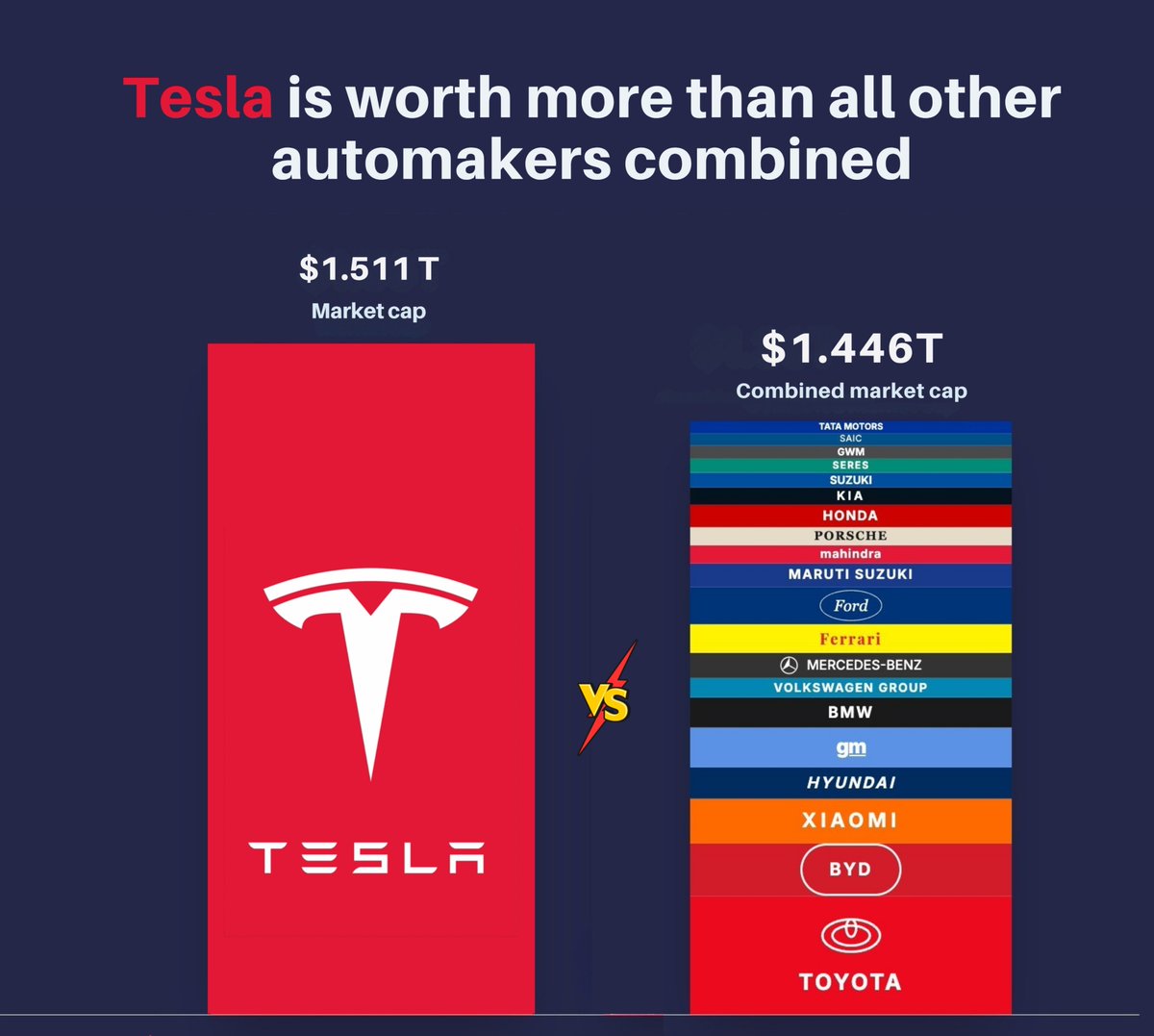
4. ~$1.4 Trillion — Tesla's Market Cap as of September 2026
Multiple sources place Tesla's market capitalization in the $1.2–$1.5 trillion range as of early September 2026, with day-to-day fluctuations accounting for the spread. At the midpoint of those figures, Tesla sits at roughly 800–900 times its IPO valuation in raw dollar terms. Factor in that the $1.7 billion IPO figure itself was generous relative to first-day trading, and Musk's 1,000x claim holds up. For a company that was burning cash and racing to finish its first factory in 2010, reaching a 13-figure market cap is a result few investors — let alone critics — would have predicted.
5. 16 Years — The Timeline That Makes This Unusual
A 1,000x return over 16 years works out to a compound annual growth rate of roughly 50% — sustained, not spiked. Most companies that achieve that kind of total return do so over much longer periods or through a single transformative event. Tesla's trajectory involved near-bankruptcy in 2008 (before the IPO), production hell during Model 3 ramp, a global pandemic, and multiple cycles of analyst downgrades. The fact that the growth compounded through all of it is arguably the more remarkable data point than the final multiple itself.
Musk's post didn't come with a forward-looking statement, and it doesn't need one. The more interesting question for current owners and investors is what the next inflection point looks like — whether that's Optimus scaling to meaningful production volumes, the Cybercab fleet expanding, or energy storage continuing its growth trajectory. The IPO milestone is a useful anchor. Where the next thousand days take the company is the open question.
Related Gear
Gear up your Tesla with tested, custom-fit BASENOR accessories — shop Tesla accessories →
Sources & reporting notes
The links below identify the material source records used for this report.
- @elonmusk on X (2026-09-04T14:30:39.000Z) — Direct source
Source links are preserved as published or accessed. See our editorial standards and corrections policy.
The BASENOR Editorial Desk covers Tesla, SpaceX, and related technology, curating reporting from primary sources — official accounts, regulatory filings, and software release data. Every article passes source-record and fact-checking review before publication. About the newsroom.
This report was curated by the BASENOR Editorial Desk from the sources listed above. Read our editorial standards or email editorial@basenor.com to report an error.