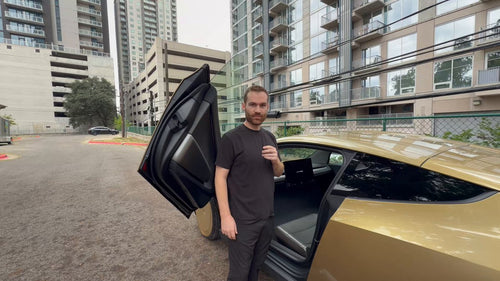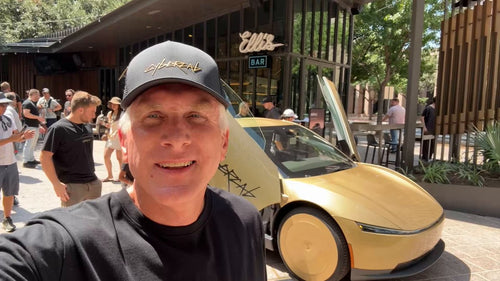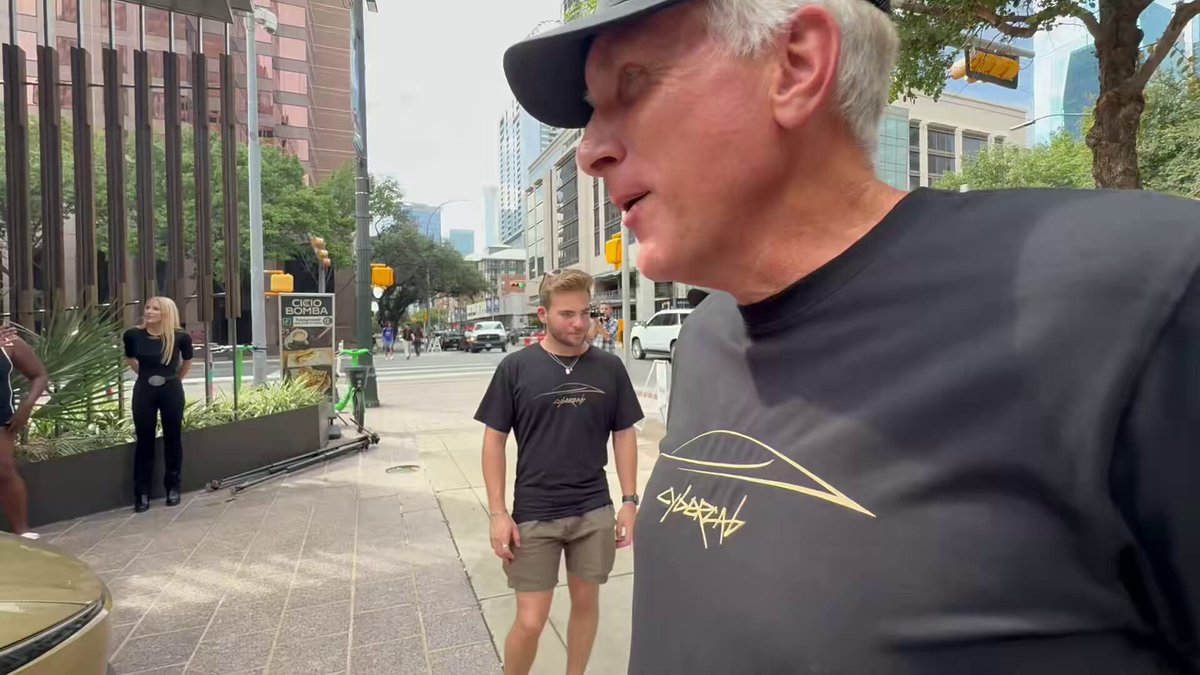
Tesla didn't just design a new car for the Cybercab — it engineered an entirely new way to build it. At the heart of that effort is a custom Reaction Injection Molding (RIM) process developed entirely in-house at Gigafactory Texas, covering the exterior and select interior plastic panels. Joe Tegtmeyer recently spoke directly with the head of Tesla's RIM team, who revealed just how deep the innovation goes: custom processes, custom machines, custom materials, and a full production line built from scratch.

What exactly is Reaction Injection Molding?
RIM is a manufacturing process in which two liquid chemical components — typically polyurethane-based — are mixed under high pressure and injected into a mold, where they react and cure into a solid part. Unlike traditional injection molding, which melts solid plastic pellets, RIM works with reactive liquids, making it well-suited for large, complex panels with varying wall thicknesses. The result is a lightweight, durable component that can be molded with tight dimensional tolerances — without the need for a stamping press or a paint booth.
Why did Tesla build its own RIM process instead of using an existing one?
According to the head of Tesla's RIM team, as reported by Tegtmeyer, Tesla developed its own processes, machines, and materials specifically for Cybercab production. Off-the-shelf RIM systems exist in the broader automotive and industrial world, but they weren't built around Tesla's specific requirements — particularly the ambition to eliminate painting entirely. By engineering the system in-house at Giga Texas, Tesla could optimize every variable: chemistry, cycle time, mold design, and pigmentation integration.
How does color work if the panels aren't painted?
Pigments are integrated directly into the polyurethane polymer mixture before it enters the mold. That means the panel exits the mold already colored — no primer, no base coat, no clear coat. The practical benefit for owners is significant: because the color runs through the material rather than sitting on top of it, a scratch doesn't reveal a contrasting underlayer. Panel swaps also become simpler, since replacement panels arrive pre-colored and require no paint-matching or paint shop involvement.
What are the environmental and production efficiency gains?
The numbers here are concrete. According to verified reporting, Tesla's RIM process achieves a 100% elimination of Volatile Organic Compounds (VOCs) — the chemical emissions associated with conventional automotive spray painting. It also cuts manufacturing and supply chain emissions for these parts by 35%. On the production floor, cycle times for what would traditionally be painted parts drop from hours to minutes. That compression has a direct impact on throughput at Giga Texas, where Cybercab mass production commenced in April 2026.
Which Cybercab components use RIM, and are any parts still traditional?
The exterior body panels are the primary application, and roof panels are also polyurethane with embedded pigmentation — not painted during manufacturing. Some interior panels are included as well. Not every component is pure RIM plastic, however. The front hood, for instance, uses a Fiber Reinforced Plastic (FRP) support structure produced in-house at the Giga Texas plastics shop, bonded directly to the underside of the RIM-molded hood skin. This composite-bonding approach appears consistent across multiple exterior body components, blending RIM skins with structural reinforcement where load-bearing geometry demands it.
What does this mean for Cybercab durability and repairability long-term?
The paint-infused construction addresses one of the most common owner frustrations with plastic-trimmed vehicles: color mismatch after minor damage. Because there's no paint layer to chip or peel, surface scratches stay cosmetically minor rather than exposing bare substrate. Panel replacement — when it does become necessary — sidesteps the paint shop entirely, which could meaningfully reduce repair times and costs. How body shops will stock and source color-matched RIM panels at scale is still an open question as the Cybercab fleet grows, but the underlying design intent clearly favors simpler, faster repairs over the traditional refinishing workflow.
Tesla's first Cybercab rolled off the Giga Texas line in February 2026, with mass production following in April. The RIM line was operational from the start — meaning this isn't a future upgrade but the production reality for every Cybercab built so far. How far Tesla extends this approach to other models will be worth watching as the manufacturing playbook matures.
🚕 Following the Robotaxi rollout? See every operating city, launch date and announced market in our Tesla Robotaxi Tracker.
Related Gear
Gear up your Tesla with tested, custom-fit BASENOR accessories — shop Tesla accessories →
Sources & reporting notes
The links below identify the material source records used for this report.
- @JoeTegtmeyer on X (2026-09-04T16:23:08.000Z) — Direct source
Source links are preserved as published or accessed. See our editorial standards and corrections policy.
The BASENOR Editorial Desk covers Tesla, SpaceX, and related technology, curating reporting from primary sources — official accounts, regulatory filings, and software release data. Every article passes source-record and fact-checking review before publication. About the newsroom.
This report was curated by the BASENOR Editorial Desk from the sources listed above. Read our editorial standards or email editorial@basenor.com to report an error.