Tesla has started sending out invitations for individuals to order a Cybercab for personal use — and the details of how this rollout works are more specific, and more restrictive, than most people expected. Here's what the initial wave of invites reveals about Tesla's strategy for putting its autonomous two-seater in private hands.

1. It's Invitation-Only — and Tesla Is Starting With High-Profile Names
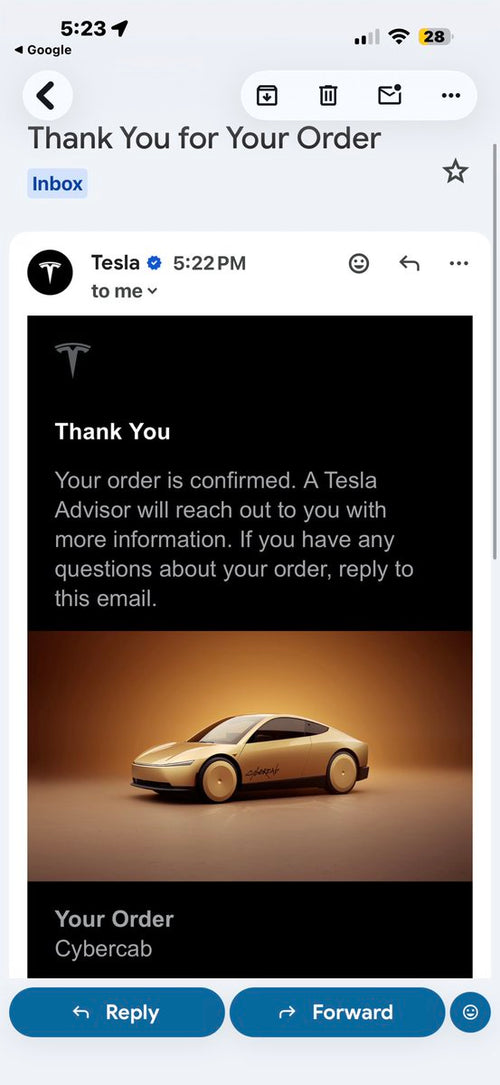
The first confirmed invites have gone to prominent tech reviewers and influencers, not the general reservation queue. Marques Brownlee (MKBHD) was publicly identified as one of the first to receive an order invitation, according to reports from @SawyerMerritt. This mirrors Tesla's playbook from early Model S and Cybertruck launches — seed the product with people who will document the experience publicly, generating organic coverage before broad availability opens up.
2. The Price Is $29,990 — Plus a Mandatory $299/Month Subscription
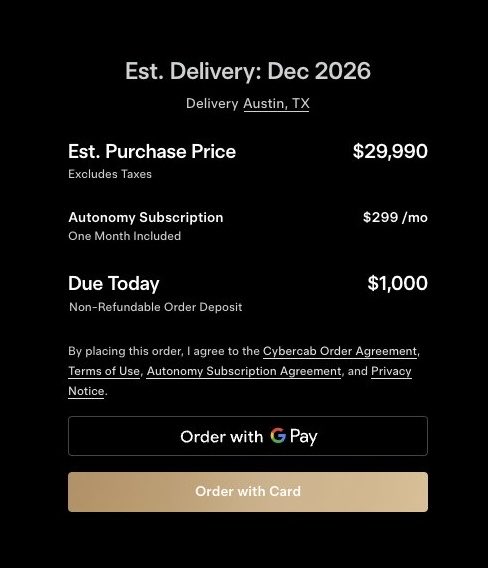
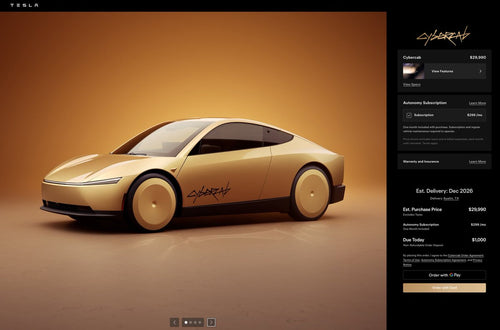
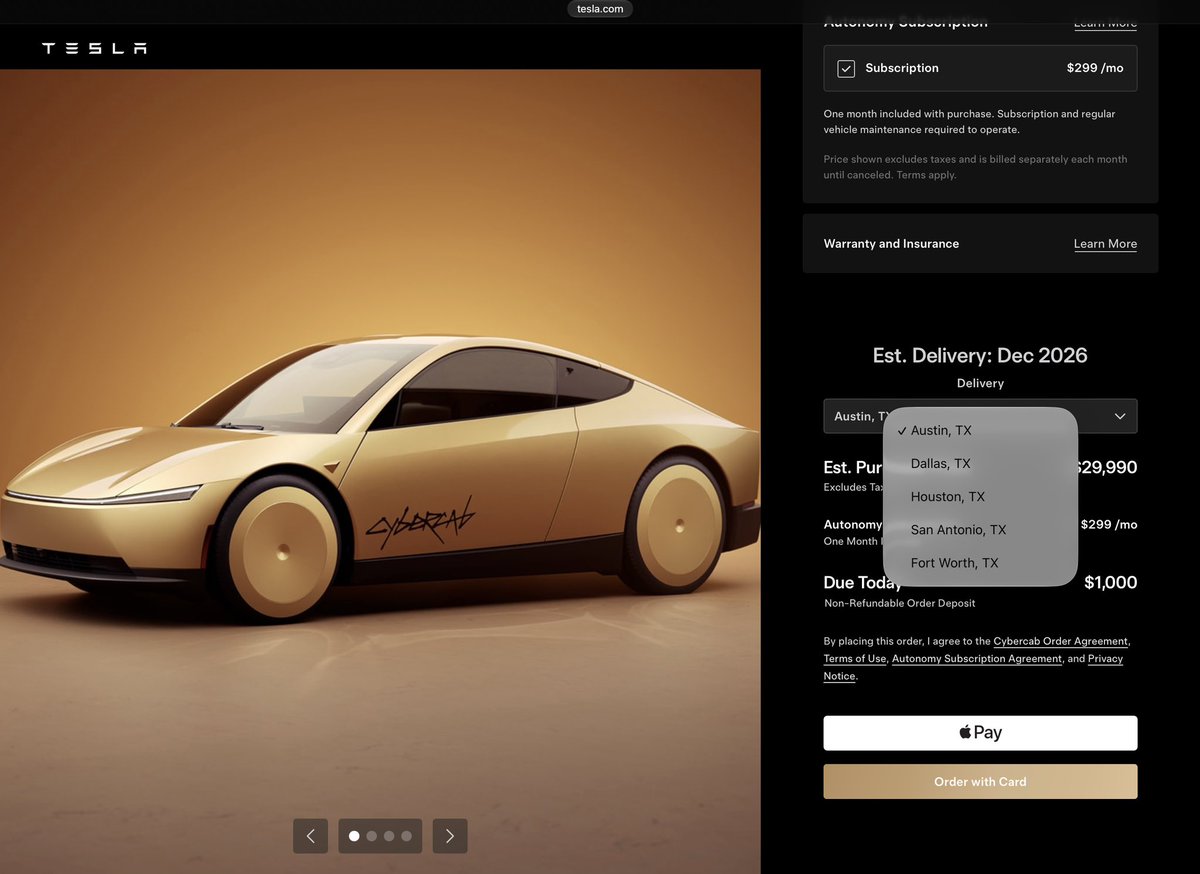
The Cybercab lists at $29,990 before taxes, with a non-refundable $1,000 deposit required at order. But the real ongoing cost is the mandatory Autonomy Subscription at $299 per month — there is no option to operate the vehicle without it. The first month is included in the purchase price. That subscription also covers routine maintenance: front and rear tire replacements, rotations, and windshield services. Over a year, the subscription alone adds $3,588 to the cost of ownership.
3. Deliveries Are Starting in Austin — and Only Austin
Initial personal-use deliveries are concentrated in Austin, Texas, with an estimated start date of December 2026. This isn't arbitrary: Austin is where Tesla's commercial Robotaxi fleet has operated since September 2026, with over 570 Cybercabs already registered in that fleet as of early November. The geofenced infrastructure is already in place. Customer-owned Cybercabs will operate within the same geofenced zones as the commercial fleet — currently spanning eight US cities across Texas and Florida — but early deliveries will be Austin-first.
4. The Vehicle Has No Steering Wheel, No Pedals, and No Rear Window
This isn't a modified car with driver controls removed — the Cybercab was engineered from the ground up without them. It's a two-passenger vehicle with butterfly doors, a 21-inch center touchscreen, a camera-only autonomous driving system, and 20.1 cubic feet of cargo space. There are no side mirrors either. Regulators have taken notice: NHTSA opened an investigation in September 2026 into Tesla's self-certification of the vehicle, given the absence of traditional driver controls. That investigation is ongoing.
5. You Cannot Use It Commercially
Buyers should be clear on this upfront: a personally owned Cybercab cannot be deployed for ride-hailing through Uber, DoorDash, or even Tesla's own Robotaxi network. It is strictly personal-use only. This is a notable constraint given that Tesla has publicly discussed a future where owners could add their vehicles to the Tesla fleet to generate income — that capability, if it comes, is not part of this initial purchase structure.
6. Full Unsupervised Capability for Owners Is Still Months Away
Here's the nuance that Fred Lambert flagged on X: Tesla is delivering these vehicles in Austin specifically to demonstrate that it can hand over an unsupervised autonomous vehicle to a private individual in 2026. But full unsupervised self-driving for customer-owned Cybercabs isn't targeted until Q2 2027, according to verified reporting. The December deliveries will operate within the existing geofenced Robotaxi zones — the same areas the commercial fleet already covers. Buyers are, in effect, getting early access to a tightly scoped version of the full autonomous experience.
The invitation-only approach, Austin-first geography, and mandatory subscription all point to a deliberate strategy: Tesla wants to control the early narrative around personal Cybercab ownership, keep the operational footprint manageable, and build a documented track record of unsupervised delivery before opening the floodgates. Whether that measured rollout satisfies the broader waitlist — or frustrates it — will become clear over the next few months as the invite list expands.
🚕 Following the Robotaxi rollout? See every operating city, launch date and announced market in our Tesla Robotaxi Tracker.
Related Gear
Gear up your Tesla with tested, custom-fit BASENOR accessories — shop Tesla accessories →
Sources & reporting notes
The links below identify the material source records used for this report.
- @FredLambert on X (2026-11-14T02:13:07.000Z) — Direct source
- @SawyerMerritt on X (2026-11-14T02:20:07.000Z) — Direct source
- @DirtyTesLa on X (2026-11-14T02:20:38.000Z) — Direct source
Source links are preserved as published or accessed. See our editorial standards and corrections policy.
The BASENOR Editorial Desk covers Tesla, SpaceX, and related technology, curating reporting from primary sources — official accounts, regulatory filings, and software release data. Every article passes source-record and fact-checking review before publication. About the newsroom.
This report was curated by the BASENOR Editorial Desk from the sources listed above. Read our editorial standards or email editorial@basenor.com to report an error.