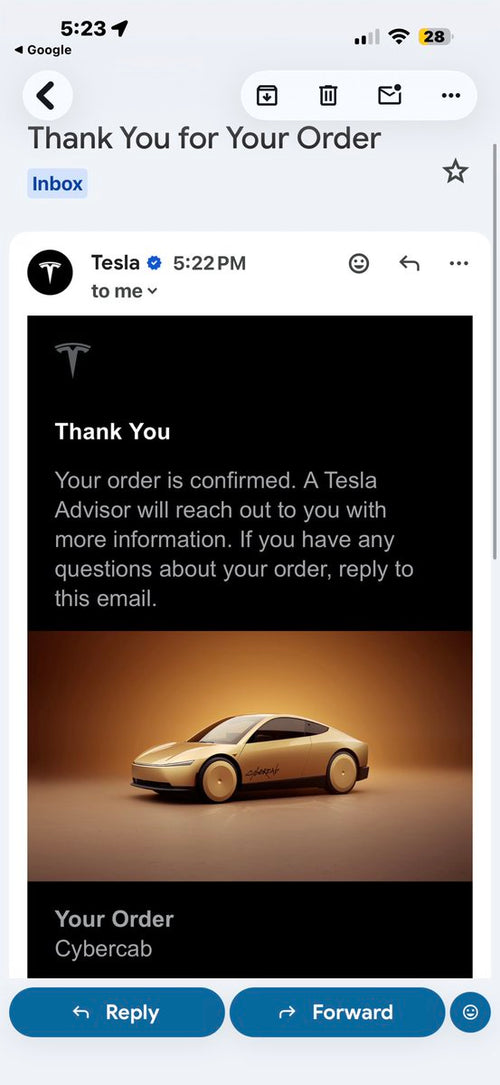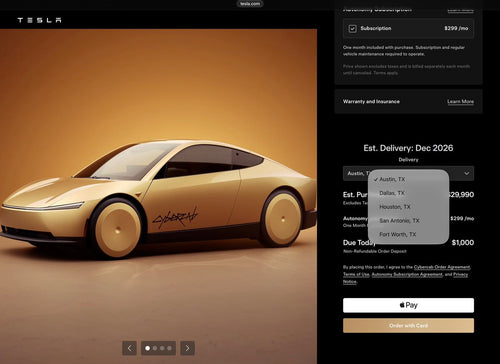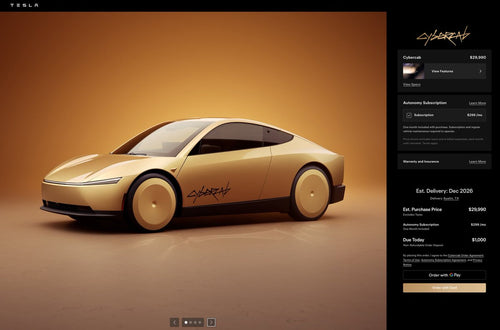

Elon Musk has confirmed that the Tesla Cybercab will launch across the entire United States the moment federal and state regulators give the green light — no phased city-by-city rollout, no geographic limits. He also acknowledged that the current $299/month autonomy subscription is too expensive and should eventually drop to around $115/month. Here's what you need to know about where the Cybercab stands right now.

1. Nationwide from Day One — If Regulators Allow It
Musk's statement is a significant departure from how most new vehicle categories roll out. Rather than starting in a handful of friendly markets and expanding gradually, Tesla intends to make the Cybercab available across the entire US simultaneously once it clears regulatory hurdles. That's an ambitious posture — but it also means the timeline is entirely out of Tesla's hands. The bottleneck isn't production capacity or logistics; it's federal and state approval.
2. The NHTSA Audit Is the Real Wildcard
The National Highway Traffic Safety Administration launched a formal audit on September 4, 2026, examining how Tesla self-certified the Cybercab against federal motor vehicle safety standards — standards that currently require manual controls like a steering wheel and pedals. The Cybercab has neither. Until NHTSA either updates those standards or grants an exemption, a true nationwide rollout faces a structural legal barrier. Tesla's nationwide ambition is real; the regulatory path to get there is still being carved out.
3. The $299/Month Subscription Is a Known Pain Point — and Musk Admits It
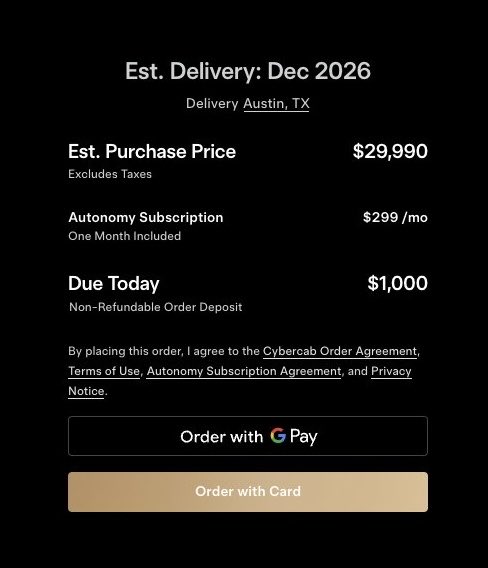
To operate a personally owned Cybercab, buyers must pay a mandatory Autonomy Subscription currently priced at $299/month. Musk acknowledged this is too high and said it should eventually come down to around $115/month — roughly the cost of a comparable service. The first month is bundled with the vehicle's $29,990 purchase price, but the ongoing cost will be a real consideration for anyone doing the math on ownership. A drop to $115/month would meaningfully change the value equation.

4. Austin Is Where It Actually Starts
Whatever the long-term national ambition, the near-term reality is Austin-first. Paid public robotaxi rides began in Austin in September 2026, and initial personal deliveries are slated for December 2026 — again, starting in Austin. According to Tesla VP of Vehicle Engineering Lars Moravy, the plan is to start small and scale up. Prospective buyers in other states should treat the nationwide rollout as a medium-term target, not an imminent event.
5. The Operating Economics Are Built for Scale
Tesla has set an internal target of less than $0.30 per mile in operating costs for its Cybercab fleet — a figure that, if achieved, would make the robotaxi service highly competitive on a per-ride basis. The vehicle itself runs on FSD version 15 (unsupervised) on modified Hardware 4, with a camera-only autonomy stack and no side mirrors or rear window. The hardware is purpose-built for this use case, not adapted from an existing platform. That cost target is what makes the eventual $115/month subscription figure plausible — and what makes the current $299 price look like a placeholder.
The gap between Musk's nationwide ambition and today's regulatory reality is the defining tension in the Cybercab story. Tesla has the vehicle, the production line, and the pricing framework in place. What it doesn't have yet is a clear federal pathway for a steering-wheel-free car to operate legally in all 50 states. Watch the NHTSA audit — that outcome will set the actual timeline far more than anything Tesla announces.
🚕 Following the Robotaxi rollout? See every operating city, launch date and announced market in our Tesla Robotaxi Tracker.
Related Gear
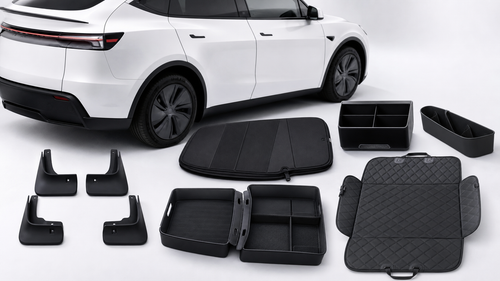
Gear up your Tesla with tested, custom-fit BASENOR accessories — shop Tesla accessories →
Sources & reporting notes
The links below identify the material source records used for this report.
- @TeslaNewswire on X (2026-11-14T08:04:02.000Z) — Direct source
Source links are preserved as published or accessed. See our editorial standards and corrections policy.
The BASENOR Editorial Desk covers Tesla, SpaceX, and related technology, curating reporting from primary sources — official accounts, regulatory filings, and software release data. Every article passes source-record and fact-checking review before publication. About the newsroom.
This report was curated by the BASENOR Editorial Desk from the sources listed above. Read our editorial standards or email editorial@basenor.com to report an error.