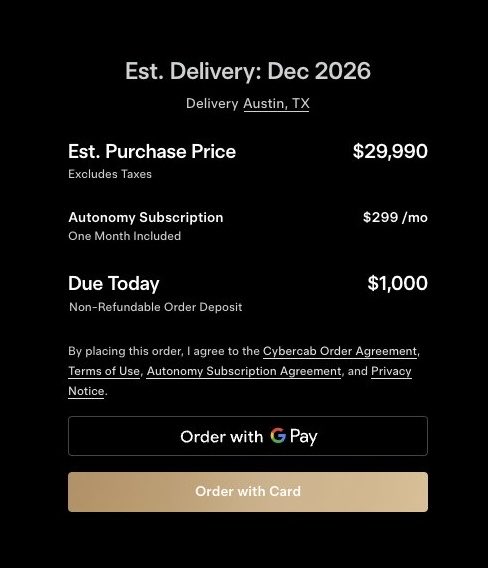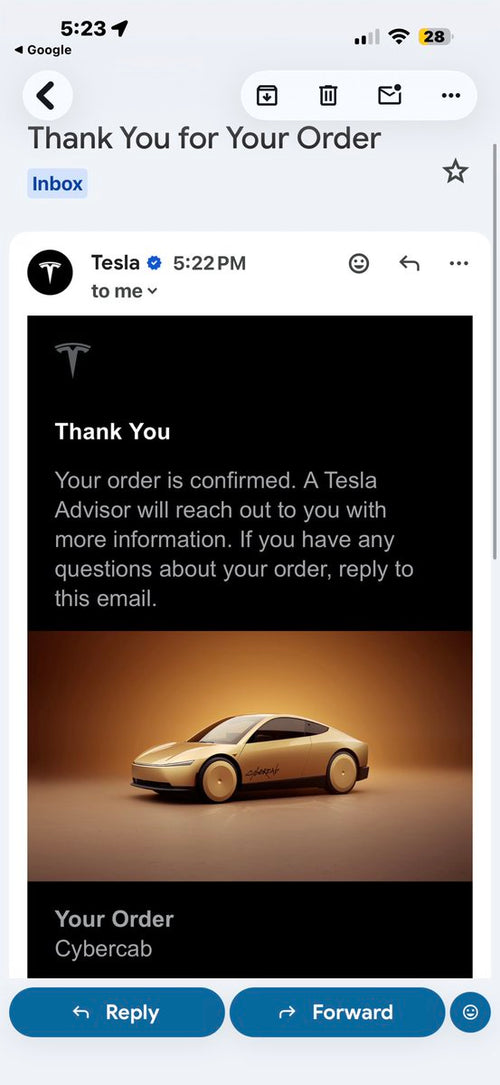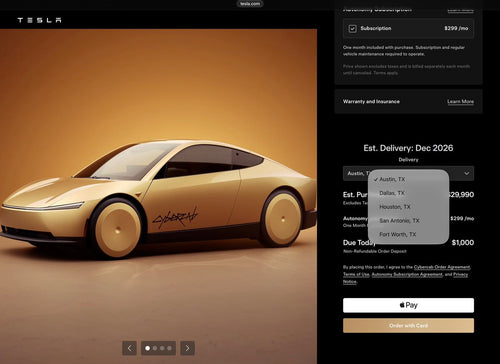

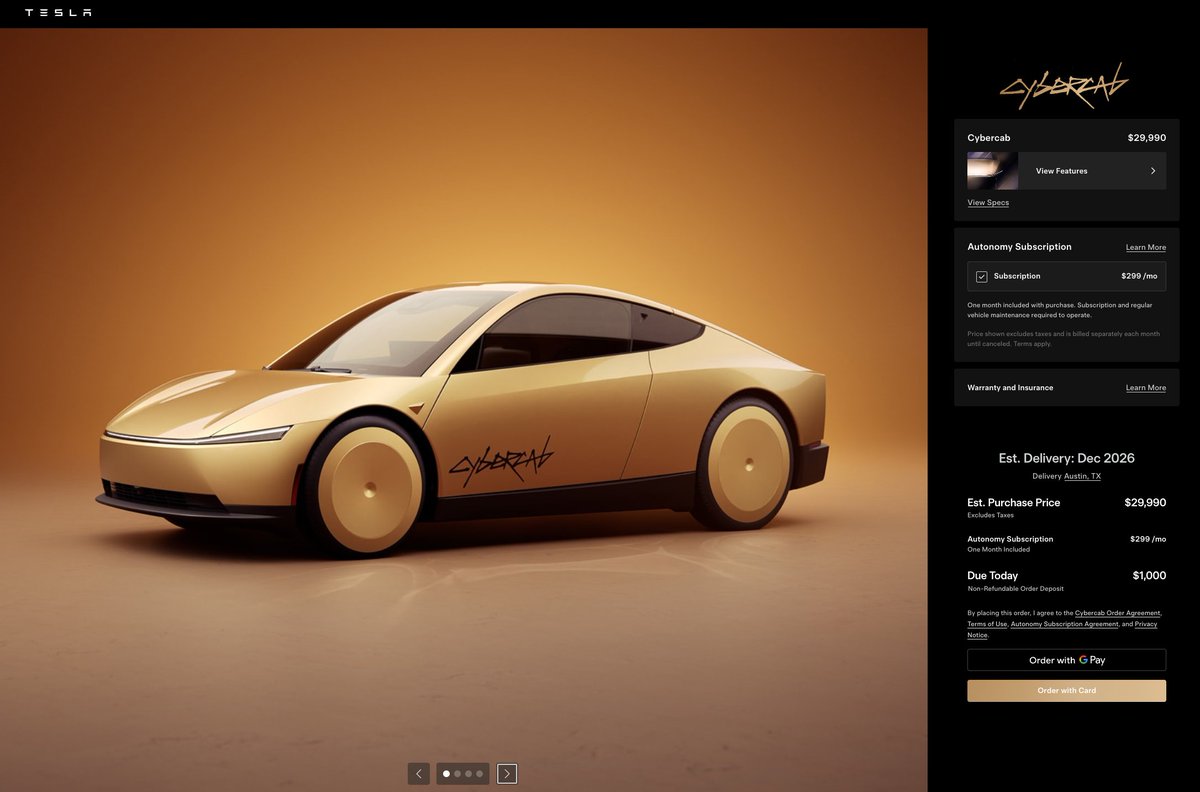
Tesla's Director of Autopilot, Ashok Elluswamy, dropped a significant clarification late Thursday night: customer-owned Cybercabs will be capable of fully unsupervised operation — no human in the loop — within the same geographic boundaries already used by Tesla's commercial Robotaxi fleet. It's a short tweet with long implications for anyone who has ordered or is considering a Cybercab.

1. The Confirmation Comes Directly From the Person Who Builds the System
Elluswamy isn't a PR spokesperson — he's the engineer who oversees Tesla's Autopilot and FSD development. When he says the personal Cybercab will work unsupervised inside Robotaxi geo-zones, that's an architectural statement, not marketing copy. It tells us the same unsupervised FSD stack powering commercial rides is the same one that will run in privately owned vehicles. The capability isn't a separate product; it's the same software, the same geofence, different ownership model.
2. The Geofence Is Already Bigger Than Most People Realize
As of early November 2026, Tesla's Robotaxi network spans eight US cities: Austin, Dallas, Houston, Miami, Orlando, Tampa, Fort Worth, and San Antonio. Austin's geofence alone covers approximately 440 square miles — expanded on November 9 — making it the largest in Tesla's network. San Antonio launched the same day with roughly 274 square miles. Houston's zone was expanded in late October. For a Cybercab owner in any of these cities, that's a substantial operating territory, not a token demo area.
3. The Target Window Is Q2 2027
According to verified reporting, unsupervised FSD for customer-owned Cybercabs is targeted for the second quarter of 2027. The capability will be fleet-bound and geofenced — meaning it activates only inside existing Robotaxi zones. That's a deliberate safety architecture: Tesla expands the zone for its commercial fleet first, validates it, then opens the same boundary to personal vehicles. Owners shouldn't expect to drive unsupervised on any road they choose; the geofence is the product.
4. The Cybercab's Hardware Was Designed for Exactly This
The Cybercab ships with no steering wheel, no pedals, no side mirrors, and no rear window. It was never intended to have a human fallback driver — that's not a cost-cutting omission, it's the design premise. The vehicle runs on a 48-kWh battery pack using Tesla's 4680 cells and relies entirely on a camera-only autonomous driving system. Elluswamy's confirmation aligns with the hardware: there was never a supervised mode planned for this vehicle. Unsupervised operation isn't an upgrade; it's the baseline the car was built around.
5. The Fleet Scale Gives Personal Owners a Head Start on Trust
As of November 9, 2026, 573 Cybercabs were registered in Tesla's Texas Robotaxi fleet, with public rides active in Austin since September 4 and expansion to Dallas planned for November. Every commercial mile logged inside these geofences is training data and validation for the same system that will serve personal Cybercab owners. By the time Q2 2027 arrives, the unsupervised stack will have accumulated months of real-world operation across hundreds of square miles. That's a meaningful safety runway that distinguishes this rollout from a cold launch.
The practical picture: if you own a Cybercab and live or work within a current or future Robotaxi zone, unsupervised operation isn't a distant feature — it's a dated commitment from the engineer building it. The more interesting question now is how quickly Tesla expands those geofences, because the boundary of the Robotaxi network is, by definition, the boundary of what your personal Cybercab can do on its own.
🚕 Following the Robotaxi rollout? See every operating city, launch date and announced market in our Tesla Robotaxi Tracker.
Related Gear
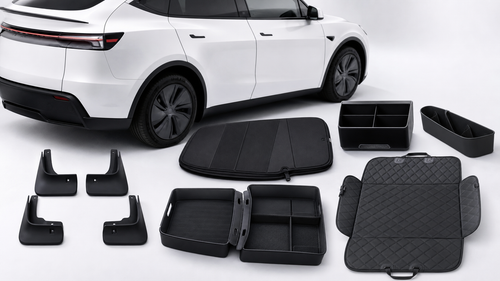
Gear up your Tesla with tested, custom-fit BASENOR accessories — shop Tesla accessories →
Sources & reporting notes
The links below identify the material source records used for this report.
- @aelluswamy on X (2026-11-14T00:35:04.000Z) — Direct source
Source links are preserved as published or accessed. See our editorial standards and corrections policy.
The BASENOR Editorial Desk covers Tesla, SpaceX, and related technology, curating reporting from primary sources — official accounts, regulatory filings, and software release data. Every article passes source-record and fact-checking review before publication. About the newsroom.
This report was curated by the BASENOR Editorial Desk from the sources listed above. Read our editorial standards or email editorial@basenor.com to report an error.