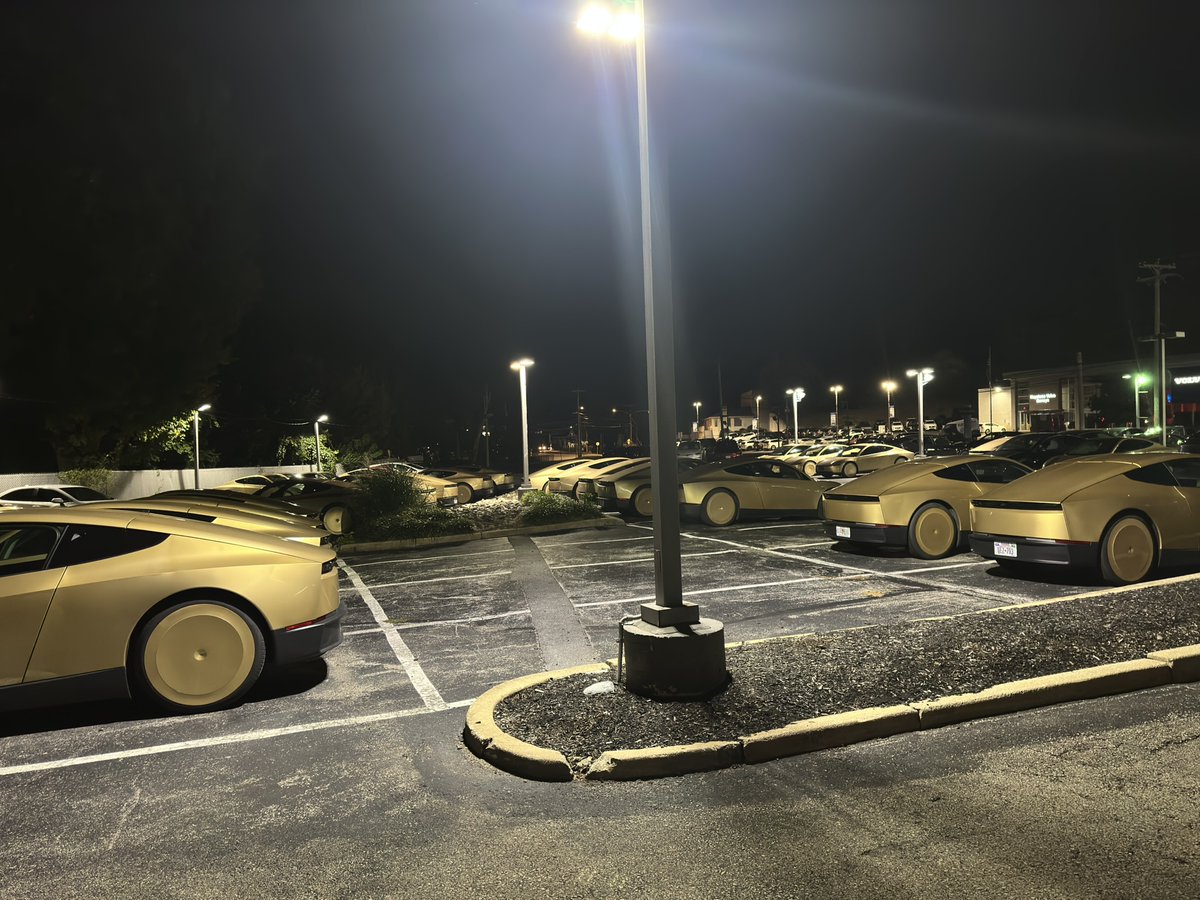
About 35 Tesla Cybercabs have been spotted in Devon, Pennsylvania — a suburb roughly 30 minutes outside Philadelphia — signaling that Tesla is actively staging vehicles well beyond its current Texas and Florida robotaxi zones. The sighting, flagged by Tesla watcher Sawyer Merritt, raises real questions about how quickly Philadelphia could become the next city to see driverless rides.

1. The location is deliberate — Devon sits in Tesla's Philadelphia orbit
Devon, PA isn't a random waypoint. It's a well-connected suburb on the Main Line, roughly 30 minutes from Center City Philadelphia. According to reports, the Cybercabs have been observed at a Tesla dealership in Devon, described as undergoing "training" for future Philadelphia-area deployment. Staging vehicles this close to a major metro — rather than shipping them directly to an operational zone — is consistent with how Tesla pre-positioned cars in Austin before launch.
2. Pennsylvania requires a PennDOT permit before any commercial robotaxi service can launch
Don't expect to hail a driverless Cybercab in Philly tomorrow. Commercial autonomous ride-hailing in Pennsylvania requires a permit from the Pennsylvania Department of Transportation. As of this writing, Tesla has not activated any geofenced robotaxi zones in the state. A PennDOT spokesman has confirmed that Cybercabs observed in Pennsylvania — including earlier sightings in Pittsburgh — have been operating at Level 2, meaning a human operator remains in the vehicle and fully responsible. PennDOT only mandates certification for vehicles operating at Level 3 or above.
3. The fleet size hints at serious intent, not just a test drive
For context: in early September 2026, approximately 45 Cybercabs were registered for Tesla's robotaxi operations across all of Texas — out of a total fleet of roughly 420 vehicles, most of which were Model Ys. Parking ~35 Cybercabs at a single Pennsylvania location before any commercial permit is in hand suggests Tesla is building inventory ahead of regulatory approval, not waiting for the green light before it starts moving iron.
4. The NHTSA is watching — and that adds a layer of complexity
On September 4, 2026, the National Highway Traffic Safety Administration opened an Audit Query into approximately 1,000 Cybercabs, investigating Tesla's self-certification that the vehicle complies with Federal Motor Vehicle Safety Standards. The core issue: the Cybercab was designed without a steering wheel, pedals, side mirrors, or rear window — and federal safety standards were written with human-operated vehicles in mind. That investigation, triggered by the Austin commercial launch, is still open. Any Pennsylvania deployment will need to navigate both state permitting and this federal scrutiny simultaneously.
5. The current operational footprint gives a roadmap for what comes next
Tesla's driverless Cybercab service — running on FSD version 15 (unsupervised) — went public in Austin on September 3, 2026. Since then, the service has expanded to Dallas, Houston, Miami, Orlando, and Tampa, all without an in-vehicle safety supervisor. Philadelphia would represent Tesla's first Northeast market, a meaningfully different operating environment: denser urban grids, harsher winters, and a regulatory climate that hasn't yet been tested with autonomous vehicles at scale. The Devon staging suggests Tesla's internal timeline puts the Philadelphia region as a near-term target — but the permit process and the open NHTSA inquiry mean the actual launch date remains genuinely uncertain.
The Devon sighting is the clearest signal yet that Tesla is treating the Northeast as the next frontier for Cybercab. Whether Philadelphia riders get driverless rides in weeks or months depends almost entirely on how fast PennDOT moves — and whether the NHTSA audit produces any operational constraints before then.
🚕 Following the Robotaxi rollout? See every operating city, launch date and announced market in our Tesla Robotaxi Tracker.
Related Gear
Gear up your Tesla with tested, custom-fit BASENOR accessories — shop Tesla accessories →
Sources & reporting notes
The links below identify the material source records used for this report.
- @SawyerMerritt on X (2026-09-24T02:07:29.000Z) — Direct source
Source links are preserved as published or accessed. See our editorial standards and corrections policy.
The BASENOR Editorial Desk covers Tesla, SpaceX, and related technology, curating reporting from primary sources — official accounts, regulatory filings, and software release data. Every article passes source-record and fact-checking review before publication. About the newsroom.
This report was curated by the BASENOR Editorial Desk from the sources listed above. Read our editorial standards or email editorial@basenor.com to report an error.