📌 UPDATE — September 24, 2026
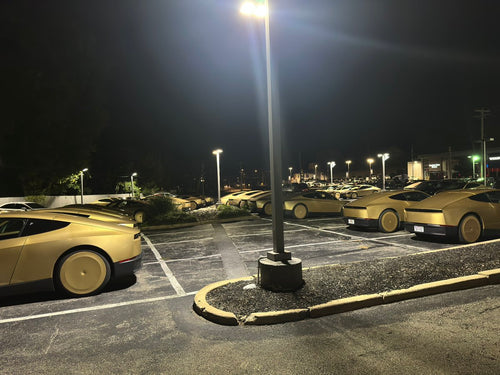
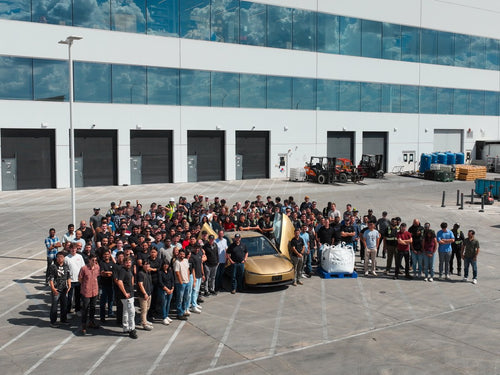
Major corporate customers are set to take delivery of Tesla Semis at today's Sparks factory event, with DHL, PepsiCo, and US Foods all confirmed to be receiving trucks — each having placed large fleet orders. The simultaneous rollout to multiple Fortune 500 companies signals the start of meaningful commercial-scale deployment from the new Nevada facility. Sawyer Merritt shared footage ahead of the event, giving a first look at the deliveries lined up for today's ceremony.
@SawyerMerritt · Sep 24, 2026
"Looks like various large companies will be taking delivery of a new @Tesla Semi tomorrow, including DHL, PepsiCo and US Foods. Each one of these companies have put in large orders."
View on X

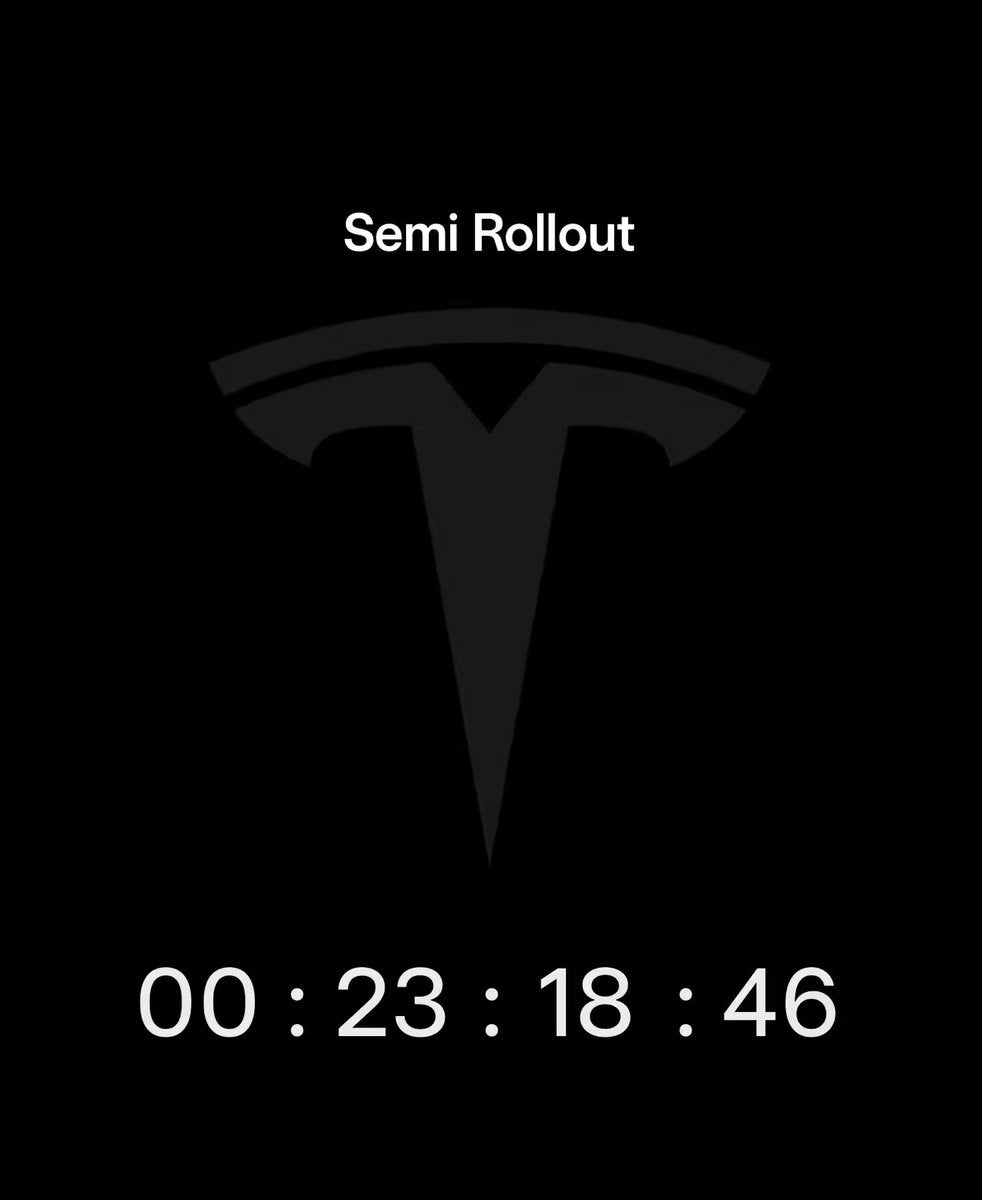
Tesla is set to formally mark the rollout of the Class 8 Tesla Semi on Thursday, September 24, with a livestream event tied to the grand opening of its new dedicated Semi factory in Sparks, Nevada. According to a countdown clock published on Tesla's site and shared by Sawyer Merritt, the livestream is scheduled to begin at 9 PM ET. The Sparks facility has an installed capacity to produce 50,000 Tesla Semis per year — a scale that fundamentally changes the electric heavy-duty trucking conversation.

What Thursday's Event Actually Marks
Framing matters here. Tesla is calling this an inauguration and rollout, but production at the Sparks plant has been underway for months — high-volume manufacturing at the new facility began in late April 2026, according to prior reporting. Thursday is essentially the ceremonial ribbon-cutting: the moment Tesla stakes its claim to the Class 8 electric freight market with a purpose-built factory rather than the low-volume pilot line that has been running out of a nearby Semi production building since 2022.
Drone photographer Joe Tegtmeyer, who has documented the Sparks buildout for years, framed the moment bluntly: "Less than 24 hours until the @tesla_semi official rollout event and this starts a new chapter in freight transportation."

The Factory by the Numbers
The new Sparks facility is not a modest expansion. It is a $3.6 billion buildout attached to Gigafactory Nevada, and the physical footprint alone signals Tesla's ambition for the freight segment.
| Metric | Value |
|---|---|
| Factory footprint | 1.7 million sq ft |
| Total investment | $3.6 billion (Gigafactory NV expansion) |
| Installed annual capacity | 50,000 Tesla Semis / year |
| Battery integration | 4680 cell production on-site |
| Paint process | Powder-coating (shared with Megapack) |
The co-location with 4680 cell manufacturing is arguably the more consequential number than the 50,000-unit capacity. According to earlier reporting on the Gigafactory Nevada expansion, packaging cell production and truck assembly under the same roof directly attacks the supply-chain bottleneck that kept the Semi at pilot-line volumes for nearly four years after its 2017 unveiling. A Semi Long Range pack is 822 kWh — roughly the equivalent of 10 Model Y Long Range battery packs — so scaling the truck was never going to happen without dedicated cell supply.
What Tesla Is Actually Shipping
The production Semi that will be rolling off the Sparks line has firmed up considerably from the 2017 prototype spec sheet. Based on Tesla's published production-version specifications:
- Standard Range: approximately 325 miles per charge, 548 kWh pack, curb weight under 20,000 lbs.
- Long Range: approximately 500 miles per charge, 822 kWh pack, roughly 23,000 lbs curb weight.
- Energy consumption: 1.7 kWh per mile at the full 82,000 lb Gross Combined Weight — the metric Tesla has consistently emphasized against diesel's roughly 6.5 mpg equivalent.
- Powertrain: tri-motor drivetrain producing meaningful launch power at legal freight weights.
Notably, the 500-mile Long Range figure holds at 82,000 lbs GCW — the standard U.S. Class 8 legal weight — which is the number that matters to fleet operators sizing routes.
Why This Matters for the Freight Market
Fifty thousand trucks per year is a serious statement. For context, the entire U.S. Class 8 truck market runs roughly 250,000–300,000 units annually across all diesel and alt-fuel builders combined. A single factory targeting 50,000 electric Class 8s per year is not a demonstration project — it is a production line designed to take real share from diesel OEMs on high-utilization routes where the Semi's efficiency math works hardest.
Whether Tesla ramps to that installed capacity quickly is a separate question. Installed capacity and actual output rarely line up in year one at any auto plant, and Tesla's own history at Gigafactory Texas and Berlin suggests a multi-quarter ramp is realistic. The initial customer list has historically leaned on PepsiCo, Sysco, Costco, Saia, and Martin Brower — fleets that have been running pilot Semis on real routes since late 2022 and provide the operational data Tesla needs to sell into more conservative freight buyers.
What to Watch During and After the Livestream
A few specific signals will tell you whether Thursday is genuinely a pivot point or a well-produced photo opportunity:
- Order book disclosure. Does Tesla name new fleet customers or share a backlog figure? Reservation quality is what turns 50,000 installed capacity into 50,000 built.
- Confirmed pricing. Tesla originally quoted $150,000 for the 300-mile and $180,000 for the 500-mile at the 2017 reveal. Production pricing in a 2026 cost environment has been a long-running open question.
- Megacharger network updates. Semi economics depend on 750 kW+ charging at the destinations customers actually run. Any new Megacharger site announcements will matter more than the truck reveal itself.
- Delivery cadence. Watch for a stated production ramp — units per week or month by quarter — rather than just the annualized capacity number.
- Livestream confirmation. As of publication, Tesla has posted a countdown clock but has not formally confirmed a public livestream. The event has been described as invite-only, so the format of public viewing is worth verifying at start time.
Editor's View
The Tesla Semi has spent longer in "almost shipping" limbo than any other Tesla product — nearly nine years between reveal and dedicated factory opening. That's why the Sparks event deserves more attention than a typical Tesla milestone livestream: it is the moment the Semi program stops being a rounding error in Tesla's financials and starts being a real business line with its own supply chain, its own factory, and its own annual production number. Whether it gets to 50,000 units a year is a 2027–2028 question. Whether it ships in volumes that matter to freight fleets is a Thursday-night question.
Related Gear
Gear up your Tesla with tested, custom-fit BASENOR accessories — shop Tesla accessories →
Sources & reporting notes
The links below identify the material source records used for this report.
- @JoeTegtmeyer on X (2026-09-24T01:43:32.000Z) — Direct source
- @SawyerMerritt on X (2026-09-24T01:58:58.000Z) — Direct source
Source links are preserved as published or accessed. See our editorial standards and corrections policy.
The BASENOR Editorial Desk covers Tesla, SpaceX, and related technology, curating reporting from primary sources — official accounts, regulatory filings, and software release data. Every article passes source-record and fact-checking review before publication. About the newsroom.
This report was curated by the BASENOR Editorial Desk from the sources listed above. Read our editorial standards or email editorial@basenor.com to report an error.