📌 UPDATE — November 18, 2026
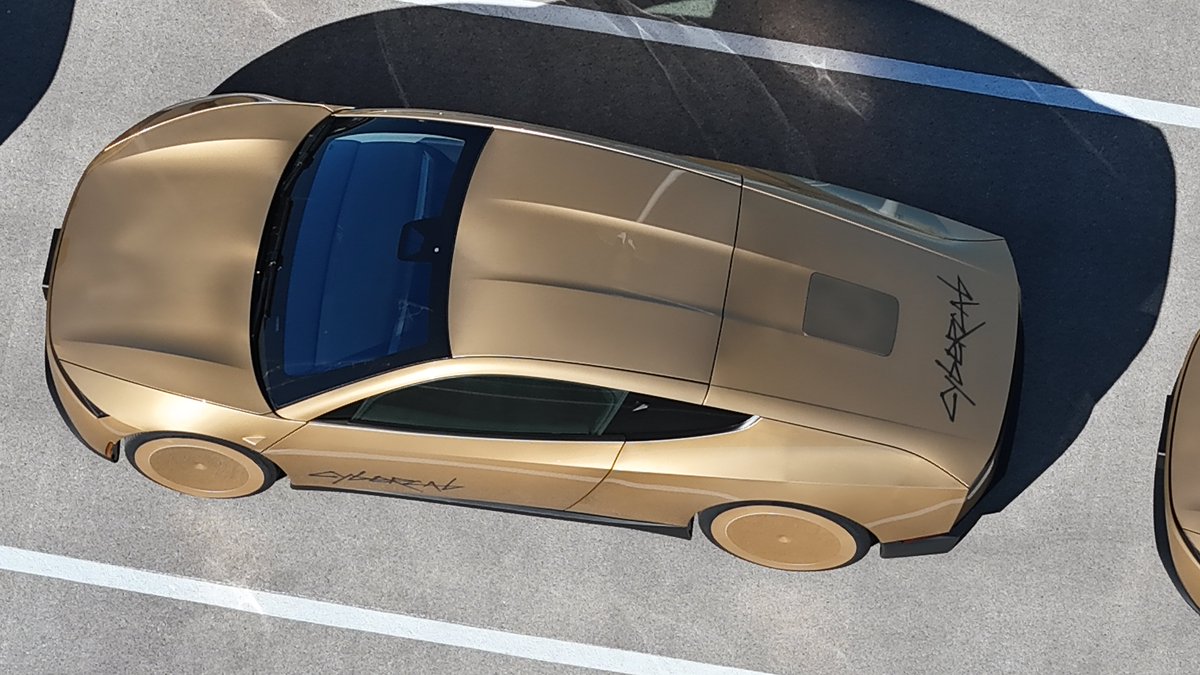
Cybercab production at Giga Texas is ramping, and the Starlink antenna design appears to be evolving toward a final form. New images and footage shared by @SawyerMerritt and @TeslaNewswire show Cybercabs already wearing official Cybercab decals alongside the updated Starlink antenna — a strong signal that a broader rollout may be imminent. The new antenna design differs from the darker cover variant we originally reported, suggesting Tesla may have iterated further since those early drone sightings. Ubiquitous connectivity via integrated Starlink remains a key differentiator for the robotaxi platform.


Sources: @SawyerMerritt · @TeslaNewswire · Nov 18, 2026
Drone spotter Joe Tegtmeyer caught something worth a second look at Giga Texas on November 18: a batch of Cybercabs rolling through the outbound lot with what appears to be a noticeably darker cover over the Starlink V5 module on the rear hatch. It's a small visual detail, but given how deliberately Tesla integrated Starlink into the Cybercab's design, any change to that hardware's appearance raises legitimate questions about where the program is headed.

What exactly did Tegtmeyer spot?
Two posts from Tegtmeyer show multiple Cybercabs at Giga Texas, all wearing the production "Cybercab" badging on the exterior. The detail that stands out is the cover panel over the flush-mounted Starlink V5 terminal on the rear hatch — it appears darker than the lighter, vehicle-color-matched panel documented in earlier production runs from August and September 2026. Tegtmeyer himself flagged the uncertainty: he's not sure whether the darker coloring is intentional product design or a cosmetic issue Tesla is still working through.
How does this compare to what we saw earlier in production?
When Tesla first revealed Starlink integration on the Cybercab at Giga Texas around August 10–12, 2026, the hardware was described as a flush-mounted rectangular panel that matched or closely approximated the vehicle's gold color. Drone footage from September 9, 2026, confirmed that hundreds of units in the outbound lot carried what observers described as a "lighter" panel on the rear hatch. The darker cover spotted today is a visible departure from that earlier appearance, though whether it represents a deliberate revision or a batch-level variation is not yet confirmed.

Why does the Starlink cover design actually matter?
The Starlink V5 terminal is a factory-integrated component — not an afterthought. It's flush-mounted within the rear roof panel, and the cover is the only visible interface between that hardware and the outside world. A darker cover could serve a functional purpose (thermal management, signal optimization), a branding purpose (making the Starlink capability visually identifiable to passengers or fleet operators), or it could simply reflect a supplier change in the cover material. None of those explanations are confirmed yet, but each carries different implications for how Tesla wants the Cybercab's connectivity story to read from the outside.
Does the Starlink hardware affect how the Cybercab drives autonomously?
No. According to background research, the Cybercab's autonomous driving operations run entirely on Tesla's onboard AI4 computer. Starlink connectivity is not in the loop for real-time driving decisions. Its role is in fleet management, remote customer service, real-time navigation updates, and in-cabin passenger services like 4K video streaming and productivity applications. The Starlink V5 terminal is capable of download speeds exceeding 375 Mbps with a typical power draw of around 35–50W — more than enough headroom for a full passenger experience during a ride.
Is Tesla likely to address this publicly?
Probably not proactively. Tesla rarely comments on incremental hardware variations spotted at the factory before vehicles reach customers. If this is a deliberate design update, it will likely surface quietly in production units or through a future product communication. If it's a coloration issue being resolved, it may simply disappear from the next batch without any announcement. Either way, the Cybercab program appears to be actively refining production details — which is consistent with a vehicle still working toward broad commercial deployment.
🚕 Following the Robotaxi rollout? See every operating city, launch date and announced market in our Tesla Robotaxi Tracker.
Related Gear
Gear up your Tesla with tested, custom-fit BASENOR accessories — shop Tesla accessories →
Sources & reporting notes
The links below identify the material source records used for this report.
- @JoeTegtmeyer on X (2026-11-18T14:30:01.000Z) — Direct source
- @JoeTegtmeyer on X (2026-11-18T14:35:00.000Z) — Direct source
Source links are preserved as published or accessed. See our editorial standards and corrections policy.
The BASENOR Editorial Desk covers Tesla, SpaceX, and related technology, curating reporting from primary sources — official accounts, regulatory filings, and software release data. Every article passes source-record and fact-checking review before publication. About the newsroom.
This report was curated by the BASENOR Editorial Desk from the sources listed above. Read our editorial standards or email editorial@basenor.com to report an error.