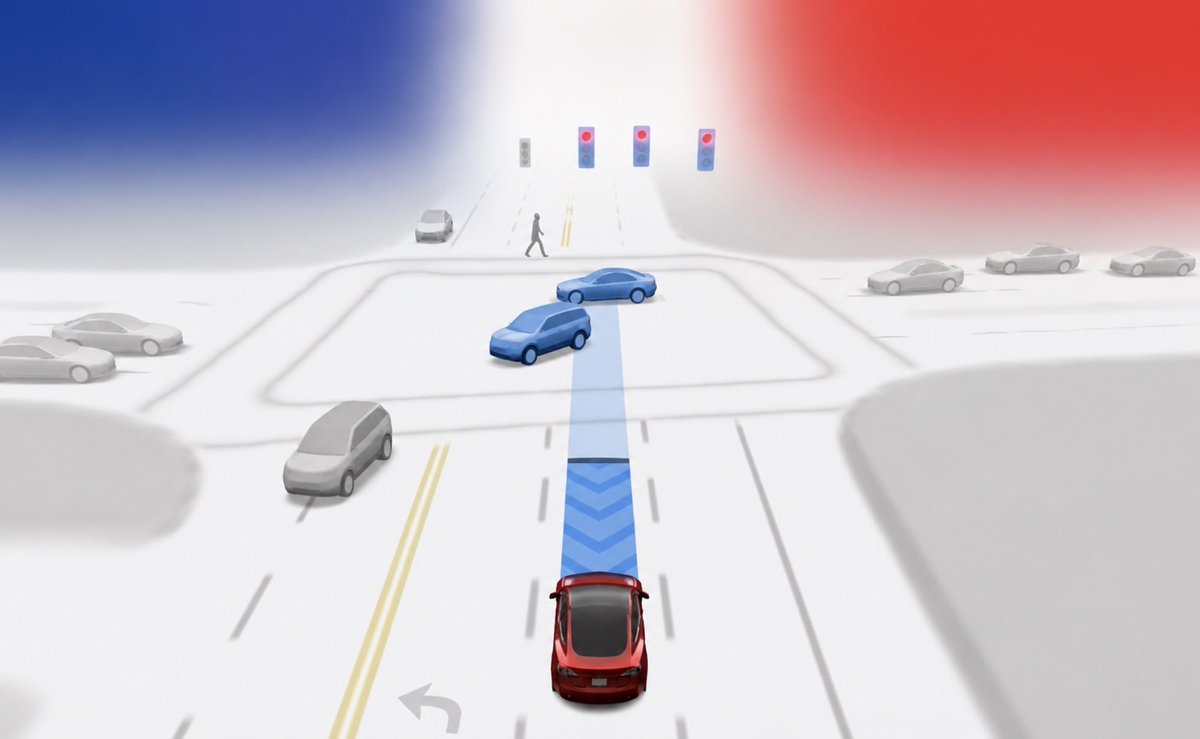
France has been actively lobbying other EU member states to vote against approving Tesla's assisted driving technology for use across the bloc, according to a source inside an EU member state cited by The Tesla Newswire. The opposition centers on unresolved speed-related issues and regulatory shortfalls — and with a critical vote potentially coming in December 2026, the outcome is far from settled.

What France Is Objecting To
France's transportation minister Philippe Tabarot made Paris's position public back in July 2026, but the behind-the-scenes lobbying effort adds a new dimension. France isn't simply abstaining — it's reportedly working to build a blocking coalition among other member states.
The technical objections are specific. The European Transport Safety Council (ETSC) flagged Tesla's "speed offset" function as a violation of UN Regulation No. 171, which governs driver assistance systems in the EU. That function originally allowed drivers to set the vehicle's speed up to 50% above the detected speed limit. A second concern involves the "contextual max speed" feature, which can allow the car to set its own speed ceiling based on surrounding traffic — meaning if other drivers are speeding, the Tesla could follow suit.
France's broader argument is that one country's national approval shouldn't be sufficient to trigger EU-wide access. Paris wants a harmonized framework with common test protocols before any bloc-wide green light is given.

How the Approval Process Actually Works
Tesla's FSD (Supervised) — rebranded as Tesla Assisted Driving (TAD) in Europe to meet regulatory naming requirements — currently has national-level approval in 11 EU countries: the Netherlands, Belgium, Czechia, Denmark, Croatia, Lithuania, Slovenia, Estonia, Slovakia, Latvia, and Finland. Those approvals flow largely from the Dutch RDW granting type approval in April 2026.
But national approval and EU-wide approval are two different things. A bloc-wide green light requires a qualified majority vote through the Technical Committee on Motor Vehicles (TCMV): at least 15 of 27 member states in favor, representing 65% of the EU population. The TCMV discussed the file on October 6, 2026, without holding a vote. The next opportunity is a meeting in December 2026.
EU Approval Scorecard
| Country / Bloc | Position | Est. EU Pop. Share |
|---|---|---|
| Germany | Supports EU-wide approval | ~18.5% |
| Italy | Supports EU-wide approval | ~13% |
| France | Actively opposing | ~15% |
| 11 national approvals (NL, BE, CZ, DK, HR, LT, SI, EE, SK, LV, FI) | Approved at national level | ~10% combined (est.) |
EU-wide approval requires 15 of 27 states representing 65% of EU population. Germany + Italy alone represent ~31.5%, according to background research.
What Tesla Has Already Changed for Europe
Tesla hasn't been standing still. The company has made several targeted adjustments to address European regulatory concerns ahead of any TCMV vote:
- The maximum speed offset has been reduced from +50% to +10% above the detected limit.
- Drivers must keep hands on the wheel when traveling above 130 km/h (approximately 81 mph).
- Driver monitoring has been tightened — earlier inattention warnings and a full strike for inattention during an active maneuver.
- The system has been renamed Tesla Assisted Driving (TAD) to comply with EU naming conventions.
The current European version is TAD v14.2.2.7, part of software package 2026.39.100. Whether these changes are sufficient to satisfy France — and the countries it's reportedly lobbying — remains the open question heading into December.

The Bigger Picture
France's active lobbying effort is a meaningful escalation beyond simply casting a no vote. If Paris succeeds in assembling a blocking minority — member states representing more than 35% of EU population — the December vote fails regardless of how many individual countries are in favor. With France alone accounting for roughly 15% of EU population, it doesn't need many allies to reach that threshold.
For Tesla owners in Europe, the practical impact depends on geography. Drivers in the 11 countries with national approvals can already access TAD. But without EU-wide approval, Tesla faces a fragmented market where the feature remains unavailable in France, Spain, Poland, and other major markets. A failed December vote wouldn't end the process — it would reset it, likely pushing any EU-wide resolution into 2027 and requiring Tesla to address the remaining regulatory objections more formally.
The December TCMV meeting is now the clearest near-term signal of whether Europe's assisted driving landscape consolidates or fractures further. For our broader coverage of FSD developments, see our FSD coverage.
Related Gear
Gear up your Tesla with tested, custom-fit BASENOR accessories — shop Tesla accessories →
Sources & reporting notes
The links below identify the material source records used for this report.
- @TeslaNewswire on X (2026-11-18T14:09:10.000Z) — Direct source
Source links are preserved as published or accessed. See our editorial standards and corrections policy.
The BASENOR Editorial Desk covers Tesla, SpaceX, and related technology, curating reporting from primary sources — official accounts, regulatory filings, and software release data. Every article passes source-record and fact-checking review before publication. About the newsroom.
This report was curated by the BASENOR Editorial Desk from the sources listed above. Read our editorial standards or email editorial@basenor.com to report an error.