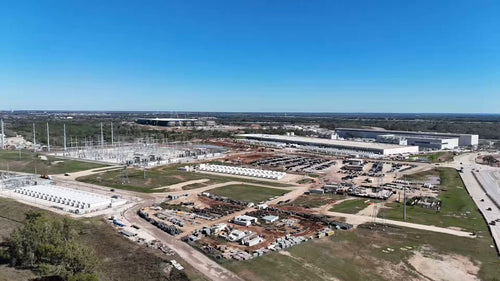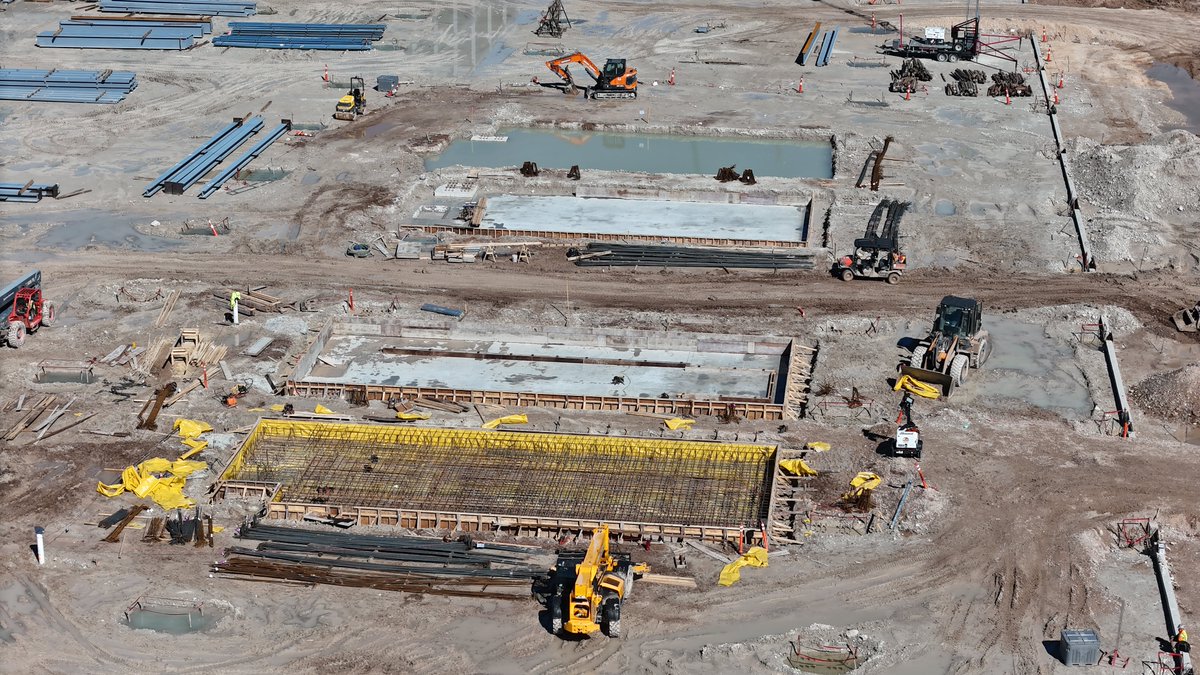
Tesla's dedicated Optimus factory at Giga Texas is moving fast — and a new observation from aerial tracker Joe Tegtmeyer suggests the build is entering a more consequential phase. As of November 18, the structure is roughly 65% assembled, and four reinforced foundations on the southeast side point toward heavy manufacturing equipment arriving soon. Here's what the latest site activity tells us about where this project is headed.

1. The factory shell is on track to close out before year-end
Groundbreaking on the North Campus Optimus site happened March 23, 2026 — less than eight months ago. Getting to 65% structural assembly in that window is a brisk pace for a facility of this scale. According to previous reporting, the structural shell is projected to be complete before the end of 2026, which would keep Tesla on schedule to begin initial production runs in the same timeframe. The steel frame was already nearing completion by early October, with concrete being poured on upper floors shortly after.
2. Four reinforced foundations signal IDRA casting machines are coming
The most significant new detail from Tegtmeyer's November 18 flyover is the construction of four heavily reinforced foundations on the southeast side of the facility. His read: these are sized and positioned for IDRA giga press casting machines. IDRA presses used elsewhere at Giga Texas for vehicle components weigh thousands of tons and require purpose-built foundations — the kind of groundwork you don't pour unless the equipment order is already placed. Tegtmeyer expects some of these machines to arrive in the new year.
3. Casting at this scale would be a first for humanoid robot manufacturing
IDRA giga presses are best known for die-casting large structural components — Tesla uses them to produce the front and rear underbody sections of the Model Y and Cybertruck in single pieces. Applying that same approach to Optimus components would be a meaningful manufacturing innovation. It would allow Tesla to produce complex structural parts of the robot body faster and with fewer individual pieces, directly supporting the kind of volume the factory is ultimately designed for.
4. The long-term production target is 10 million robots per year
That number comes from Tesla's own stated ambitions for the Giga Texas Optimus facility — designed for an annual run-rate of 10 million Gen 4 units at full build-out. For context, Tesla's Fremont factory began Gen 3 Optimus mass production on January 21, 2026, at a capacity designed for 1 million units per year. The Texas facility is being built to a different order of magnitude entirely, which is why the manufacturing infrastructure — including what appear to be casting foundations — matters as much as the building itself. Up to $10 billion in investment is estimated for the project.
5. High-volume production is targeted for Summer 2027
Initial production at Giga Texas is expected to begin by late 2026, with high-volume output targeted for Summer 2027. The pace of construction over the past eight months suggests Tesla is not treating those dates as aspirational. The appearance of casting foundations now — while the building is still being assembled — indicates equipment procurement and site prep are running in parallel, not sequentially. If the IDRA machines arrive in early 2027 as Tegtmeyer anticipates, installation and commissioning could align with that summer ramp timeline.
The Optimus factory story is still largely a construction story, but the foundation work on the southeast side marks a shift: this is no longer just a building going up — it's a manufacturing line being laid in. The next major signal to watch for is confirmation of those casting machine deliveries, which Tegtmeyer expects to start materializing in the new year.
🤖 Tracking Tesla's humanoid robot? See every Optimus production milestone and appearance in our Tesla Optimus Tracker.
Related Gear
Gear up your Tesla with tested, custom-fit BASENOR accessories — shop Tesla accessories →
Sources & reporting notes
The links below identify the material source records used for this report.
- @JoeTegtmeyer on X (2026-11-18T14:45:00.000Z) — Direct source
Source links are preserved as published or accessed. See our editorial standards and corrections policy.
The BASENOR Editorial Desk covers Tesla, SpaceX, and related technology, curating reporting from primary sources — official accounts, regulatory filings, and software release data. Every article passes source-record and fact-checking review before publication. About the newsroom.
This report was curated by the BASENOR Editorial Desk from the sources listed above. Read our editorial standards or email editorial@basenor.com to report an error.