📌 UPDATE — August 10, 2026
After a notably slow stretch on the production line, Cybercabs are once again queuing up on the west side of the end-of-line area at Giga Texas — and this batch comes with a visible change: official "Cybercab" logos on the doors and hatches. Aerial observer Joe Tegtmeyer flagged the uptick today, noting that while output had been "noticeably very low" over the past week or so, multiple badged units are now visible lining up. Whether the addition of exterior branding signals a production milestone, a trim/spec change, or simply a parts-supply catch-up is still unclear — Tegtmeyer himself stopped short of drawing conclusions.
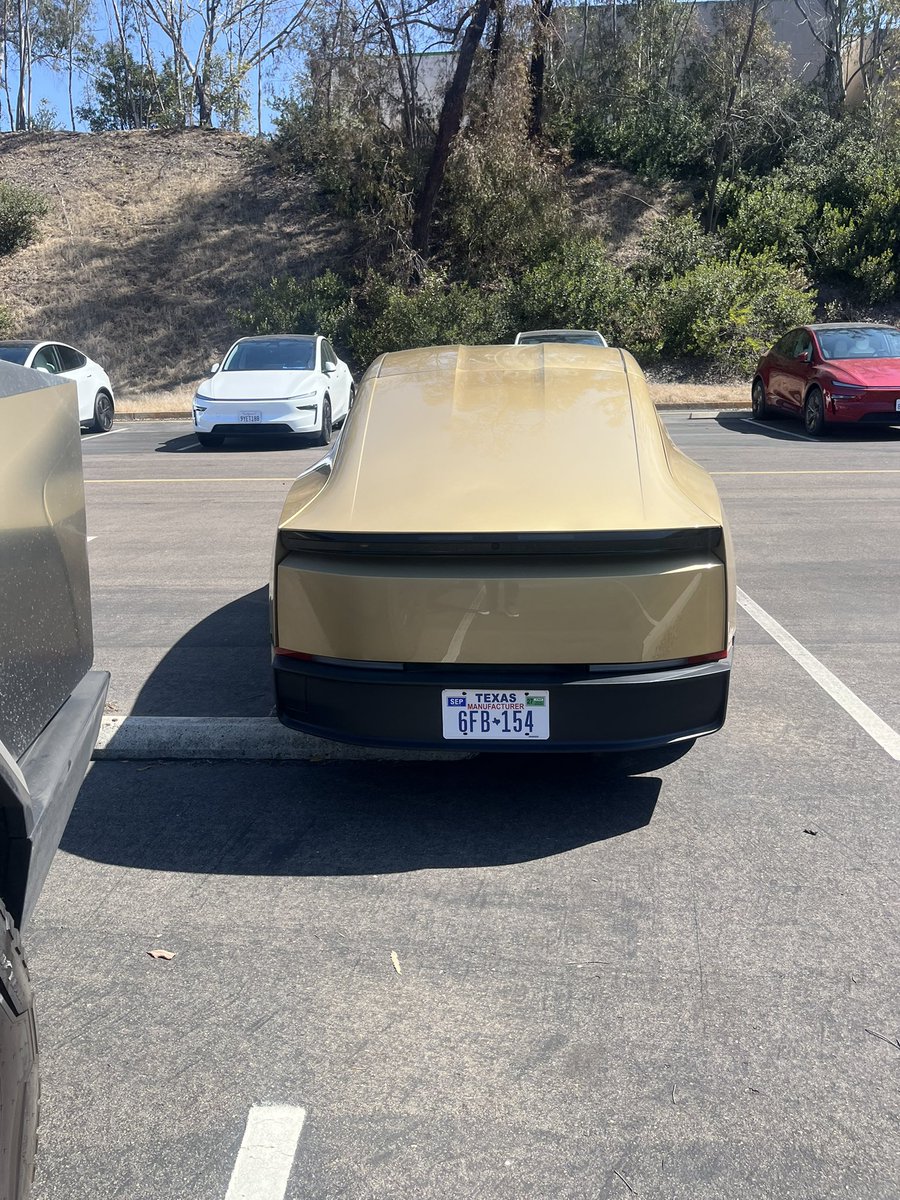
For context, the VIN #2172 unit spotted in San Diego (covered below) was unbadged, making today's logo-equipped cars a meaningful cosmetic step forward in how production-ready units are leaving the factory floor.
📸 Via @JoeTegtmeyer (Aug 10, 2026):
"Cybercab production over the past week or so has been noticeably very low, but today, we are seeing more starting to line up on the W side of the EOL at Giga Texas, but this time, many with the 'Cybercab' logos on the doors and the hatches."

A Tesla Cybercab bearing VIN #2172 was photographed in San Diego, California on August 9, 2026 — and that four-digit number is drawing a lot of attention. If Tesla's VIN sequencing follows a roughly linear pattern, it implies the company may have already assembled more than 2,000 Cybercabs since production officially kicked off at Giga Texas in April. Here's what that actually means, and what we still don't know.

When did Cybercab production actually start?
Tesla issued an official Start of Production designation for the Cybercab on April 24, 2026, at Gigafactory Texas, with VIN #001 assigned that day. That means the roughly 2,000-unit milestone — if the VIN spotted in San Diego is representative — would have been reached in approximately three and a half months. A first production vehicle had rolled off the line as early as February 2026, but April 24 is the formal production start date on record.
Does a VIN number actually tell us how many units have been built?
Not precisely — and that caveat matters. VIN sequences are not always a clean 1-to-1 count of manufactured vehicles. Automakers sometimes reserve blocks, skip numbers for regulatory or regional variants, or assign VINs before physical production is complete. That said, VIN sightings have historically served as a reasonable rough proxy for Tesla's production volume, particularly in the early ramp phase when the sequence is less fragmented. VIN #2172 in the wild is a meaningful data point, but it should be read as a floor estimate, not a confirmed production tally.
What is Tesla's stated production capacity for the Cybercab?
According to Tesla's Q2 2026 shareholder deck, installed annual capacity for the Cybercab at Giga Texas is listed above 125,000 units. That's the current installed figure — not the long-term ceiling. Tesla's stated ambition is to eventually produce 2 million Cybercabs per year across multiple factories at full design capacity, with an internal target of one unit every 10 seconds at full scale. The gap between 125,000 annual capacity and 2 million reflects how early the program still is in its manufacturing build-out.
Is a 2,000-unit count in roughly three months a fast ramp or a slow one?
At a sustained pace of roughly 2,000 units over three to four months, the annualized rate would sit somewhere around 6,000–8,000 units per year — well below the 125,000 installed capacity figure. That's not unusual for an early ramp: Tesla's own history with the Model 3 and Cybertruck shows that the gap between installed capacity and actual output can be enormous in the first year. The more relevant question is the trajectory — whether the build rate is accelerating week-over-week — which a single VIN sighting can't fully answer. By mid-March 2026, reports indicated 25 Cybercabs had been produced, which means the pace has clearly increased significantly since then.
Where are these Cybercabs going — and when does public deployment begin?
The San Diego sighting is consistent with Tesla's known testing and logistics patterns; early-production units typically circulate through California for validation, regulatory certification, and fleet preparation before any commercial deployment. Tesla has not announced a firm public launch date for Cybercab robotaxi service. What the VIN data does suggest is that Tesla is building inventory ahead of that launch rather than producing to order — a sign the company is preparing for a meaningful initial deployment rather than a token rollout.
A single VIN sighting won't settle the production debate, but #2172 on a public road in San Diego is a concrete signal that the Cybercab program is moving faster than the early trickle of units from February and March implied. The next meaningful milestone to watch: whether Tesla discloses Cybercab-specific delivery or production figures in its Q3 2026 earnings report.
🚕 Following the Robotaxi rollout? See every operating city, launch date and announced market in our Tesla Robotaxi Tracker.
Related Gear
Gear up your Tesla with tested, custom-fit BASENOR accessories — shop Tesla accessories →
Sources & reporting notes
The links below identify the material source records used for this report.
- @TeslaNewswire on X (2026-08-09T18:36:23.000Z) — Direct source
Source links are preserved as published or accessed. See our editorial standards and corrections policy.
The BASENOR Editorial Desk covers Tesla, SpaceX, and related technology, curating reporting from primary sources — official accounts, regulatory filings, and software release data. Every article passes source-record and fact-checking review before publication. About the newsroom.
This report was curated by the BASENOR Editorial Desk from the sources listed above. Read our editorial standards or email editorial@basenor.com to report an error.