📌 UPDATE — September 4, 2026
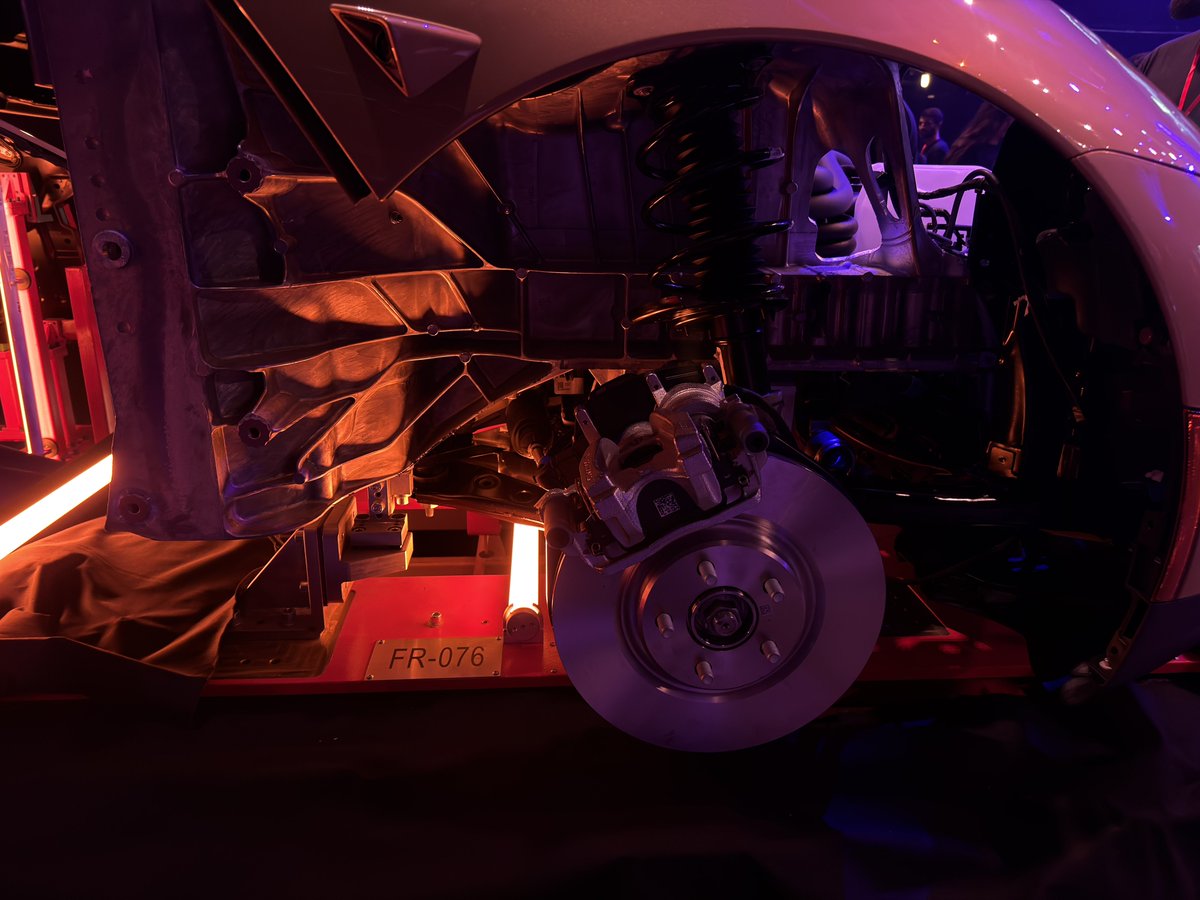
Elon Musk has confirmed two additional engineering breakthroughs for the Cybercab. First, the Cybercab's motor contains no rare earth metals while delivering the same range as rare-earth-dependent alternatives — something Musk described as "extremely hard to achieve." Second, Musk elaborated on the brake-by-wire system, noting that electric brakes eliminate the need to route hydraulic plumbing throughout the entire vehicle, meaningfully reducing mechanical complexity and potential failure points.
The rare-earth-free motor is a particularly notable development, as rare earth elements like neodymium are standard in high-performance EV motors. Removing them without a range penalty has significant implications for supply chain independence and long-term production cost.


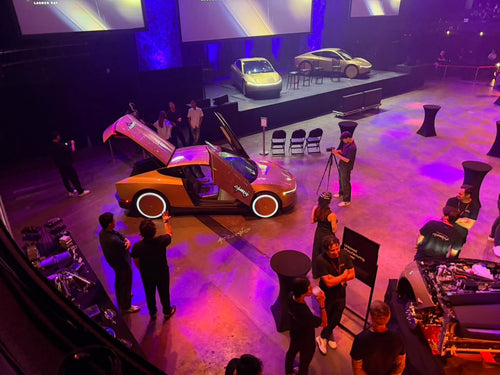
Tesla's Cybercab, which officially launched on September 3, 2026 in Austin, Texas, isn't just a new vehicle — it's a ground-up rethink of how a car's most fundamental systems work. Two details surfaced by Sawyer Merritt cut to the heart of what makes the Cybercab technically distinct: a brake-by-wire system with no brake fluid whatsoever, and a drive unit that is simultaneously smaller, lighter, and more efficient than anything else in the segment. Here's what both mean in plain terms.
What exactly is brake-by-wire, and how does it differ from a conventional braking system?
In every conventional car — including all previous Teslas — pressing the brake pedal compresses hydraulic fluid that physically pushes calipers against the rotors. There is a direct mechanical and fluid link between your foot and the brakes. Brake-by-wire replaces that entire hydraulic circuit with electronics: a sensor reads the braking input, sends a signal to a control unit, and that unit commands actuators at each wheel. The Cybercab takes this further still — because it has no brake pedal at all, the system operates entirely on commands from the vehicle's autonomy stack. According to Sawyer Merritt, the Cybercab is the first Tesla to use this architecture and the first to contain no brake fluid.

Why does removing brake fluid matter for a robotaxi specifically?
Hydraulic brake fluid is hygroscopic — it absorbs moisture over time, which degrades its boiling point and requires periodic flushing. In a high-utilization robotaxi running potentially around the clock, that maintenance interval becomes a real operational cost. Eliminating the fluid circuit removes that service requirement entirely and reduces the number of failure points in the system. It also simplifies the vehicle's architecture in ways that support fully automated manufacturing — which connects directly to the drive unit story below.
What is a bar-wound stator, and why does the Cybercab use one?
Most EV motors use round-wire stators, where copper wire is wound in coils. A bar-wound (also called hairpin) stator uses rectangular copper bars pressed into slots, which pack more copper into the same space, reduce resistance, and improve thermal performance. Tesla has used bar-wound stators in other vehicles, but the Cybercab's implementation is described as simplified — meaning fewer process steps during manufacturing. According to Merritt, the architecture enables fully automated assembly with sub-10-second cycle times per unit, which is an extraordinary figure for a component as complex as an electric motor.

How much smaller and lighter is the Cybercab drive unit compared to other top-performing EV units?
Merritt reports the Cybercab's drive unit is 18% smaller in volume and 25% lighter than other top-performing electric vehicle drive units. The motor itself is rated at 163 kW (219 hp) in a front-wheel-drive, single-speed configuration. For a vehicle purpose-built around efficiency and low operating cost per mile, shaving a quarter of the weight out of the drivetrain has meaningful downstream effects: less unsprung mass, lower energy consumption, and a lighter overall vehicle. The Cybercab's curb weight is reported at approximately 3,110 lbs — lean for a car with this level of onboard compute and sensor hardware.
Does any of this technology carry over to other Tesla models?
Nothing in the current source material confirms a near-term rollout of brake-by-wire or the Cybercab-specific drive unit to other Tesla vehicles. The brake-by-wire architecture is particularly tied to the Cybercab's no-pedal design — retrofitting it to a vehicle with a conventional pedal box would require a fundamentally different implementation. The bar-wound stator and simplified lubrication system, however, are manufacturing-process innovations that Tesla could theoretically apply to future motor generations across the lineup. For now, these remain Cybercab-specific firsts.
🚕 Following the Robotaxi rollout? See every operating city, launch date and announced market in our Tesla Robotaxi Tracker.
Related Gear
Gear up your Tesla with tested, custom-fit BASENOR accessories — shop Tesla accessories →
Sources & reporting notes
The links below identify the material source records used for this report.
- @SawyerMerritt on X (2026-09-04T01:15:00.000Z) — Direct source
- @SawyerMerritt on X (2026-09-04T01:31:22.000Z) — Direct source
Source links are preserved as published or accessed. See our editorial standards and corrections policy.
The BASENOR Editorial Desk covers Tesla, SpaceX, and related technology, curating reporting from primary sources — official accounts, regulatory filings, and software release data. Every article passes source-record and fact-checking review before publication. About the newsroom.
This report was curated by the BASENOR Editorial Desk from the sources listed above. Read our editorial standards or email editorial@basenor.com to report an error.