The News: Elon Musk has publicly reaffirmed that the Cybertruck's stainless steel exoskeleton is bulletproof against handguns, shotguns, and Tommy guns.
Why It Matters: With nearly 1.85 million views on the tweet in under an hour, this reignites the conversation around Cybertruck's real-world defensive capabilities — and what the steel's limits actually are.
Source: @elonmusk on X
Cybertruck's Exoskeleton Is Bulletproof to Handguns, Shotguns & Tommy Guns — Here's the Full Breakdown
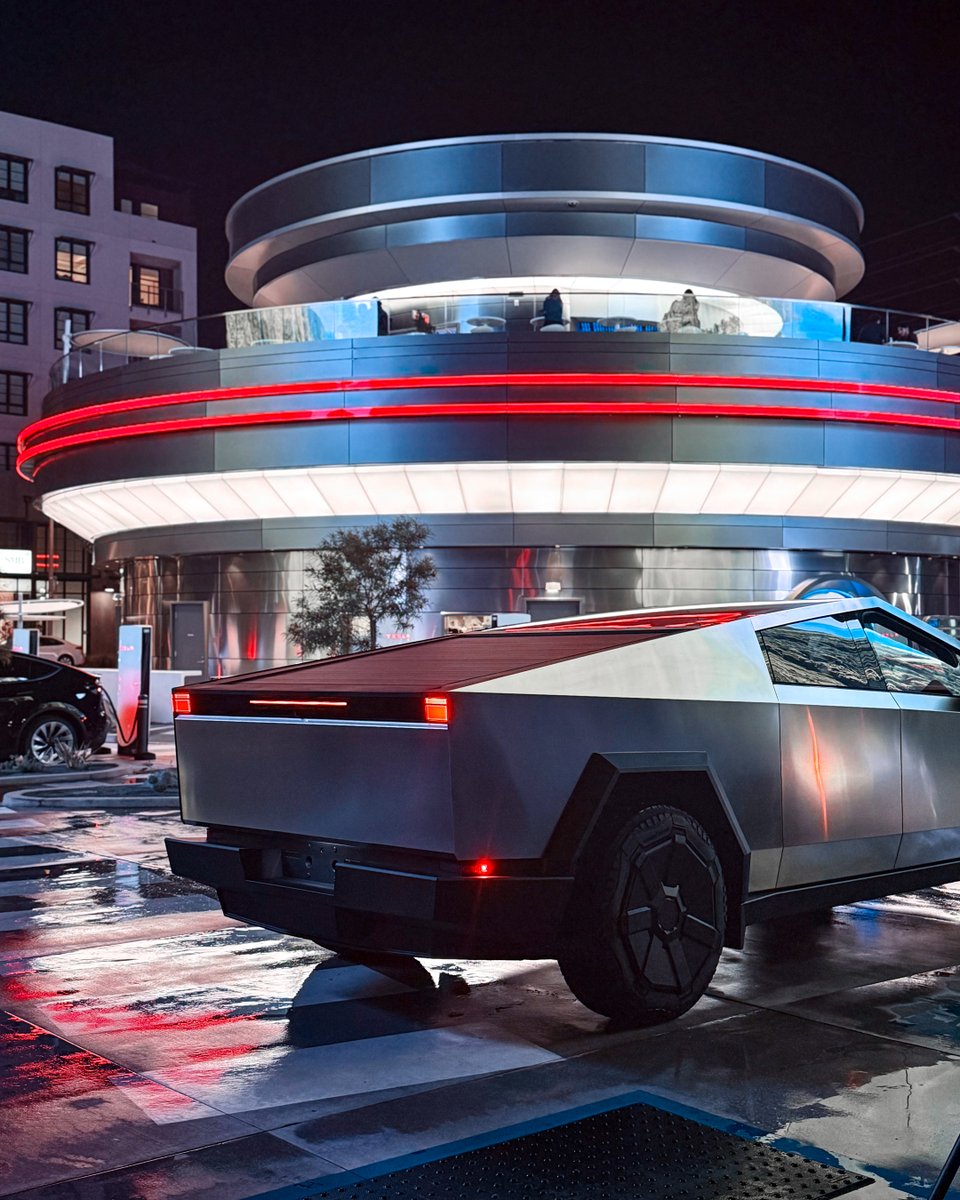
The Cybertruck's defining feature just made headlines again. Elon Musk took to X to reaffirm what Tesla demonstrated at the 2023 delivery event: the Cybertruck's ultra-hard stainless steel exoskeleton can stop bullets from any handgun, shotgun, or Tommy gun. The post pulled nearly 1.85 million views within the hour, confirming this remains one of the most talked-about aspects of the vehicle.

📊 Key Figures
| Metric | Value | Context |
|---|---|---|
| Tweet Views | 1,845,696 | Within ~1 hour of posting |
| Tweet Likes | 25,300 | High engagement signal |
| Steel Panel Thickness (doors) | 1.8 mm | Ultra-Hard 30X Cold-Rolled |
| Steel Panel Thickness (sails/hood) | 1.4 mm | Same 30X alloy |
| Calibers confirmed stopped | 9mm, .45 ACP, 12-gauge | Verified in Tesla ballistic tests |
What Makes the Cybertruck's Steel Different?
The Cybertruck is not wrapped in conventional automotive steel. Tesla engineered a proprietary 30X cold-rolled stainless-steel alloy — a variant of 300-series stainless steel for which Tesla holds a patent — that is dramatically harder than the mild steel used in traditional vehicle bodies. This is the same family of material used in SpaceX's Starship, chosen for its exceptional strength-to-weight ratio, corrosion resistance, and the ability to bear structural loads without a separate frame.
The exoskeleton design means the outer skin is the structure. There is no inner frame beneath it doing the heavy lifting. That architecture demands a material capable of handling structural stress, which is exactly why the 30X alloy was developed. As a side effect of that structural hardness, it also happens to be extremely difficult for most ballistic threats to penetrate.
What's Been Tested — And What Stopped
Tesla's own ballistic demonstrations, conducted ahead of the November 2023 delivery event, put the exoskeleton through a notable battery of tests. According to verified reports and Tesla's own footage:
- 9mm handgun rounds: Did not penetrate the door panels.
- .45 ACP (Glock): Stopped at the door skin — no breach of the passenger compartment.
- Tommy Gun (.45 caliber, full drum magazine): An entire drum fired into the driver's door produced zero penetration into the cabin — the Al Capone-style test that went viral.
- MP5-SD (9mm suppressed): The exoskeleton was not penetrated.
- Shotgun blasts: Resisted without penetration.
Musk's tweet today specifically references handguns, shotguns, and Tommy guns — matching precisely what was demonstrated in verified testing.
The Honest Limits: What It Does NOT Stop
Transparency matters here. The Cybertruck is not an armored military vehicle, and Musk's statement is accurate within a specific ballistic window. Independent testing and Tesla's own caveats confirm that high-velocity rifle rounds can defeat the steel. A .223 from an AR-15 or a .50 caliber round has been shown to penetrate the panels in external tests. The vehicle is classified as bullet-resistant under limited conditions — not certified bulletproof by any military or law enforcement standard.
The windows are a separate matter. The famous 2019 reveal incident — where a metal ball shattered the Armor Glass during the live demo — is well-documented. Musk clarified after the November 2023 delivery event that the window glass is not bulletproof, though the door panels themselves are. A subsequent 2023 demo using a baseball showed the glass held up to blunt force, but owners should understand the distinction: the steel doors stop handgun rounds; the glass does not carry the same claim.
🔭 The BASENOR Take
| Timeline | Claim first demonstrated November 2023 delivery event; reaffirmed today, February 25, 2026 |
| Impact Level | 🟡 Medium — Reaffirmation, not new capability |
| Confidence | 🟢 High — Backed by Tesla's own ballistic tests and third-party verification |
Why is Musk reinforcing this now? The Cybertruck continues to be a polarizing vehicle — adored by fans, scrutinized by critics. Reaffirming the ballistic specs keeps the vehicle's most unique selling point front-of-mind as it enters its third year of production. Manufacturing refinements at Gigafactory Texas are reportedly enabling tighter panel tolerances, which could mean even more consistent ballistic performance across the fleet.
It's also worth reading this in the context of ongoing public discourse around personal safety and vehicle security. The Cybertruck is the only consumer vehicle on the market that arrives from the factory — at a standard trim level — with this level of passive ballistic resistance baked into its core structure, not bolted on as an aftermarket option. That remains a genuinely differentiated position in the automotive market.
For current Cybertruck owners, the takeaway is straightforward: the claim is real, it's been tested, and it applies to the most common everyday ballistic threats. Just don't confuse it with full armor — and keep the glass distinction in mind.
📰 Deep Dive
The 30X cold-rolled stainless-steel alloy at the heart of this story is genuinely unusual material for a consumer vehicle. Tesla developed it specifically for Cybertruck, filing a patent for the composition. Cold-rolling the steel — rather than hot-rolling — produces a denser, harder grain structure, which is exactly what delivers both the structural rigidity and the ballistic resistance. At 1.8mm on the doors and 1.4mm on the sails and hood, these panels are thicker and harder than anything you'd find on a conventional production car.
The exoskeleton architecture amplifies this further. Because the steel panels carry the structural load of the vehicle — replacing the traditional inner steel cage — Tesla had every engineering incentive to push the material's strength as high as possible. The ballistic resistance is essentially a bonus derived from a structural engineering decision, not a marketing feature bolted on at the end.
One nuance worth understanding: "bulletproof" as a colloquial term and as a certified standard are very different things. Musk uses it in the everyday sense — bullets from the listed weapons do not pass through. Certified bulletproof ratings (like NIJ Level IIIA) require standardized testing protocols, specific shot placement, and formal documentation. The Cybertruck has not been publicly certified to any NIJ standard. That doesn't make the claim false — the tests show what they show — but owners should understand the vehicle is not sold as, nor should it be relied upon as, a certified armored vehicle.
What makes today's tweet significant is the specificity. Musk didn't say "it's tough steel." He named three weapon categories — handguns, shotguns, Tommy guns — which map precisely to the ballistic tests Tesla conducted before the 2023 delivery event. That level of specificity from the CEO, combined with nearly 1.85 million views in under an hour, ensures this claim will be scrutinized. Based on verified testing data, it holds up within those stated parameters.
Related Gear
Gear up your Cybertruck with tested, custom-fit BASENOR accessories — shop Cybertruck accessories →
Sources & reporting notes
The links below identify the material source records used for this report.
- @elonmusk on X (2026-02-25T15:01:54.000Z) — Direct source
Source links are preserved as published or accessed. See our editorial standards and corrections policy.
The BASENOR Editorial Desk covers Tesla, SpaceX, and related technology, curating reporting from primary sources — official accounts, regulatory filings, and software release data. Every article passes source-record and fact-checking review before publication. About the newsroom.
This report was curated by the BASENOR Editorial Desk from the sources listed above. Read our editorial standards or email editorial@basenor.com to report an error.